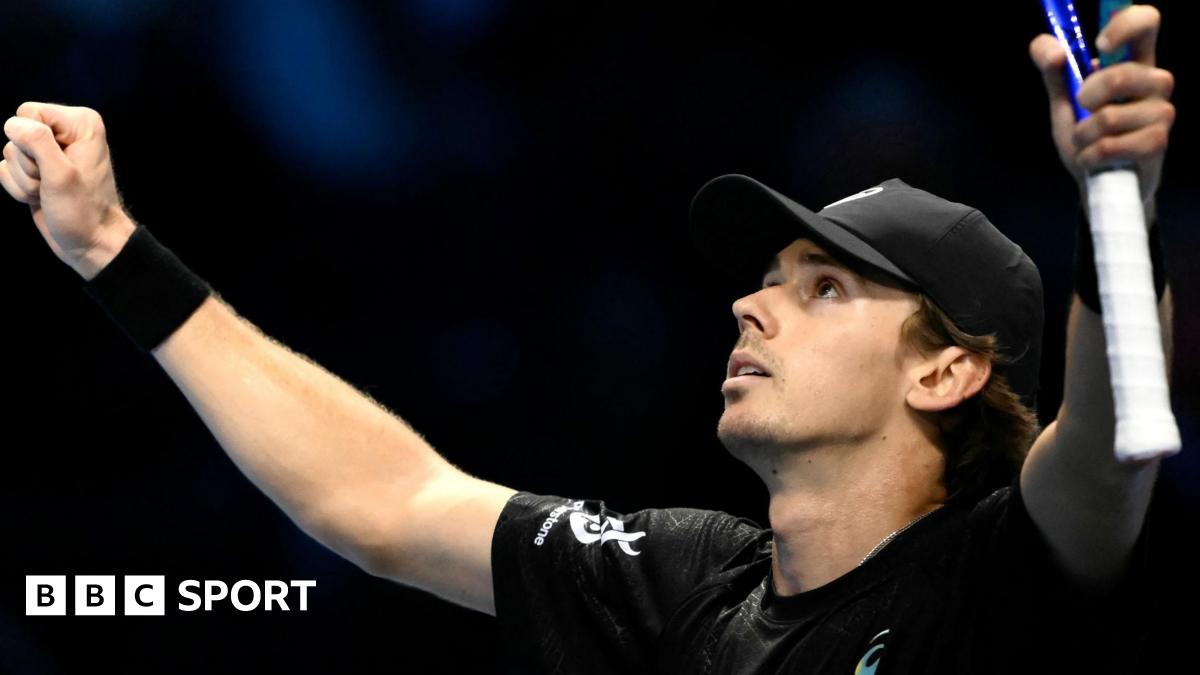
Alex de Minaur’s ATP Finals Resilience: From “Dark Place” to Victory
The ATP Finals in Turin witnessed a remarkable turnaround for Alex de Minaur. After facing early setbacks – including a 16-match losing streak against top 10 opponents and previous defeats in all five ATP Finals appearances – de Minaur delivered a stunning victory against Taylor Fritz,keeping his tournament hopes alive. But this win represents more than just a single match; it’s a testament to mental fortitude and the ability to rebound from crushing disappointment.
A Rollercoaster Start to the Tournament
De Minaur’s journey at the 2023 ATP Finals began with two consecutive losses. The most painful was arguably his defeat against Lorenzo Musetti. He held a commanding 5-3 lead in the deciding set, only to lose four consecutive games and the match. This collapse understandably shook his confidence, leaving him in what he described as a “pretty dark place.”
This experience highlights a critical aspect of professional tennis: the mental game. Even with superior skill, a momentary lapse in focus or a surge of doubt can dramatically alter the outcome.
The Turning Point: Resetting the Mindset
Facing Fritz, a player he’d lost to twice before, de Minaur demonstrated a crucial skill – the ability to reset mentally. He didn’t dwell on past failures. Instead, he “made peace with what had happened and just committed,” as he told Sky Sports.
This commitment translated into an inspired performance.De Minaur didn’t overthink, focusing rather on executing his game plan. He backed himself, regardless of the outcome, and left everything on the court. This proactive approach is a hallmark of champions.
Why This Win Matters – Beyond Qualification
While a win by Carlos Alcaraz would secure de Minaur’s qualification for the next stage, the victory over Fritz is notable in its own right. It’s a powerful exhibition of resilience, a quality highly valued in any competitive field.
De Minaur’s post-match comments reveal a player who understands the importance of hard work and self-belief. He acknowledged the “heartbreak” he’d recently experienced but emphasized the satisfaction of being rewarded for his dedication.
Lessons for You: Building Mental Toughness
De Minaur’s experience offers valuable lessons for anyone facing adversity, not just athletes. Here’s how you can apply his approach to your own life:
* Acknowledge and Accept: Don’t ignore setbacks. Acknowledge the disappointment, but don’t let it consume you.
* Focus on Control: You can’t control the past,but you can control your response to it. Focus on what you can influence – your effort, your attitude, and your readiness.
* Commit to the Process: Instead of fixating on the outcome, commit to the process of improvement.
* Self-belief is Key: Back yourself, even when facing challenges.Beleive in your abilities and your potential.
* Reset and Refocus: Learn from your mistakes, but don’t dwell on them. Reset your mindset and refocus on the task at hand.
Recent Trends in Player Resilience (2023-2024)
Recent research in sports psychology emphasizes the growing importance of mental skills training. A 2023 study published in the Journal of Applied Sport Psychology found that athletes who actively practice mindfulness and cognitive restructuring techniques demonstrate significantly higher levels of resilience and performance under pressure. https://www.tandfonline.com/journals/uasp20
This trend is reflected in the increasing number of players investing in sports psychologists and mental performance coaches. The ability to manage emotions, overcome adversity, and maintain focus is now considered as crucial as physical conditioning and technical skill.
Evergreen Insights: The Power of the Bounce-Back
The story of Alex de Minaur isn’t unique. Throughout sports history, countless athletes have overcome adversity to achieve greatness. What separates the prosperous from the rest is their ability to bounce back from setbacks. This resilience isn’t innate; it’s a skill that can be developed through deliberate practice and a positive mindset.Remember, failure isn’t the opposite of success – it’s
Related reading