
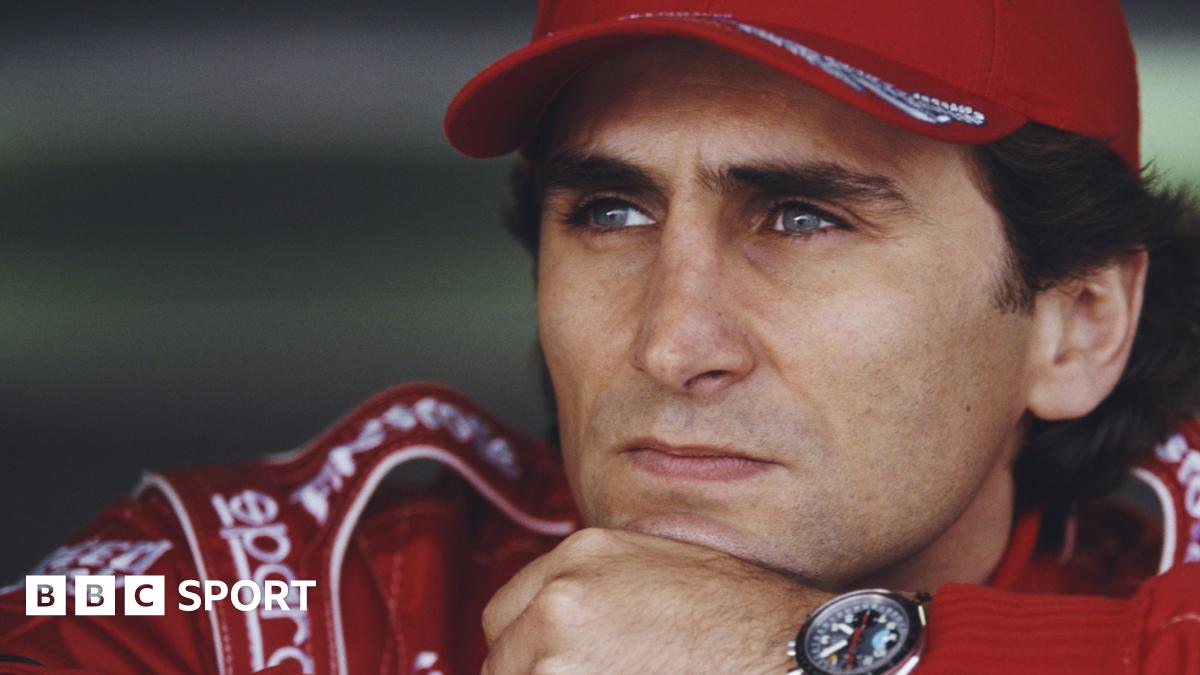
In the high-stakes world of professional motorsport, where success is measured in milliseconds and victory is often separated by a thin line from catastrophe, few figures loom as large as Alessandro “Alex” Zanardi. For many, he was a master of the open-wheel circuit, a driver of immense technical skill and charisma. But for millions more, he became a global symbol of resilience—a man who redefined the limits of human endurance and spirit in the face of unbelievable adversity.
Zanardi’s journey was not a linear path of triumph, but rather a series of profound challenges met with an almost defiant optimism. From the pinnacle of the CART series to the depths of a life-altering accident and the subsequent ascent to Paralympic glory, his life served as a masterclass in psychological fortitude. He did not merely survive a tragedy; he engineered a second act that was, in many ways, more impactful than his first.
To understand the magnitude of his influence, one must look beyond the trophies and the medals. Zanardi’s legacy is found in the quiet courage he inspired in others—individuals grappling with disability, loss, or the feeling that their best years were behind them. By treating his recovery not as a burden, but as a new race to be won, he transformed the narrative of disability from one of limitation to one of expanded possibility.
The Ascent to Racing Glory
Before he became a beacon of hope for the disabled community, Alex Zanardi was a force of nature on the racetrack. Born on October 23, 1966, in Italy, Zanardi possessed a natural affinity for speed and a daring approach to driving that captivated audiences. His early career saw him navigating the grueling world of Formula One, where he competed from 1991 to 1994 and briefly returned in 1999. Even as his F1 tenure included a notable sixth-place finish at the 1993 Brazilian Grand Prix, it was in the United States that he truly found his stride.

Zanardi transitioned to the CART (Championship Auto Racing Teams) series, where his flamboyant style and relentless pace made him a fan favorite. He achieved the extraordinary feat of winning the CART championship in both 1997 and 1998, securing a total of 15 wins in the series according to historical racing records. His success was built on a foundation of technical precision and an unwavering belief in his own ability to push a machine to its absolute limit.
The Turning Point: Tragedy at the American Memorial
The trajectory of Zanardi’s life changed irrevocably on September 15, 2001, during the American Memorial race at the Lausitzring in Germany. In a horrific accident, Zanardi’s car collided with another, resulting in a crash so violent that it led to the amputation of both of his legs. In an instant, the man whose life was defined by the physical control of a high-performance vehicle lost the very limbs that allowed him to interact with his craft.
The aftermath of the crash could have been the end of his public life, but for Zanardi, it was the beginning of a new, more challenging competition. His recovery was not a sudden miracle, but a grueling process of rehabilitation. He approached his physiotherapy with the same intensity he had brought to the CART circuit, treating every small movement as a victory. Less than two years after the accident, he defied medical expectations by returning to competitive racing in the European Touring Car Championship, utilizing a specially modified car that allowed him to accelerate and brake using his hands.
A New Frontier: The Paralympic Games
While returning to the racetrack was a triumph of will, Zanardi sought a new way to challenge himself and inspire others. He discovered handcycling, a sport that demanded the same cardiovascular endurance and tactical intelligence as motorsport. This transition marked his evolution from a racing driver to a world-class paracyclist.
Zanardi’s impact on the Paralympic movement was profound. He did not enter the Games as a celebrity looking for a hobby; he entered as an elite athlete seeking perfection. His achievements on the global stage were staggering. At the London 2012 Paralympic Games, he secured three medals, including gold in the Men’s Individual H4 Road Race as reported by NBC News. He continued his dominance through the 2016 Rio de Janeiro Games, where he once again claimed gold in the time trial.
Beyond the medals, Zanardi’s presence in the Paralympics helped shift the global perception of adaptive sports. He demonstrated that the “para” in Paralympic did not mean a diminished version of sport, but a different, equally rigorous expression of human excellence. He became one of the most recognizable faces in the international para-cycling scene, proving that the spirit of a champion is not tied to physical wholeness but to the resolve of the mind.
The Final Challenge and an Enduring Legacy
Zanardi’s life was characterized by a cycle of crisis and comeback. In June 2020, he faced perhaps his most daunting adversity yet. While riding his handbike in Siena, Italy, he was involved in a severe crash that resulted in critical head injuries. The accident left him in a medically induced coma and required multiple neurosurgical interventions according to reports from the BBC.
Even in this state, the world watched with bated breath, remembering the man who had already beaten the odds twice. His recovery was a long, arduous journey involving intensive brain and body training programs. His wife provided rare updates during this period, confirming that his recovery was continuing apace despite the severity of the trauma via Formula 1’s official coverage.
Alex Zanardi’s life teaches us that adversity is not a wall, but a door. Whether it was the loss of his legs or the trauma to his brain, he never viewed himself as a victim. Instead, he viewed every setback as an opportunity to discover a new version of himself. He taught millions that the definition of “impossible” is merely a starting point for those with the courage to persevere.
Key Milestones in the Life of Alex Zanardi
| Period/Year | Event/Achievement | Impact/Outcome |
|---|---|---|
| 1991–1999 | Formula One Career | Competed for teams including Jordan and Williams; 6th place in 1993 Brazilian GP. |
| 1997–1998 | CART Championships | Won back-to-back championships with 15 total series wins. |
| 2001 | Lausitzring Accident | Sustained injuries leading to the amputation of both legs. |
| 2012 | London Paralympics | Won three medals, including gold in the H4 Road Race. |
| 2016 | Rio Paralympics | Won gold in the time trial, cementing his status as a para-cycling legend. |
| 2020 | Siena Handbike Crash | Suffered severe head injuries; underwent extensive neurosurgical recovery. |
The story of Alex Zanardi is not merely a sports story; it is a human story. It is a reminder that while we cannot always control what happens to us, we have absolute control over how we respond. In a world often overwhelmed by cynicism, Zanardi’s unquenchable spirit remains a guiding light for anyone searching for the strength to start over.

As we reflect on his contributions to sport and humanity, we are reminded that the greatest victory is not the one achieved on a podium, but the one won over one’s own despair. Alex Zanardi did not just race cars and bikes; he raced against the limitations of the human condition and won.
For those following the ongoing legacy of adaptive sports and the evolution of Paralympic training, updates on new athlete programs and accessibility initiatives can often be found through the International Paralympic Committee’s official channels.
We invite our readers to share their thoughts in the comments below: How has Alex Zanardi’s journey of resilience influenced your own perspective on overcoming adversity?