
Alopecia areata is an autoimmune condition where the body’s immune system mistakenly attacks hair follicles, resulting in sudden, often circular patches of hair loss. While the exact triggers remain a subject of ongoing clinical research, medical professionals identify it as a dysfunction of the immune system that can affect hair on the scalp, face, and entire body.
For many women, the sudden appearance of these patches can be a profound personal challenge. While the medical community focuses on the biological mechanisms of the disease, patients often navigate a complex intersection of physical symptoms and emotional resilience. Recent medical advancements, particularly in targeted therapies, are beginning to change the landscape for those managing this chronic condition.
The condition, often characterized by smooth, round bald spots, can vary significantly in severity. For some, the hair loss is localized and temporary; for others, it can progress to more extensive forms. Understanding the underlying immunology and the current standard of care is essential for anyone facing a diagnosis.
What causes the immune system to attack hair follicles?
At the core of alopecia areata is a breakdown in immune tolerance. In a healthy body, the immune system identifies and attacks foreign invaders like bacteria and viruses. In patients with alopecia areata, specialized white blood cells, specifically T-cells, mistakenly identify the hair follicles as threats.
According to the Mayo Clinic, this immune response causes inflammation around the hair follicle, which interrupts the natural hair growth cycle. Instead of progressing from the growing phase (anagen) to the resting phase (telogen), the follicle is forced into a premature resting state, causing the hair shaft to fall out.
While the specific “switch” that triggers this attack is not fully understood, researchers have identified several contributing factors:
- Genetic Predisposition: Family history plays a significant role, as certain genes are linked to an increased risk of autoimmune disorders.
- Immune System Dysfunction: The condition is often categorized alongside other autoimmune diseases, such as thyroiditis or vitiligo.
- Environmental Triggers: While not definitively proven as a sole cause, some patients report that significant physical or emotional stress precedes a flare-up.
Understanding the different forms of alopecia
Alopecia areata is not a singular experience; it manifests in several distinct clinical patterns. Dermatologists typically categorize the severity based on the extent and location of the hair loss.
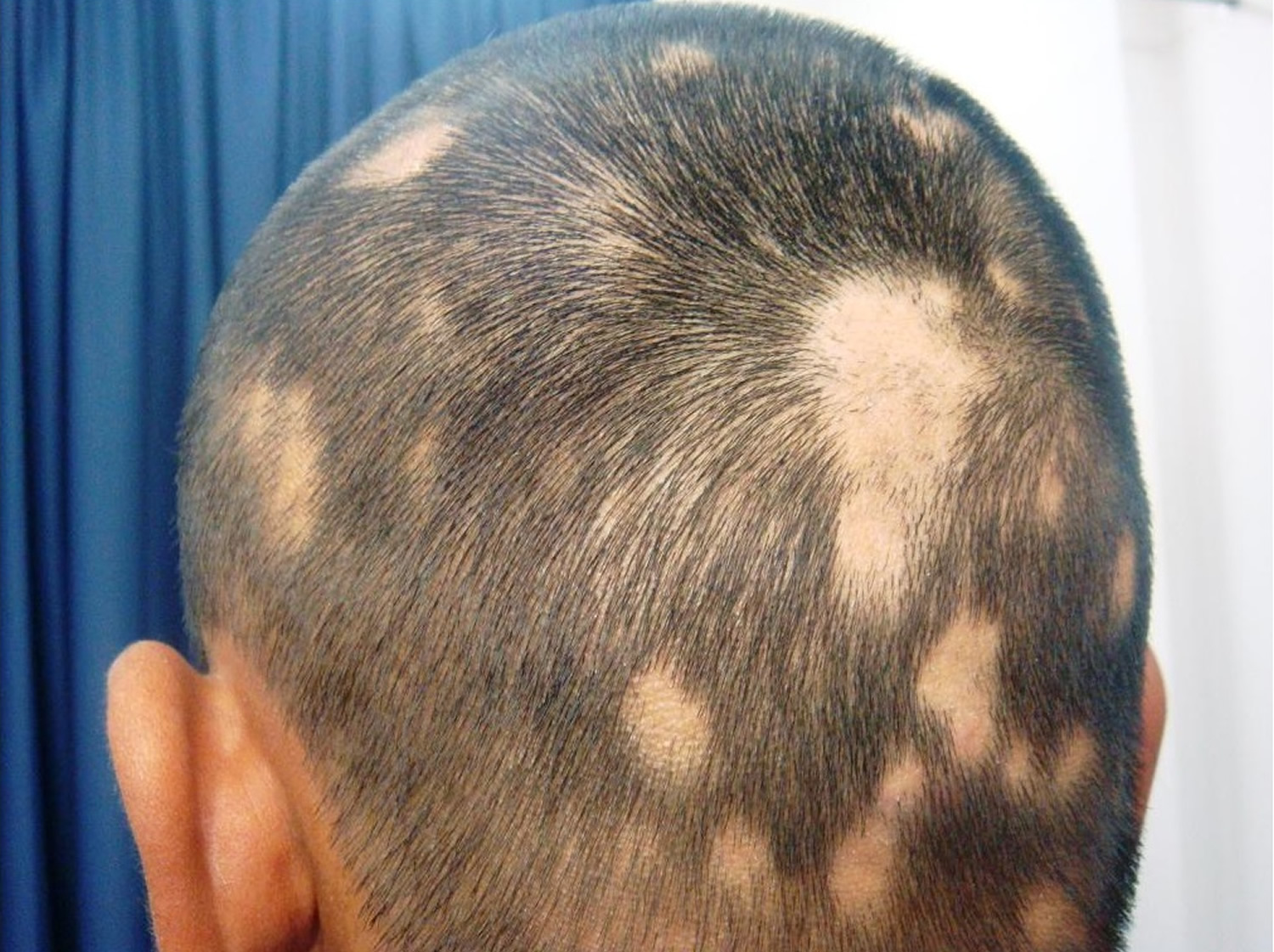
Alopecia Areata (Patchy): This is the most common form, characterized by one or more small, circular bald patches on the scalp or body. These patches are usually smooth and can appear suddenly.
Alopecia Totalis: In this more advanced stage, the hair loss extends to the entire scalp. The individual may still have hair on their eyebrows or eyelashes, but the scalp is completely bare.
Alopecia Universalis: This is the most severe form of the condition. It involves the total loss of all hair on the body, including the scalp, eyebrows, eyelashes, and even fine body hair. The National Institute of Neurological Disorders and Stroke (NINDS) notes that these progressive forms represent a significant escalation of the autoimmune response.
How is alopecia areata managed and treated?
There is currently no permanent cure for alopecia areata, but medical science has moved beyond simple topical applications. Treatment strategies are generally tailored to the severity of the hair loss and the patient’s lifestyle preferences.
For mild cases, dermatologists often recommend localized treatments to stimulate regrowth. These may include:
- Corticosteroids: These are frequently administered via small injections directly into the bald patches to reduce inflammation and suppress the local immune response.
- Topical Immunotherapy: Applying certain chemicals to the scalp can trigger a localized allergic reaction, which may “distract” the immune system and allow hair to regrow.
For more severe or widespread cases, systemic treatments are required. A major breakthrough in recent years has been the development of Janus kinase (JAK) inhibitors. These medications work by blocking specific signaling pathways within the immune cells that lead to follicle inflammation.
The U.S. Food and Drug Administration (FDA) has approved specific JAK inhibitors, such as baricitinib, for the treatment of severe alopecia areata. These drugs represent a shift from general immunosuppression to highly targeted molecular therapy, offering hope for patients who previously had limited options.
The psychological impact on women and families
Beyond the biological disruption, alopecia areata carries a heavy psychological weight. For women, hair is often deeply tied to identity, femininity, and social presentation. The sudden loss of hair can lead to significant emotional distress, including anxiety, depression, and social withdrawal.
Medical professionals emphasize that the impact is not merely cosmetic. The “shock” of seeing circular patches appear in the mirror can disrupt a person’s sense of self. For mothers and caregivers, the added pressure of maintaining a sense of normalcy for their families while managing their own health can be overwhelming.
Finding “new courage,” as many patients describe it, often involves a dual approach: medical treatment to address the physical symptoms and psychological support to manage the emotional toll. Support groups and counseling are increasingly recognized as vital components of a comprehensive care plan.
Frequently Asked Questions
Is alopecia areata contagious?
No. Alopecia areata is an autoimmune condition, not an infection. It cannot be spread from person to person through physical contact or shared items.

Can stress cause hair loss?
While research is ongoing, many clinicians observe a correlation between intense physiological or psychological stress and the onset or worsening of alopecia patches. However, stress is generally considered a trigger rather than the primary cause.
Is hair regrowth permanent?
Not necessarily. Because alopecia areata is a chronic condition, the immune system may continue to attack follicles even after hair has regrown. Many patients experience cycles of hair loss and regrowth.
Should I see a dermatologist or a general practitioner?
While a general practitioner can provide an initial assessment, a dermatologist is the specialist trained to diagnose and treat hair and scalp disorders. They can provide specific treatments like corticosteroid injections or coordinate advanced systemic therapies.
Clinical research into the genetic markers of alopecia areata continues, with many studies currently investigating how personalized medicine might one day predict and prevent flare-ups. Patients are encouraged to monitor their symptoms and consult with specialists regarding the latest approved therapies.
For more updates on medical breakthroughs and healthcare policy, follow our health section. We welcome your comments and personal experiences regarding hair health and autoimmune management below.
Related reading