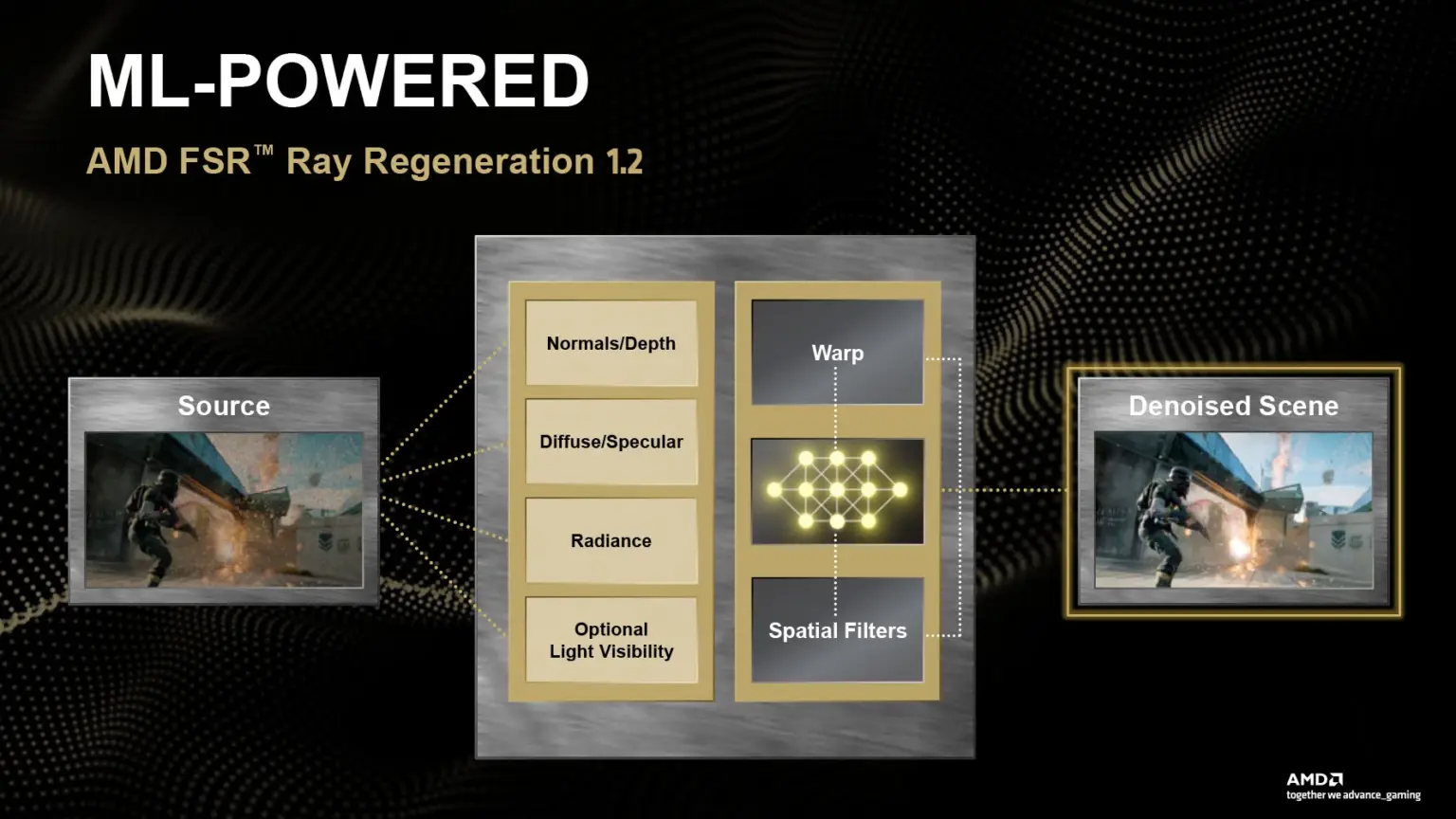
Advanced Micro Devices (AMD) has released an update for its FidelityFX Super Resolution (FSR) technology, specifically targeting the integration of version 2.3 within the software ecosystem. This update introduces Ray Regeneration 1.2.0, a development focused on enhancing visual fidelity and performance for hardware based on the RDNA 3 architecture, according to AMD’s official GPUOpen documentation.
The update arrives as part of AMD’s ongoing efforts to refine its temporal upscaling solutions. FidelityFX Super Resolution 2.3 represents a refinement of the company’s open-source spatial and temporal upscaling pipeline. By focusing on Ray Regeneration, the software aims to address common artifacts that occur during ray-traced rendering, such as ghosting or flickering, by improving how the engine reconstructs light paths across consecutive frames.
Technical Improvements for RDNA 3 Architecture
The primary benefit of the 1.2.0 Ray Regeneration implementation is its optimization for RDNA 3-based graphics cards, such as the Radeon RX 7000 series. According to technical specifications provided by AMD, the update allows the hardware to handle complex ray-tracing tasks more efficiently by reducing the computational load required for denoising. This is achieved through a more intelligent accumulation of spatial data, which helps maintain image sharpness even when the camera or objects in the scene are moving rapidly.
For developers, integrating this update involves updating the FSR 2.3 SDK. The 1.2.0 version of the Ray Regeneration module is designed to be backward compatible with existing RDNA 3 implementations, though it requires specific hooks within the game engine’s rendering pipeline to function as intended. This process ensures that developers can provide users with higher frame rates without sacrificing the visual quality typically associated with native ray-traced reflections.
What This Update Means for Gamers
For the end-user, the update is intended to manifest as a smoother, more stable visual experience in titles that support advanced ray-tracing features. Historically, enabling ray tracing often results in significant performance penalties. By utilizing the refined Ray Regeneration 1.2.0, AMD seeks to mitigate these performance costs. As reported by industry analysis on RDNA 3 capabilities, the ability to reconstruct rays effectively is a key factor in keeping games playable at 4K resolution while maintaining high settings.
While the update is technically significant, its real-world impact depends heavily on game developer adoption. Because FSR 2.3 is an open-source technology, it is up to individual studios to implement these libraries into their titles. Users should monitor game settings menus for updates that specifically mention FSR 2.3 support, as this will be the primary indicator that the latest rendering optimizations are active.
The Evolution of FidelityFX
AMD’s strategy with FidelityFX has consistently focused on cross-platform compatibility and open-source accessibility. Unlike some proprietary solutions that are locked to specific hardware vendors, FSR is designed to operate on a wide range of GPUs, including those from competitors. However, the Ray Regeneration 1.2.0 update is specifically tuned to leverage the unique hardware accelerators found in the RDNA 3 architecture, such as the second-generation ray accelerators.
According to AMD’s technical developer portal, the company continues to iterate on its temporal upscaling algorithms to compete with other industry standards like NVIDIA’s DLSS. By separating the Ray Regeneration component into a distinct, updatable library, AMD allows for faster deployment of visual improvements without requiring a complete overhaul of the entire FSR suite. This modular approach is intended to accelerate the pace at which new rendering techniques reach the consumer market.
Looking Ahead
The release of version 1.2.0 of the Ray Regeneration module serves as a baseline for future iterations of AMD’s upscaling suite. As the industry moves toward more complex path-tracing implementations, the efficiency of these denoising and reconstruction tools will become increasingly critical. The next major milestone for AMD in this space will likely involve deeper integration with FSR 3, which introduces frame generation technology to complement the existing upscaling pipeline.
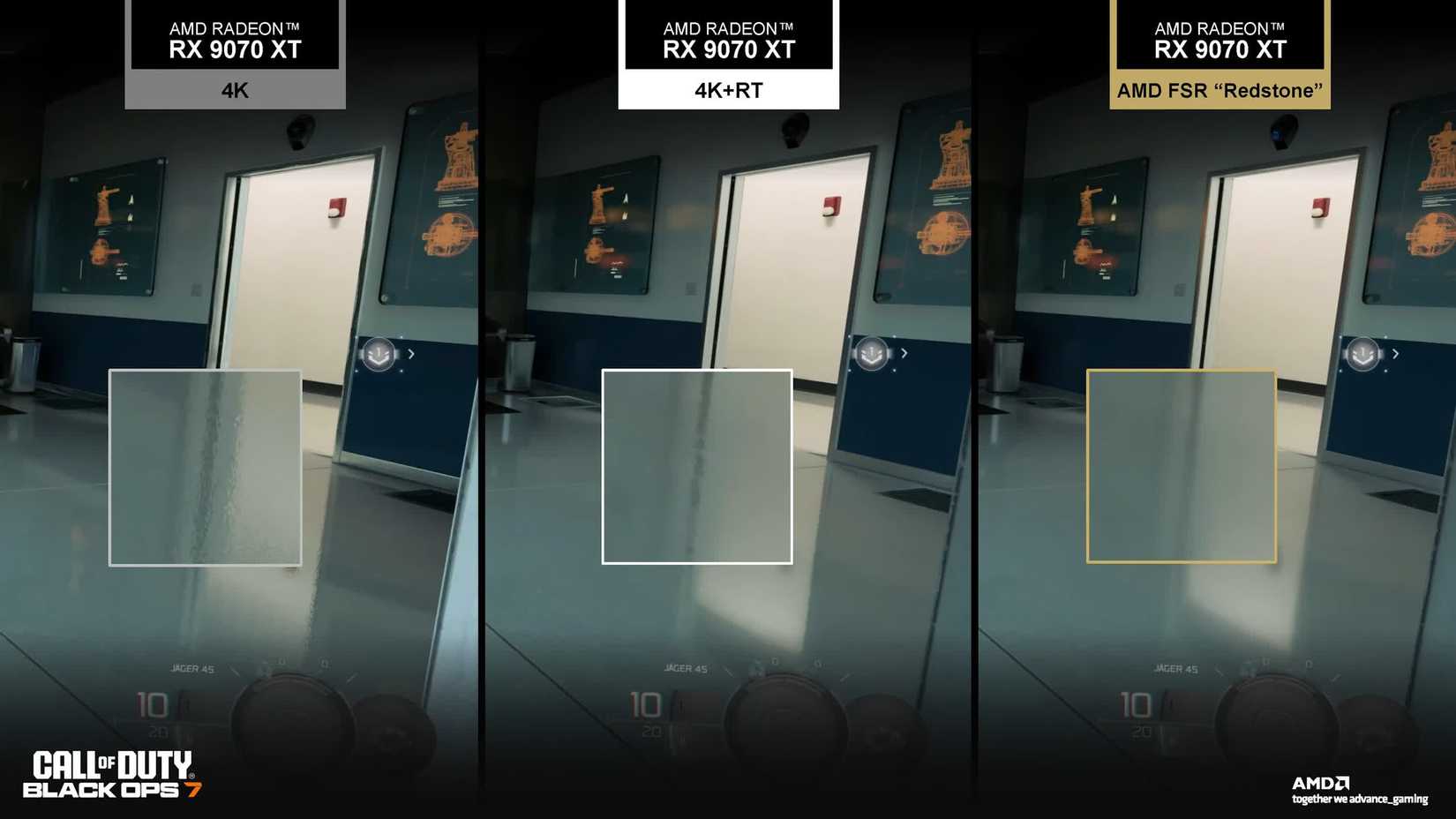
AMD has not provided a specific timeline for the next major SDK release, but developers and enthusiasts are encouraged to track the official GPUOpen GitHub repository for the most recent code drops and documentation updates. As always, keeping graphics drivers updated to the latest version is the best way for users to ensure compatibility with these new software features. We invite readers to share their experiences with updated FSR implementations in the comments section below.
Keep reading