
A cross-party delegation from Taiwan’s Legislative Yuan, led by Legislative Speaker Han Kuo-yu, concluded a series of high-level meetings in Washington, D.C., this week, emphasizing the need for continued U.S. support for Taiwan’s international participation. The visit featured engagements with over 40 members of the U.S. Congress, including a private meeting with former U.S. House Speaker Nancy Pelosi, as discussions centered on regional security, economic cooperation, and the long-term diplomatic relationship between Taipei and Washington.
The delegation’s visit to the U.S. capital serves as a significant marker in legislative diplomacy, occurring amidst ongoing debates regarding Taiwan’s international standing. During the visit, several U.S. lawmakers expressed support for the strengthening of U.S.-Taiwan ties, with some representatives publicly voicing a desire to see Taiwan’s leadership, including President Lai Ching-te, visit the United States in the future. The discussions underscore the bipartisan consensus in the U.S. Congress regarding the importance of maintaining robust, albeit unofficial, relations with Taiwan under the framework of the Taiwan Relations Act, as outlined by the American Institute in Taiwan.
Legislative Diplomacy and Congressional Engagement
The delegation, which included representatives from Taiwan’s major political parties, utilized the visit to advocate for Taiwan’s meaningful participation in international organizations. By engaging with both Republican and Democratic lawmakers, the group sought to reinforce the message that Taiwan remains a key partner in the Indo-Pacific region. According to reports from the Central News Agency, the discussions were framed around securing U.S. backing for Taiwan’s inclusion in global forums, particularly those related to public health and economic security.
The meeting with Nancy Pelosi, who previously visited Taiwan in August 2022, drew significant attention given her role in elevating Taiwan’s profile on the international stage during her tenure as Speaker of the House. While the specific content of the private meeting remains largely confidential, the optics of the encounter signify the enduring nature of the U.S.-Taiwan legislative partnership. Such interactions are a standard component of track-two diplomacy, allowing for dialogue on sensitive issues that remain outside the formal scope of state-to-state diplomatic recognition.
The Diplomatic “Relationship” Metaphor
During the trip, Legislative Speaker Han Kuo-yu utilized a metaphorical description of Taiwan-U.S. relations, suggesting that the current dynamic is akin to a relationship that can be “dated” but not yet “married.” This characterization sparked internal debate within Taiwan’s political sphere. Members of the Democratic Progressive Party (DPP) legislative caucus reportedly commented on the remark, suggesting that while the humor was noted, the complexities of international diplomacy require a more formal and structured approach than the analogy might imply.
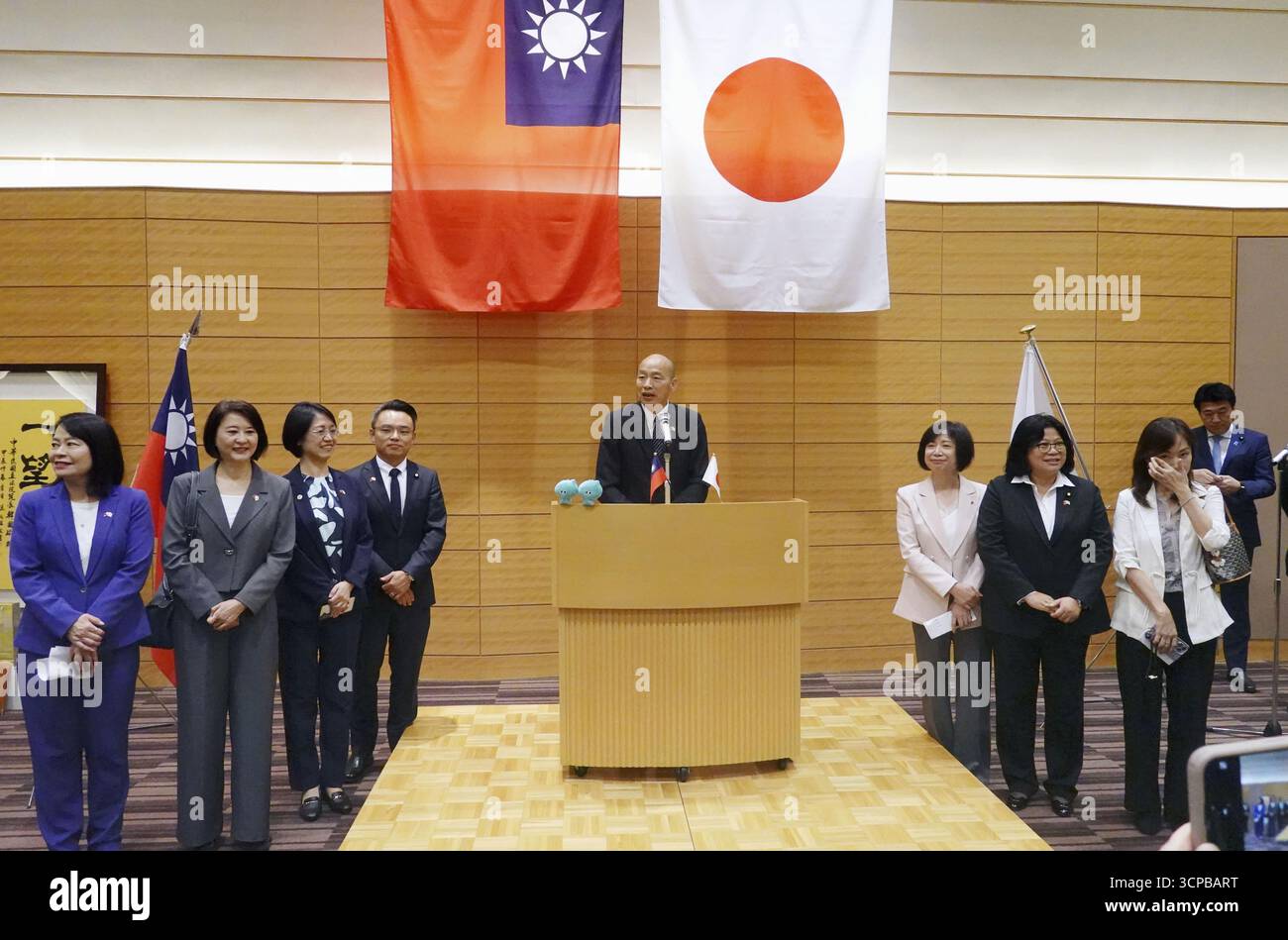
This internal friction reflects the broader domestic debate in Taiwan regarding how best to manage relations with the United States. While the opposition Kuomintang (KMT) has historically favored a pragmatic, incremental approach to international engagement, the ruling party often advocates for more explicit, high-level diplomatic milestones. Analysts note that these differing strategies are often calibrated to balance domestic public opinion with the realities of the sensitive geopolitical environment created by the cross-strait relationship.
Future Prospects for High-Level Visits
The prospect of a visit to the United States by President Lai Ching-te remains a subject of speculation and political interest. U.S. lawmakers who met with the delegation expressed a clear interest in facilitating such a move, viewing it as a logical evolution of the U.S.-Taiwan partnership. However, any such travel would be subject to the long-standing protocols governing U.S.-Taiwan interactions, which are designed to balance support for Taiwan with the complexities of U.S. policy toward the People’s Republic of China.
According to the U.S. Department of State, the United States maintains a “one China” policy, guided by the Taiwan Relations Act, the three U.S.-PRC Joint Communiqués, and the Six Assurances. These documents establish the framework within which U.S. officials interact with their Taiwanese counterparts. Any change in the status quo regarding high-level visits is typically viewed through the lens of regional stability, with Washington carefully weighing the implications for its overall strategic posture in the Indo-Pacific.

The delegation’s return to Taipei marks the completion of a mission intended to reinforce the legislative branch’s role in foreign affairs. As the legislative session resumes, the focus will shift back to domestic policy priorities, though the outcomes of these Washington meetings are expected to inform Taiwan’s external strategy in the coming months. Observers will be monitoring upcoming official statements from both the Legislative Yuan and the U.S. Department of State for any indications of follow-up actions regarding the legislative proposals discussed during the visit.
For ongoing updates on Taiwan’s legislative developments and international outreach, stakeholders may refer to the official records maintained by the Legislative Yuan of the Republic of China (Taiwan). Readers are encouraged to share their perspectives on the role of parliamentary diplomacy in the comments section below.
Keep reading