
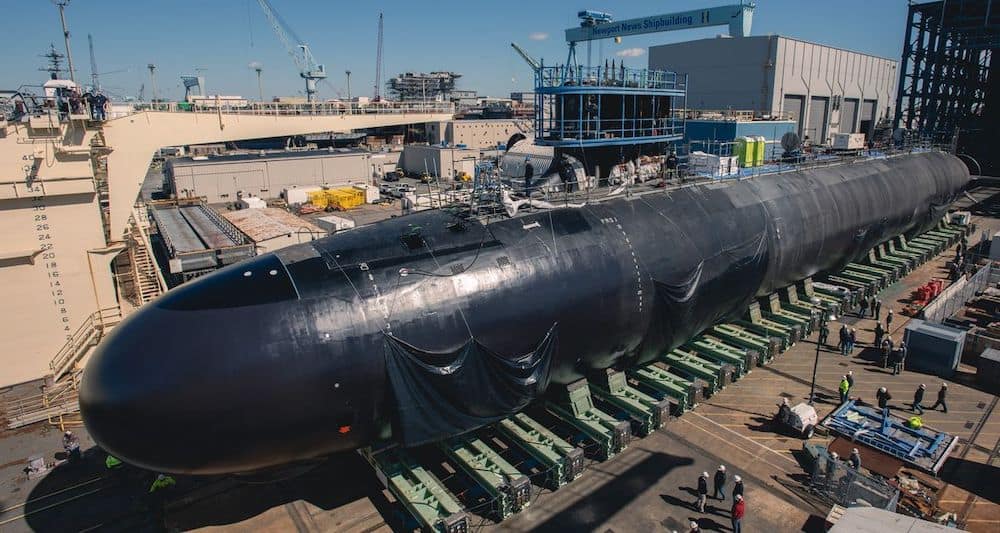
Recent reports from Arabic-language news outlets have highlighted developments in U.S. Naval capabilities, including claims about a newly commissioned warship equipped with 128 launch platforms valued at $17 billion. These reports also reference an accelerated submarine construction program and efforts by a U.S. Coastal city to meet growing demands from the Navy. To provide accurate context for an international audience, it is essential to examine verified information about current U.S. Naval procurement and construction initiatives.
The United States Navy maintains the world’s largest and most technologically advanced fleet, with ongoing investments in both surface combatants and undersea warfare capabilities. As of 2024, the Navy’s battle force includes 11 aircraft carriers, 92 destroyers and cruisers and a submarine fleet comprising 50 attack submarines and 14 ballistic missile submarines, according to the Office of the Chief of Naval Operations. These forces are supported by a sustained shipbuilding effort aimed at maintaining maritime superiority in key global regions.
One of the most significant current programs is the Columbia-class ballistic missile submarine initiative, designed to replace the aging Ohio-class fleet. Each Columbia-class submarine is estimated to cost approximately $8.2 billion, with the first unit scheduled for delivery in 2027 and initial operational capability expected by 2031, according to the U.S. Congressional Budget Office. The program involves major defense contractors including General Dynamics Electric Boat and Huntington Ingalls Industries, and represents the Navy’s largest investment in strategic deterrence since the Cold War.
In parallel, the Navy is advancing the construction of Virginia-class attack submarines, which incorporate modular design principles allowing for technological upgrades throughout their service life. As of early 2024, 22 Virginia-class submarines have been delivered to the fleet, with additional units under construction at shipyards in Groton, Connecticut, and Newport News, Virginia. The Program Executive Office for Submarines reports that the Virginia-class program has achieved cost savings through multi-year procurement and improved construction efficiency, reducing the average cost per vessel to approximately $3.45 billion in recent contracts.
The reference to a U.S. Coastal city accelerating efforts to support naval needs likely points to locations such as Groton, Connecticut—often called the “Submarine Capital of the World”—or Newport News, Virginia, both of which host major naval shipbuilding facilities. Groton is home to General Dynamics Electric Boat, the primary contractor for Virginia- and Columbia-class submarines, while Newport News Shipbuilding constructs aircraft carriers and supports submarine maintenance. These cities have seen increased workforce hiring and infrastructure investment in recent years to support elevated production rates, as confirmed by local economic development reports and Navy installation updates.
Regarding surface combatants, the Navy continues to procure Arleigh Burke-class destroyers and is introducing the next-generation DDG(X) program, intended to eventually replace legacy cruisers and destroyers. The DDG(X) is envisioned to feature advanced propulsion systems, increased electric power for future weapons technologies, and enhanced missile capacity. However, specific details such as exact launch tube counts or unit costs remain under development, with the Navy indicating that preliminary design function is ongoing and no final contract has been awarded as of mid-2024.
Claims regarding a $17 billion warship with 128 launch platforms do not align with any officially announced or funded naval program in public defense budgets or congressional appropriations documents. The most expensive individual naval vessels currently in service or under construction are the Gerald R. Ford-class aircraft carriers, each costing approximately $13.3 billion (including research and development), according to the Congressional Research Service. No surface combatant in the Navy’s inventory or approved construction plan reaches a $17 billion price point or carries 128 vertical launch systems; even the largest proposed surface combatants under study typically envision fewer than 128 missile cells distributed across the fleet rather than on a single vessel.
It is important to distinguish between aspirational concepts, classified programs, and publicly funded initiatives when evaluating reports about military advancements. While the Navy continuously explores future technologies through agencies like the Defense Advanced Research Projects Agency (DARPA) and naval warfare centers, any major procurement program must undergo rigorous review by Congress and the Department of Defense before funding is allocated. Official announcements regarding new ship classes are typically made through the Secretary of the Navy or the Chief of Naval Operations and published in defense budget justification materials.
For accurate and timely information on U.S. Naval developments, stakeholders and the public can refer to primary sources including the Naval Sea Systems Command (NAVSEA) website, the Office of the Secretary of Defense’s acquisition portals, and the Congressional Budget Office’s annual reports on defense programs. Reputable defense journalism outlets such as Defense News, USNI News, and Breaking Defense also provide regular coverage of procurement milestones, contractor updates, and technical evaluations based on verified data.
As global maritime competition intensifies, particularly in strategic areas such as the Western Pacific and Mediterranean Sea, transparency in defense reporting helps foster informed public discourse. The U.S. Navy’s focus remains on maintaining a capable, ready, and technologically superior fleet through disciplined investment in proven platforms and incremental innovation, rather than unverified claims about individual systems exceeding known budgetary or technical parameters.
To stay informed about official updates on Navy shipbuilding programs, readers are encouraged to monitor the Naval Vessel Register and attend public briefings hosted by the Navy League or the Surface Navy Association. These forums provide opportunities to hear directly from program officers and industry partners about progress, challenges, and future plans.
What are your thoughts on how nations balance innovation with accountability in defense spending? Share your perspective in the comments below, and consider sharing this article to help others access verified information on global naval developments.