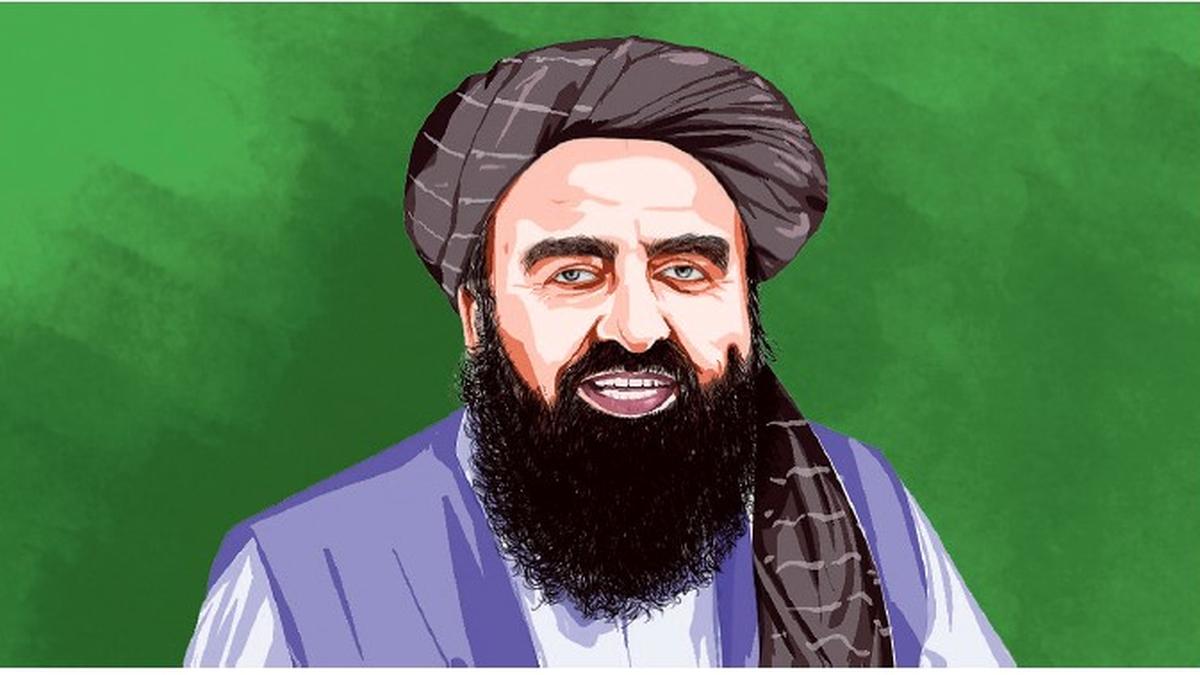
Amir Khan Muttaqi: The Negotiator Steering Afghanistan Through a Turbulent Era
(Published October 19, 2025) – For decades, the name Amir Khan muttaqi has been interwoven with the complex narrative of Afghanistan. From a young mujahid fighting against Soviet forces to the current Foreign Minister under Taliban rule, Muttaqi’s journey embodies the nation’s tumultuous history. Understanding his background, his role within the Taliban, and the challenges he faces today is crucial to comprehending the evolving geopolitical landscape of Afghanistan and its future. This article delves into the life and career of Muttaqi,examining his influence,negotiating prowess,and the formidable obstacles he confronts in seeking international recognition for the Taliban government.
From Refugee Camps to the Front Lines: A formative Journey
Muttaqi’s story begins in Helmand province, where he was born before the Soviet intervention of 1979. Forced to flee his home alongside countless other Afghans, his family sought refuge in the burgeoning refugee camps near Peshawar, Pakistan. These camps weren’t merely places of shelter; they became breeding grounds for resistance. It was here, as a teenager, that Muttaqi joined the anti-soviet jihad, a conflict heavily funded by the CIA and strategically guided by Pakistan’s Inter-Services Intelligence (ISI).
This period proved pivotal. Beyond the battlefield, Muttaqi acquired fluency in Urdu, a skill he continues to leverage in diplomatic engagements with both Pakistani and Indian officials. the Peshawar camps were also a hotbed of political factions, with seven key parties – including those led by figures like Gulbuddin Hekmatyar, Burhanuddin Rabbani, and Abdul Rasul sayyaf – vying for influence. Notably, Maulana mohammad Nabi Mohammadi and Mohammed yunus khalis, leaders within these groups, would later become staunch supporters of the Taliban’s emergence in the 1990s.
Muttaqi aligned himself with Maulana Mohammadi’s Islamic Revolutionary Movement of Afghanistan, an institution that also nurtured future Taliban leaders, most prominently Mullah Omar, the group’s founder. A common thread connected these figures: a shared educational foundation rooted in the Deoband Islamic seminary tradition in India. Muttaqi himself reverently refers to darul Uloom Deoband as his “Madar e Ilmi” – his mother of knowledge – highlighting the profound influence of this institution on his worldview and the ideological underpinnings of the Taliban.
A veteran of Conflict and a Master Negotiator
Muttaqi’s rise within the Taliban wasn’t solely based on ideological alignment. He quickly distinguished himself as a skilled negotiator, a role entrusted to him by Mullah Omar himself. This talent proved invaluable as the taliban seized power in 1996 amidst a chaotic power vacuum. Muttaqi served as Minister of Information and Culture and the chief spokesperson for the regime, navigating the complexities of governing a war-torn nation.
When the U.S.-led intervention began in 2001 following the 9/11 attacks, Muttaqi was serving as Minister of Education. He survived the ensuing years of intense conflict, a testament to his political acumen and resilience. He remained a key figure throughout the insurgency, eventually participating in the direct negotiations with the U.S. that began during the trump administration (2017-18).
His presence at the signing of the Doha agreement on February 29, 2020, alongside Mullah Abdul Ghani Baradar, marked a turning point. While the agreement was met with opposition from the then-Afghan government led by Ashraf Ghani, the Taliban leveraged it to pursue a “hybrid war” that culminated in the capture of Kabul in August 2021. Following this, Muttaqi was appointed as Afghanistan’s Foreign Minister, tasked with the monumental challenge of securing international legitimacy for the new Taliban government.
Navigating a diplomatic minefield: Challenges and Opportunities
Since assuming his role as Foreign Minister, Muttaqi has embarked on a global diplomatic tour, engaging with leaders in China, Russia, Pakistan, Qatar, Dubai, Saudi Arabia, India, and beyond. However, his mission is fraught with difficulties. the taliban’s most significant obstacle remains its controversial policies, notably the restrictions imposed on women’s education and employment. Presenting Afghanistan as a rational actor on the world stage while upholding these policies presents a constant paradox.
Despite these challenges, Muttaqi has demonstrated a capacity for prosperous negotiation. A notable example is the release of American hostage Amir Amiri in
Keep reading