El Behensa, Egypt – In a discovery hailed as unprecedented, archaeologists working in central Egypt have unearthed a fragment of Homer’s Iliad—specifically, the Catalogue of Ships from Book II—within the wrappings of a Roman-era mummy. The locate, made at a burial site near the ancient city of Oxyrhynchus (modern El Bahnasa), approximately 190 kilometers south of Cairo, offers a remarkable glimpse into the cultural landscape of Roman Egypt and the enduring influence of Greek literature.
The excavation, a joint mission undertaken by researchers from Barcelona University and the Ancient Near East Institute, has revealed a complex necropolis dating back to the Roman period. The site is yielding a wealth of information about funerary practices of the time, including insights into beliefs surrounding the afterlife. “This discovery underscores the continued importance of Egypt as a crossroads of cultures in antiquity,” stated Dr. Maite Mascort, a project director, in a statement released by the Egyptian Ministry of Tourism and Antiquities. The find highlights how ancient texts were sometimes repurposed during burial rituals, a practice documented in written sources but rarely observed with such clarity.
A Mummy’s Literary Companion
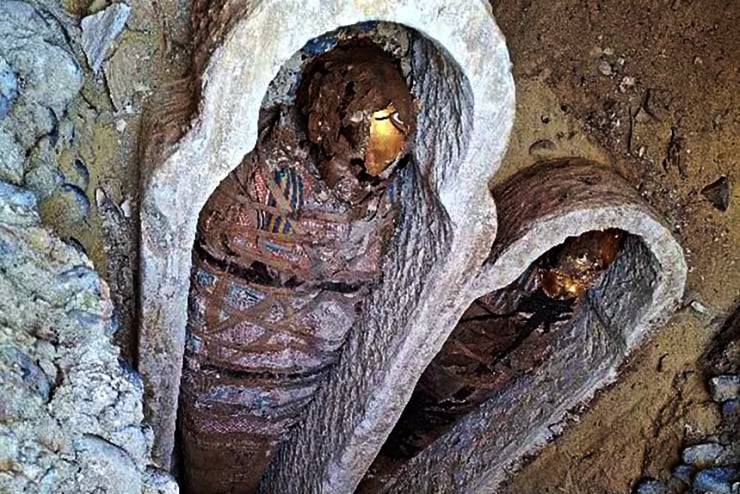
The papyrus fragment was discovered nestled within the linen wrappings of a mummy unearthed from “Tomb 65,” a subterranean burial chamber that had previously been disturbed by looting. The tomb contained multiple mummies, some still encased in wooden coffins adorned with geometric patterns and vibrant colors. Alongside the mummies, archaeologists uncovered a diverse collection of funerary objects, including metal artifacts – three delicate gold foils and one copper piece – and brightly colored wooden sarcophagi. These objects, according to researchers, were intended to guide the deceased in the afterlife, reflecting typical Greco-Roman funerary traditions.

Perhaps the most striking finds prior to the papyrus discovery were small, gold tongues placed within the mouths of some of the mummies, alongside a single copper tongue. Archaeologists theorize these objects relate to the belief in post-mortem speech, a practice described in ancient texts but seldom found in such a tangible form. The presence of gold leaf on some of the mummies suggests a meticulous preparation of the body for its journey into the afterlife.
The Iliad in Roman Egypt
The papyrus fragment itself contains verses from the Catalogue of Ships, a section of the Iliad that lists the Greek forces assembled for the Trojan War. This section, found within the mummy’s wrappings, provides compelling evidence of the continued circulation and appreciation of Greek literature within Roman Egypt. “The presence of this text within a burial context is particularly significant,” explained Professor Hassan Amer of Cairo University, “as it demonstrates the integration of Egyptian funerary traditions with Hellenistic and Roman Mediterranean influences.”

The discovery is particularly noteworthy given the site’s history. Oxyrhynchus, in Roman times, was a major administrative and cultural center. The area has long been known for its rich archaeological potential, yielding numerous papyrus fragments that have shed light on various aspects of ancient life. However, the finding of a literary text within a mummy’s wrappings represents a unique and unexpected discovery. The Egyptian Ministry of Tourism and Antiquities has released images of the papyrus fragment and the associated artifacts, showcasing the meticulous perform of the archaeological team. Images of the discovery can be viewed on Arkeofili.com.
Significance for Homeric Studies
While the fragment is relatively small, scholars believe it could offer valuable insights into the transmission and reception of Homeric texts in the Roman period. The Catalogue of Ships, in particular, is a complex and often debated section of the Iliad, and any new evidence relating to its textual history is of considerable interest to Homeric scholars. The discovery also raises questions about the literacy levels of the population in Roman Egypt and the extent to which Greek literature was accessible to different social classes.
The archaeological team is currently conducting further analysis of the papyrus fragment, including detailed examination of the script and the materials used. They hope to determine the precise date of the fragment and to identify any unique features that might shed light on its origins and its role within the broader context of Roman Egyptian culture. The ongoing excavations at El Bahnasa are expected to yield further discoveries in the coming months, potentially revealing even more about the rich and complex history of this ancient site.
Beyond the Iliad: Other Finds at El Bahnasa
The excavation at El Bahnasa has not been limited to the discovery of the Iliad fragment. Archaeologists have also uncovered a variety of other artifacts that provide valuable insights into the daily life and religious beliefs of the people who lived in Roman Egypt. These include pottery, tools, jewelry, and religious figurines. The presence of these objects, alongside the more elaborate funerary offerings, suggests a diverse and vibrant community that embraced both Egyptian and Roman traditions.
The discovery of the burial site itself is significant, as it provides a new opportunity to study the evolution of funerary practices in Roman Egypt. The layout of the tombs, the types of materials used in their construction, and the objects placed within them all offer clues about the social status, religious beliefs, and cultural affiliations of the individuals who were buried there. The ongoing research at El Bahnasa is expected to contribute significantly to our understanding of this fascinating period in Egyptian history.
Key Takeaways
- A fragment of Homer’s Iliad, specifically the Catalogue of Ships, has been discovered within the wrappings of a Roman-era mummy in Egypt.
- The discovery was made at a burial site near the ancient city of Oxyrhynchus (El Bahnasa) by a joint Egyptian-Spanish archaeological team.
- The find provides evidence of the continued circulation and appreciation of Greek literature in Roman Egypt.
- The presence of gold tongues in the mouths of some mummies suggests a belief in post-mortem speech.
- Ongoing excavations at El Bahnasa are expected to yield further discoveries about the region’s rich history.
The archaeological team plans to continue its excavations at El Bahnasa in the coming months, with a focus on exploring other areas of the necropolis. They hope to uncover additional tombs and artifacts that will further illuminate the history and culture of Roman Egypt. The Egyptian Ministry of Tourism and Antiquities has announced that it will be providing regular updates on the progress of the excavations. Further analysis of the papyrus fragment is expected to be completed by the conclude of 2026, with the results published in academic journals. The discovery serves as a potent reminder of the enduring power of literature and the interconnectedness of cultures in the ancient world.
If you are interested in learning more about the ongoing excavations at El Bahnasa, you can follow the updates provided by the Egyptian Ministry of Tourism and Antiquities. We encourage you to share this article with anyone who might be interested in this remarkable archaeological discovery.