
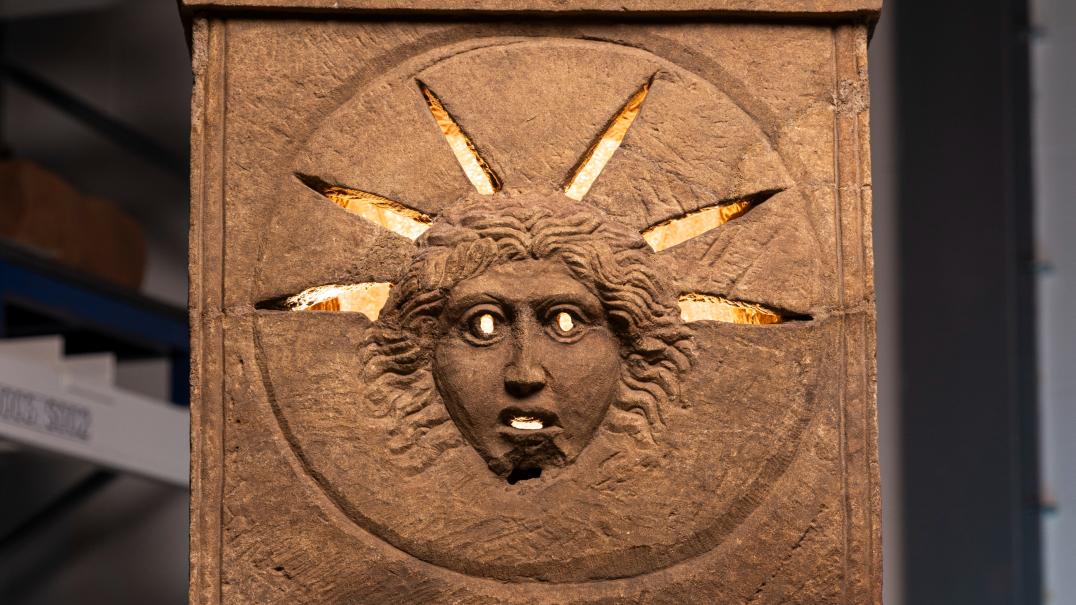
Rare 1,900-Year-Old Altar to Sol Discovered in Underground Roman Sanctuary
Archaeologists in Germany have uncovered a remarkably preserved stone altar dedicated to Sol, the ancient Roman god of the sun, believed to have been used in secret nocturnal rituals nearly two millennia ago. The artifact, found during excavations near the former Roman settlement of Augusta Treverorum—modern-day Trier—dates to the early 2nd century CE and features intricate carvings depicting solar imagery and symbolic triumphs of light over darkness. Experts say the discovery offers rare insight into private religious practices within the Roman Empire, particularly the clandestine worship of solar deities that coexisted with official state cults.
The altar, made of local sandstone and measuring approximately 80 centimeters in height, was unearthed beneath a collapsed domestic structure in Trier’s southern district. Unlike public temples dedicated to Jupiter or Mars, this monument appears to have been part of a domestic or semi-subterranean shrine, accessible only through a narrow entrance. Its iconography includes a radiate crown, a common attribute of Sol, alongside motifs of chariots and rays—symbols traditionally associated with the sun’s daily journey across the heavens. According to Dr. Lena Weber, lead archaeologist from the Rheinisches Landesmuseum Trier, the context suggests the altar was used in intimate, possibly initiatory rites conducted away from public view.
The worship of Sol evolved significantly during the Roman Imperial period, culminating in the promotion of Sol Invictus (“Unconquered Sun”) as a supreme deity under emperors like Aurelian in the 3rd century CE. However, evidence of earlier, more private devotion to solar gods—such as the altar found in Trier—indicates that such beliefs had deep roots in local and household religious life long before imperial endorsement. Similar altars have been found in Pompeii and along the Danube frontier, but few are as well-preserved or clearly linked to subterranean ritual spaces.
Secret Rites and the Underground Sanctuary
Excavation teams noted signs of repeated apply, including soot deposits on the altar’s surface and arranged fragments of ceramic lamps nearby, suggesting the space was illuminated artificially during ceremonies. Soil analysis also revealed traces of burnt barley and honey—substances mentioned in classical sources as offerings to solar deities. While no written inscriptions were found on the altar itself, its placement and associated artifacts align with descriptions of mystery cults that emphasized personal revelation, cosmic order, and the cyclical renewal of light.
Dr. Weber explained that such underground sanctuaries were not uncommon in the Roman world, particularly among groups seeking spiritual experiences beyond the formal civic religion. “These spaces allowed for flexibility in worship,” she said in a recent interview. “Individuals or small communities could adapt traditional symbols to their own beliefs, especially during times of social or political change.” The altar’s concealment beneath a residential building may reflect either precaution against suspicion or a desire for intimacy in ritual practice.
No evidence suggests the site was associated with any prohibited or subversive group. rather, it appears to have been a private expression of piety within the broader pluralistic religious landscape of Roman Gaul. The Rhineland, where Trier was a major administrative center, was known for its cultural blending of Celtic, Germanic, and Roman traditions—an environment where localized adaptations of state gods were both common and tolerated.
Archaeological Significance and Ongoing Research
The altar is now undergoing conservation at the Rheinisches Landesmuseum Trier, where it will be studied using non-invasive techniques such as 3D laser scanning and portable X-ray fluorescence to analyze tool marks and pigment residues. Researchers hope to determine whether the carvings were originally painted, as many Roman monuments were, and to identify the quarry source of the stone, which could shed light on trade or labor networks involved in its creation.
While no immediate plans for public display have been announced, museum officials indicate the altar may feature in a future exhibition on private religion in the Roman provinces. A peer-reviewed paper detailing the locate is expected to be submitted to the Journal of Roman Archaeology later this year, according to the museum’s research office. Until then, the discovery remains under active study, with scholars emphasizing the importance of context in interpreting such artifacts.
This find adds to a growing body of evidence that Roman religious life was far more diverse and experimentally varied than official records suggest. From household lararia to Mithraea tucked beneath barracks, the empire’s spiritual landscape included countless localized expressions of faith—many of which, like this altar to Sol, operated quietly beneath the surface of public life.
As research continues, the altar stands as a silent testament to the enduring human fascination with light, renewal, and the unseen forces that shape our world—beliefs that, though expressed in ancient stone, still resonate across centuries.
For updates on this and other archaeological discoveries in Germany, follow the Rheinisches Landesmuseum Trier’s official publications and exhibition announcements.