
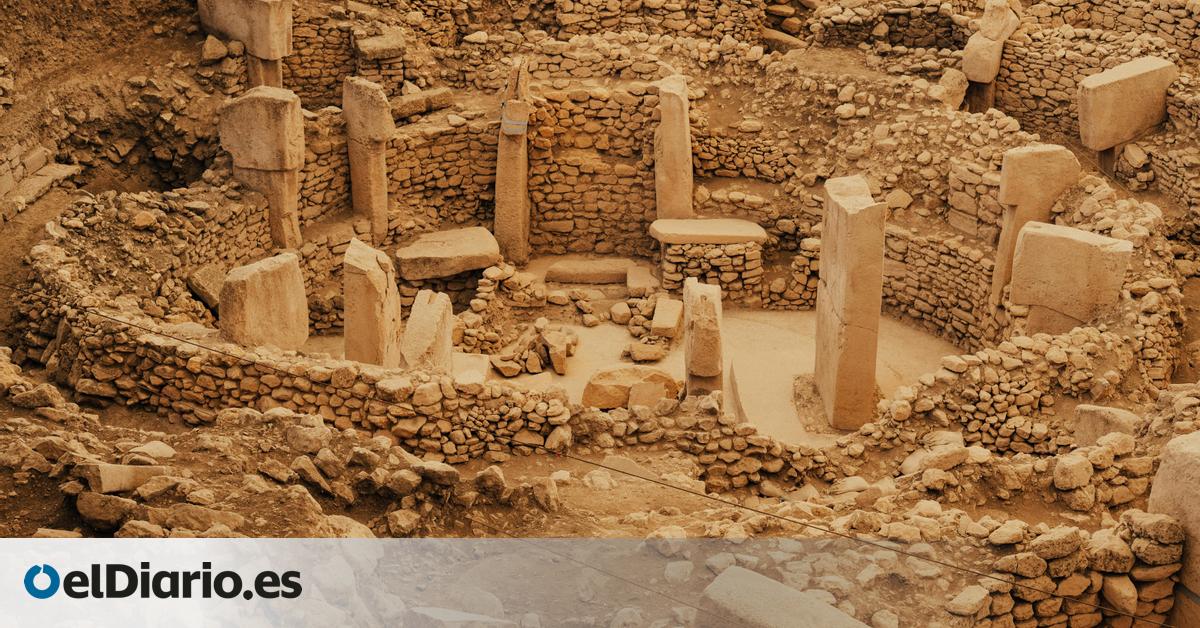
In the rolling hills of southeastern Turkey, near the city of Şanlıurfa, lies an archaeological site that has rewritten the story of human civilization. Göbekli Tepe, often described as the world’s oldest known temple complex, dates back to approximately 9500 BCE, predating Stonehenge by more than 6,000 years and the invention of pottery. This remarkable discovery challenges long-held assumptions about the capabilities of hunter-gatherer societies and offers profound insights into the spiritual and social lives of Neolithic peoples.
First identified in 1963 during a surface survey conducted by Istanbul and Chicago Universities, the site remained largely unexplored until German archaeologist Klaus Schmidt began systematic excavations in 1995. What he uncovered was extraordinary: massive T-shaped limestone pillars, some reaching up to 5.5 meters in height and weighing several tons, arranged in circular enclosures. Many of these pillars are intricately carved with reliefs of animals such as foxes, lions, bulls, and scorpions, as well as abstract human-like figures, suggesting a complex symbolic world.
Today, Göbekli Tepe is not only a focal point of academic research but likewise an accessible destination for visitors from around the world. Located about 12 kilometers northeast of Şanlıurfa’s city center, the site is open year-round, weather permitting, and managed by the Turkish Ministry of Culture, and Tourism. Visitors can walk along elevated metal walkways that provide clear views of the excavated enclosures while protecting the fragile megaliths from environmental damage. Bilingual information panels in Turkish and English explain the significance of each structure, and a modern visitor center offers exhibits, a café, and a shop.
To reach Göbekli Tepe, travelers can drive or take a taxi from Şanlıurfa, a journey of roughly 20 minutes along a well-signposted paved road. Free parking is available at the visitor center. For those seeking a deeper understanding, guided tours led by archaeologists are offered through organizations such as Serendipity Tours, which specialize in small-group visits to Göbekli Tepe and nearby sites like Karahantepe. The Turkish Museum Pass (Müzekart) is accepted at the site, providing access to numerous cultural landmarks across the country.
The site’s outstanding universal value was formally recognized in 2018 when UNESCO inscribed Göbekli Tepe as a World Heritage Site during its 42nd session. It meets criteria (i), (ii), and (iv), representing a masterpiece of human creative genius, exhibiting crucial interchanges of human values over time, and being an outstanding example of a type of architectural ensemble that illustrates a significant stage in human history. The designation underscores its importance not just to Turkey, but to the shared heritage of humanity.
What Makes Göbekli Tepe Revolutionary?
For decades, scholars believed that complex religious architecture and large-scale cooperation only emerged after the advent of agriculture and settled farming communities. Göbekli Tepe overturns this timeline. Built during the Pre-Pottery Neolithic period, when humans were still primarily hunter-gatherers, the site implies that ritual and communal gathering may have been a catalyst for sedentism — rather than a result of it. As Klaus Schmidt famously proposed, “First came the temple, then the city.”
The scale of labor required to quarry, transport, and erect the multi-ton pillars suggests a level of social organization previously thought impossible for mobile groups. Some researchers estimate that hundreds of individuals would have been needed to complete a single enclosure, pointing to the existence of emerging hierarchies or coordinated labor systems. The presence of domesticated plant remains in later layers has fueled debate over whether cultivation began at or near the site, possibly driven by the need to feed those involved in construction.
Animal carvings on the pillars are not merely decorative; they may represent totemic symbols, constellations, or deities. Notably, the absence of depictions of domesticated animals or agricultural tools reinforces the interpretation that the site was used by foraging communities. Over time, the enclosures were deliberately buried under tons of debris — possibly as an act of ritual closure — which inadvertently preserved them in remarkable condition for millennia.
Visiting Göbekli Tepe: Practical Information
The site is open daily from 8:00 AM, with closing times varying between 5:00 PM in winter and 7:00 PM in summer. Admission fees are set by the Turkish Ministry of Culture and Tourism and may change, so visitors are advised to check the official muze.gov.tr website or contact the Şanlıurfa Museum directly for the most current information. The visitor center, located just outside the main excavation area, includes sheltered viewing platforms, restrooms, and a small museum displaying artifacts recovered from the site.
Due to the fragile nature of the carvings, direct contact with the pillars is prohibited. The elevated walkways ensure visibility while minimizing risk of erosion or damage. Photography is permitted for personal use, though tripods and professional equipment may require special authorization. The site is partially accessible to visitors with mobility challenges, though the terrain includes inclines and gravel paths.
Şanlıurfa itself offers rich cultural experiences that complement a visit to Göbekli Tepe. Known as the “City of Prophets,” it is believed by many to be the birthplace of Abraham and features landmarks such as the Pool of Sacred Fish (Balıklıgöl) and the Şanlıurfa Archaeology Museum, which houses numerous artifacts from Göbekli Tepe and other regional excavations. The city’s vibrant bazaars and traditional cuisine — including dishes like çiğ köfet and lahmacun — provide a welcoming base for travelers exploring the region.
Ongoing Research and Discoveries
Excavations at Göbekli Tepe continue under the leadership of Necmi Karul and Lee Clare, who succeeded Klaus Schmidt after his passing in 2014. Recent work has focused on understanding the site’s broader landscape, including the discovery of similar but younger structures at Karahantepe, located about 35 kilometers to the east. Karahantepe, also dating to the Pre-Pottery Neolithic, features striking carvings of human heads and phallic symbols, suggesting regional variations in ritual practice.

Advances in technology, such as ground-penetrating radar and 3D modeling, are helping archaeologists map unexcavated areas without disturbing the soil. These tools have revealed that the Göbekli Tepe tell covers approximately 8 hectares (20 acres), with many more enclosures likely buried beneath the surface. International collaboration remains central to the project, with teams from Turkey, Germany, the United States, and other countries contributing expertise in archaeology, anthropology, and conservation.
As research progresses, Göbekli Tepe continues to challenge and inspire. It stands as a testament to the ingenuity and spiritual depth of early human societies — a place where stone speaks across millennia, reminding us that the urge to build, to believe, and to belong is deeply rooted in our shared past.
Whether you are a history enthusiast, a curious traveler, or someone seeking to understand the origins of civilization, a visit to Göbekli Tepe offers a rare opportunity to stand where some of humanity’s earliest monumental efforts took shape. In a world of rapid change, this ancient hill in southeastern Turkey invites reflection on what has endured — and what it means to be human.
For the latest updates on visiting hours, ticket prices, or ongoing excavations, consult the official Turkish Ministry of Culture and Tourism portal or the UNESCO World Heritage Centre website. If you’ve visited Göbekli Tepe or have questions about the site, we welcome your thoughts and experiences in the comments below. Please share this article with others who might appreciate learning about one of the world’s most extraordinary archaeological treasures.