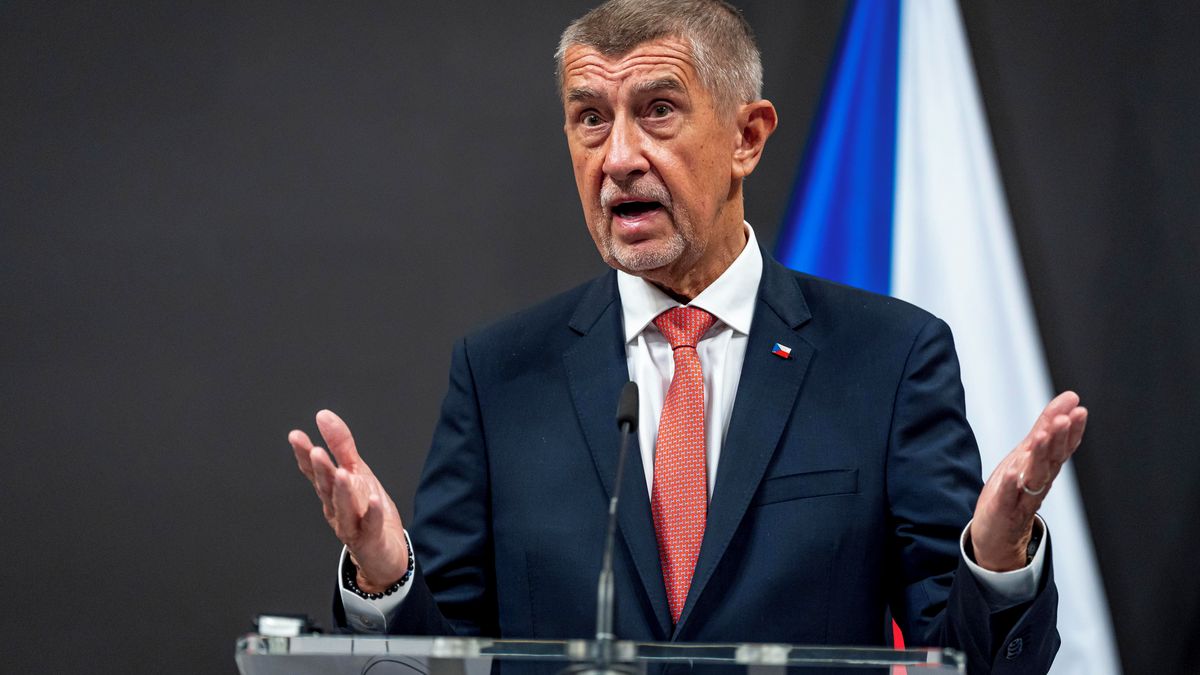
Andrej Babiš, the former Czech prime minister and leader of the ANO party, has reiterated his rejection of value-based foreign policy in favour of a pragmatic approach focused on national interests. Speaking at a public forum in Prague, Babiš argued that Czech foreign policy should prioritize economic cooperation and security pragmatism over ideological alignment, particularly in relations with major powers such as China and Russia. His remarks come amid ongoing debate over the direction of Czech international engagement under the current Petr Fiala-led government, which has emphasized solidarity with NATO and the European Union on democratic values and human rights.
Babiš’s stance reflects a broader divergence in Czech political discourse regarding the country’s role in Western alliances. Even as the Fiala administration has supported increased defence spending in line with NATO commitments and backed sanctions against Russia following its invasion of Ukraine, Babiš has questioned the wisdom of such policies, suggesting they may harm Czech economic interests without delivering proportional security benefits. He has previously advocated for maintaining dialogue with Moscow and Beijing, arguing that ideological rigidity limits diplomatic flexibility.
The former prime minister’s comments were made during a discussion on national sovereignty and foreign policy strategy, where he criticized what he described as the “moralising tendencies” of current Czech leadership. Babiš contended that compact states like the Czech Republic should avoid becoming entangled in great power conflicts driven by ideological crusades, instead focusing on trade, investment, and energy security. He did not specify which values he objected to, but his rhetoric has consistently opposed what he frames as Western moral interventionism in foreign affairs.
Analysts note that Babiš’s position resonates with segments of the electorate concerned about the economic costs of supporting Ukraine and adhering to strict EU and NATO positions. However, his views have drawn criticism from foreign policy experts who argue that abandoning value-based diplomacy undermines the Czech Republic’s credibility within Western institutions and risks isolating the country diplomatically. They emphasize that values such as democracy, rule of law, and human rights are not merely ideological preferences but foundational to the security architecture of the Euro-Atlantic community.
Despite his opposition to the current government’s foreign policy direction, Babiš has not outlined a detailed alternative strategy beyond calling for greater pragmatism. His remarks come at a time when Czech defence policy is under scrutiny following a NATO inspection in Prague that highlighted shortcomings in military readiness and defence spending. The alliance has urged member states to meet the 2% of GDP benchmark for defence expenditure, a target the Czech Republic has repeatedly missed in recent years.
According to data from NATO’s annual defence investment report, the Czech Republic allocated approximately 1.4% of its GDP to defence in 2023, well below the alliance guideline. While the Fiala government has pledged to increase defence spending gradually, Babiš has questioned whether such increases are necessary or wise, suggesting that funds could be better used domestically. He has not, however, proposed specific cuts or reallocations to social programmes or infrastructure.
The debate over Czech foreign policy reflects a wider trend across Central Europe, where populist leaders have challenged the post-1989 consensus on liberal internationalism. In Hungary and Slovakia, similar arguments have gained traction, with leaders advocating for “strategic autonomy” and criticizing what they perceive as Western overreach. Babiš’s positioning aligns him with this sceptical current, though he stops short of endorsing the outright rejection of NATO or EU membership seen in some more radical voices.
Internationally, the Czech Republic remains a committed member of both NATO and the EU, contributing to various missions and participating in joint defence initiatives. Prague hosts the NATO Communications and Information Agency and has supported enhanced forward presence in the Baltic region. Despite periodic rhetoric questioning alliance cohesion, no major Czech political party currently advocates withdrawal from either organization.
As the country prepares for upcoming European Parliament elections and continues to navigate energy security challenges following the reduction of Russian gas supplies, the tension between ideological commitment and pragmatic calculation in foreign policy is likely to remain a defining feature of Czech politics. Babiš’s continued emphasis on pragmatism over principles ensures that this debate will persist, shaping how the Czech Republic defines its role in a rapidly changing global order.
For readers seeking official updates on Czech defence spending and NATO commitments, the Ministry of Defence of the Czech Republic publishes annual reports and budgetary details on its website. NATO also provides transparent data on member states’ defence investments through its public dashboard, allowing for independent verification of claims regarding compliance with the 2% guideline.
We invite our readers to share their perspectives on the balance between values and pragmatism in foreign policy. How should small states like the Czech Republic navigate competing pressures from allies, economic partners, and domestic constituencies? Join the conversation in the comments below and assist us explore what effective, sustainable foreign policy looks like in the 21st century.
Worth a look