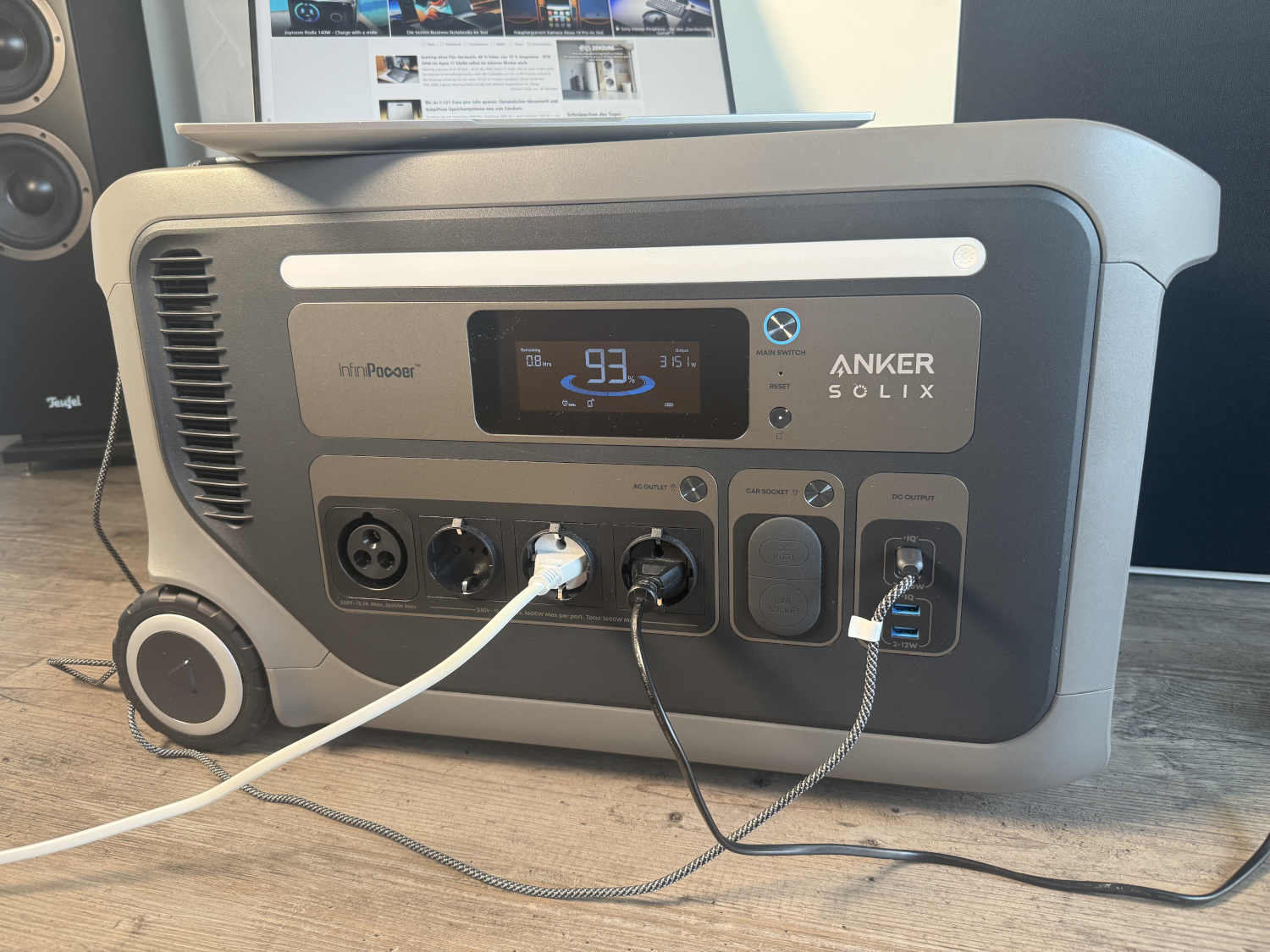
As climate change fuels more frequent and intense power outages, homeowners are increasingly turning to battery backup systems to maintain essential services. The Anker Solix F3000, a portable power station boasting 3,072Wh of capacity and 3,600W of output, aims to provide a robust solution for those seeking reliable home backup power. But does it live up to the hype? This review delves into the capabilities, efficiency, and overall value proposition of the Anker Solix F3000, examining its performance and suitability for a range of needs.
The demand for home energy storage is surging, driven not only by extreme weather events but also by a desire for energy independence and cost savings. Systems like the Anker Solix F3000 allow users to store energy from the grid during off-peak hours or from renewable sources like solar panels, providing a buffer against outages and potentially reducing electricity bills. Anker, a well-known consumer electronics brand, entered the home energy market with the Solix line, positioning itself as a competitor to established players like Tesla and EcoFlow. The F3000 represents a significant offering in this growing sector, promising a blend of power, portability, and ease of use.
Quiet Operation and UPS Functionality
One of the standout features of the Anker Solix F3000 is its remarkably quiet operation. Even under a substantial 3,000W AC load, the unit operates at around 35 dB when measured from a distance of one meter, making it barely noticeable. This is a significant advantage over traditional gas-powered generators, which can be disruptive and noisy. The F3000 incorporates an uninterruptible power supply (UPS) function, which seamlessly switches to battery power in the event of a grid failure. This ensures that sensitive electronics, such as computers and medical devices, remain powered without interruption, preventing data loss or equipment damage.
Efficiency Under Scrutiny: Load-Dependent Performance
While the Anker Solix F3000 excels in quiet operation and UPS functionality, its efficiency isn’t uniformly strong across all load levels. Testing revealed that at a constant draw of 200W, approximately 2,500Wh of the 3,072Wh capacity was available – an 81% efficiency. While this is a respectable figure for a low load, it falls short of some competitors, such as the Aferiy P280, which demonstrated higher efficiency in similar tests. Notebookcheck’s review of the Aferiy P280 highlights this comparative difference in low-load performance. However, the F3000’s efficiency improves significantly as the load increases. At a continuous draw of 1,800W, nearly 2,800Wh was delivered, translating to a very good 91% efficiency. This suggests the unit is best suited for powering higher-demand appliances during outages.
Charging Speed and Solar Integration
The Anker Solix F3000 offers impressive charging speeds. Utilizing AC charging, a full recharge can be achieved in approximately 1 hour and 20 minutes, thanks to a charging rate of up to 2,992W. During testing, 3,480Wh was used to fully charge the battery, indicating an 88% energy transfer efficiency from AC to DC – the remaining 12% lost as heat during the conversion process. The F3000 also supports dual-voltage solar input (60V & 165V) with a maximum input of 2,400W, making it compatible with a wide range of solar panels. According to Anker Solix, this allows for flexible solar recharging options, maximizing energy harvesting potential. However, a full-power solar charging test couldn’t be completed in winter conditions in Hamburg, Germany, as noted in the initial testing.
Capacity and Runtime: Powering Through Outages
The 3,072Wh capacity of the Anker Solix F3000 provides substantial runtime for essential appliances. Anker estimates the following approximate runtimes:
- LED Light (10 x 100W): 76 hours
- Window Air Conditioner (820W): 12.8 hours
- Fans (75W): 98 hours
- Refrigerator (190W): 168 hours
- Microwave (700W): 15.2 hours
- Sump Pump (370W): 27.2 hours
- Space Heater (1,500W): 7.2 hours
These estimates are based on a US household’s average daily electricity consumption of approximately 3kWh. Expanding capacity is also possible with Anker Solix expansion batteries. Combining one F3000 with three expansion batteries yields 12kWh of total capacity, while two F3000 units paired with six expansion batteries provide a substantial 24kWh.
Beyond Backup: Reducing Electricity Bills
The Anker Solix F3000 isn’t solely a backup power solution. it can also be used to reduce monthly electricity bills. By integrating the optional Bi-Directional Inlet Box and Smart Meter (sold separately), users can store free solar energy or low-cost off-peak electricity for later use. As highlighted on Amazon, this feature allows for strategic energy management, minimizing reliance on expensive peak-hour electricity.
Cost and Availability
The Anker Solix F3000 is currently available for purchase through Anker’s website and Amazon. As of February 20, 2026, the unit is priced at approximately $3,499. Expansion batteries are sold separately, adding to the overall system cost. Best Buy also carries the F3000, offering price matching guarantees.
Key Takeaways
- Quiet and Efficient: The Anker Solix F3000 operates quietly and provides a UPS function for uninterrupted power.
- Load-Dependent Efficiency: Efficiency is higher at higher loads, making it ideal for powering demanding appliances.
- Fast Charging: AC charging takes approximately 1 hour and 20 minutes.
- Solar Ready: Supports dual-voltage solar input for flexible renewable energy integration.
- Expandable Capacity: Capacity can be increased with optional expansion batteries.
The Anker Solix F3000 represents a compelling option for homeowners seeking a reliable and versatile home backup power solution. While its efficiency at lower loads could be improved, its quiet operation, fast charging, and expandable capacity make it a strong contender in the growing market for home energy storage. Anker continues to release firmware updates and expand the Solix ecosystem, suggesting ongoing commitment to improving the user experience and functionality of its products. The next step for Anker will be to further refine the efficiency of the F3000 across all load ranges and to integrate more seamlessly with smart home energy management systems.
Do you have experience with home battery backup systems? Share your thoughts and questions in the comments below. And please share this article with anyone who might find it helpful!
Keep reading