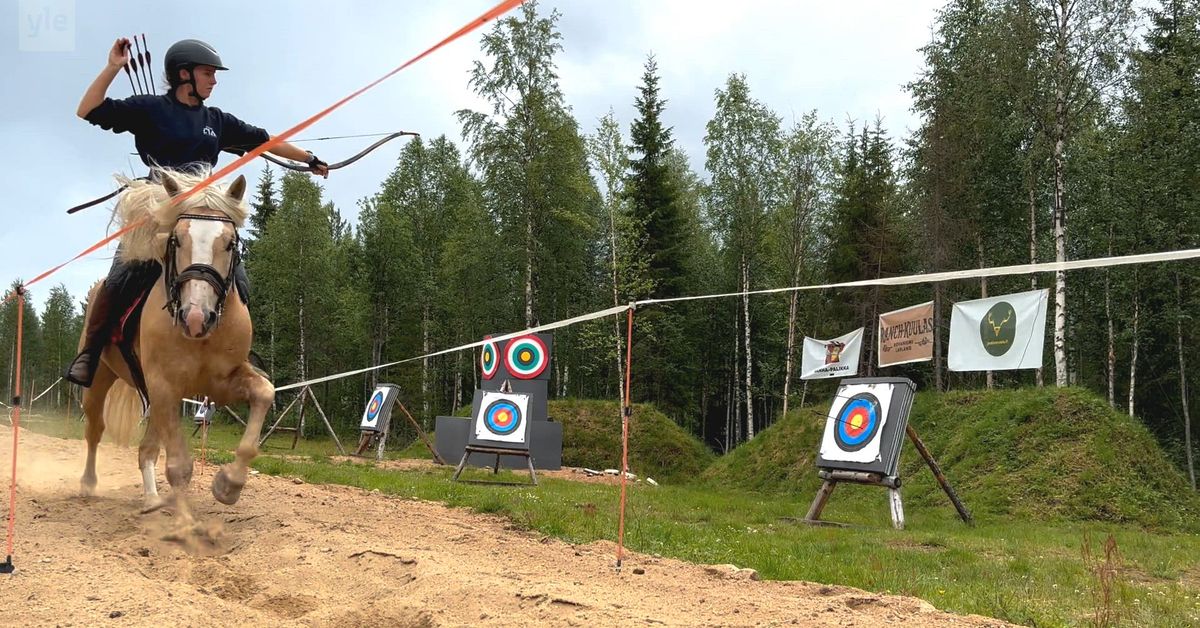
Anni Jauhiainen, a Finnish athlete who transitioned from a high school graduate to an international competitor, is currently preparing for the upcoming World Championships in horseback archery. Her journey from leaving home shortly after her secondary education to becoming a specialized equestrian athlete highlights the rigorous physical and mental demands of a niche sport that combines traditional archery with high-speed horsemanship.
The pursuit of a world championship medal represents the latest milestone in Jauhiainen’s career, which has seen her travel extensively to train and compete. Horseback archery, a discipline recognized by the International Horseback Archery Alliance (IHAA), requires riders to navigate a track at a gallop while shooting arrows at targets with precision. Success in this sport necessitates not only mastery of archery techniques but also an advanced level of horsemanship, as the rider must maintain control of the animal while focusing on the target.
The Path to International Competition
Jauhiainen’s entry into competitive horseback archery followed a period of international exploration after her graduation from high school. Moving abroad provided her with the opportunity to immerse herself in equestrian cultures where the sport is more established. According to records from the Finnish Equestrian Federation (Suomen Ratsastajainliitto), the sport has seen a gradual increase in interest within Finland, though athletes often must travel to Central Europe or other equestrian hubs to find competitive circuits and specialized coaching.
The transition from a student to a full-time athlete involves significant logistical and financial commitments. For Jauhiainen, the decision to leave Finland was driven by the need to access facilities and trainers capable of supporting her advancement to the elite level. Horseback archery, often categorized under historical martial arts or specialized equestrian sports, depends heavily on the availability of trained horses that are desensitized to the sound and movement of bow equipment.
Technical Demands of Horseback Archery
To reach the podium at a global level, athletes like Jauhiainen must balance several distinct skill sets. The sport is governed by specific rules regarding track length, target placement, and the time allowed for the horse to complete the course. The IHAA competition rules dictate that riders must hit targets while maintaining a consistent gallop, with penalties applied for slower times or missed shots. This creates a high-pressure environment where the athlete’s ability to remain calm is as critical as their physical strength.
Training typically involves hundreds of hours of repetition. The archer must learn to use a bow—often a traditional recurve or composite bow—without the use of sights or stabilizers, relying instead on instinctive shooting. Simultaneously, the rider must use their legs and seat to steer the horse, leaving their hands free to manage the bow and arrow. This level of coordination is often developed over years of dedicated practice, a reality that Jauhiainen has navigated since choosing to pursue the sport professionally.
Future Outlook and Championship Goals
As Jauhiainen focuses on her goal of securing a World Championship medal, her schedule is defined by intensive training camps and qualifying events. The path to the World Championships is not merely about athletic performance; it involves maintaining the health and fitness of the horse, which is considered a partner in the discipline. The International Federation for Equestrian Sports (FEI) emphasizes the importance of horse welfare in all equestrian disciplines, a principle that remains central to the training regimens of professional horseback archers.
For those tracking her progress, the next major checkpoint will be the official registration and participant lists for the upcoming world-level events. While the specific dates for the next world championships are determined by the host federation’s calendar, supporters and followers of the sport can monitor official updates via the IHAA event portal. Jauhiainen’s career serves as a case study for athletes who step outside traditional sports paths to pursue highly specialized, internationally focused disciplines.
The journey from a post-high school departure to the international stage is rarely straightforward, yet it remains a common trajectory for athletes in niche sports. Jauhiainen continues to refine her technique in anticipation of her next international appearance. Readers interested in following her progress can find updates through the official channels of the Finnish Equestrian Federation or international horseback archery governing bodies. We welcome your comments on the growth of specialized equestrian sports and encourage you to share this story with those interested in the evolving landscape of international athletics.
Worth a look