
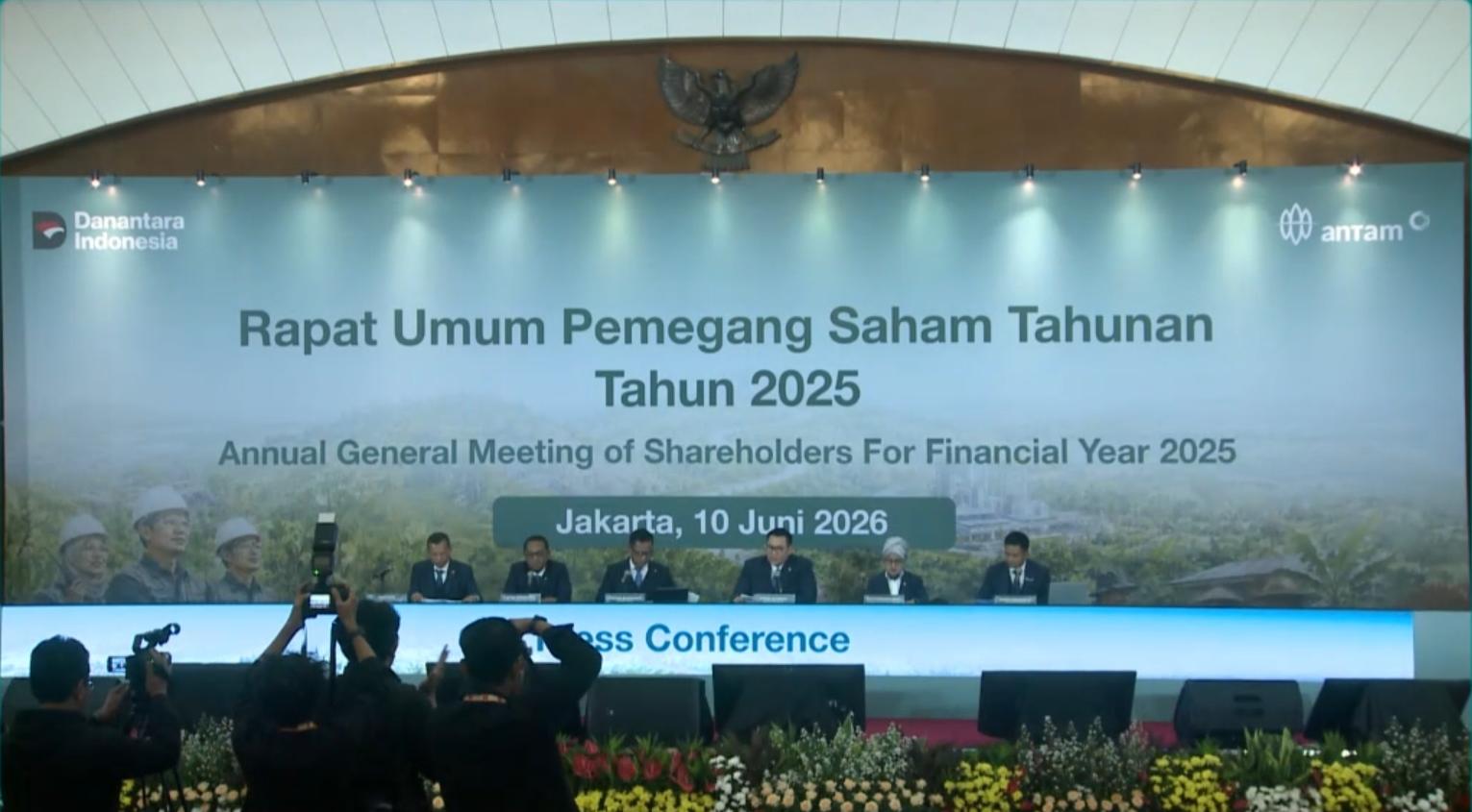
Shares of PT Aneka Tambang Tbk (ANTM) experienced significant volatility following reports that the company’s dividend payout ratio has adjusted to 70%, according to Emitennews.com. While the shift in dividend distribution contributed to a recent decline in share price, the company continues to focus on long-term capital allocation toward nickel downstreaming and electric vehicle (EV) supply chain integration.
The movement in ANTM stock comes as investors weigh immediate cash returns against the company’s massive capital expenditure requirements for industrial expansion. While the dividend ratio has seen a shift, the company’s financial trajectory remains tied to its ability to convert raw mineral assets into high-value processed products within Indonesia’s growing industrial ecosystem.
Why did the Antam (ANTM) dividend payout ratio change?
The recent adjustment in the dividend payout ratio to 70% has become a focal point for institutional and retail investors tracking the Indonesian mining sector. According to reports from Emitennews.com, this change in the ratio coincided with a period of unexpected downward pressure on the stock price.

Typically, mining companies utilize dividend payouts to reward shareholders based on commodity price cycles. However, the decision to set a specific payout ratio often reflects a balance between returning capital to investors and retaining earnings to fund internal growth. For a company like ANTM, which is a key subsidiary of the state-owned mining holding MIND ID, these decisions are heavily influenced by national strategic goals, particularly the “hilirisasi” or downstreaming policy mandated by the Indonesian government.
Despite the shift in the ratio, the scale of the distribution remains substantial. detikFinance reported that Antam has distributed dividends totaling approximately Rp 5 trillion. This massive liquidity event underscores the company’s historical capacity to generate significant cash flow from its gold, nickel, and bauxite operations, even as the percentage of profit distributed undergoes tactical adjustments.
What factors influenced the recent ANTM stock price movement?
The sudden decline in ANTM share prices has been attributed to market reactions to the updated dividend metrics and broader commodity market fluctuations. As noted by Emitennews.com, the stock saw a “jeblok” or sudden drop, a movement often seen when dividend expectations are recalibrated by the market.
Investors in the mining sector often price stocks based on “dividend yield,” which is the dividend per share divided by the share price. When the payout ratio or the dividend per share deviates from previous years, it can trigger automated sell programs or a realignment of valuation models among fund managers. In the case of ANTM, the market appears to be reacting to the interplay between these payouts and the company’s heavy reinvestment needs.
Furthermore, the volatility is compounded by the inherent price fluctuations of nickel and gold on the global market. Because ANTM’s revenue is highly sensitive to these international benchmarks, any perceived shift in the company’s ability to maintain high-margin operations can lead to rapid price corrections. This volatility is common among “blue chip” Indonesian mining stocks, which often see significant price swings despite maintaining strong balance sheets.
How is nickel downstreaming driving ANTM’s long-term outlook?
While short-term dividend ratios may fluctuate, the long-term value proposition for ANTM is increasingly centered on its role in the global energy transition. According to CNBC Indonesia, Antam is actively positioning itself to participate in major nickel downstreaming projects and the burgeoning electric vehicle (EV) battery supply chain.

Nickel downstreaming refers to the process of moving from exporting raw nickel ore to producing high-value components like Mixed Hydroxide Precipitate (MHP) or nickel sulfates, which are essential for EV battery cathodes. This shift is a cornerstone of Indonesia’s economic policy to move up the value chain and reduce reliance on raw commodity exports.
For ANTM, this strategy involves several key components:
- Industrial Integration: Partnering with domestic and international firms to build processing facilities.
- EV Supply Chain: Securing its position as a primary supplier for battery manufacturers looking to source nickel from a stable, state-backed entity.
- Value-Added Products: Transitioning from a mining-only model to a metallurgical and chemical processing model.
This strategic pivot explains why the company may adjust its dividend payout ratios. Retaining a portion of earnings is necessary to fund the massive capital expenditures (CAPEX) required to build these processing plants and technological infrastructure. Investors are essentially choosing between higher immediate dividends and higher long-term capital appreciation driven by the EV revolution.
Comparing ANTM’s earnings growth and dividend performance
To understand the current tension in the stock, it is necessary to look at the divergence between the company’s profit growth and its dividend payout structure. While the ratio has shifted, the underlying profitability of the company has shown significant upward momentum.
According to reporting from Kompas.com, ANTM’s profits have seen a massive surge, with projections suggesting a 106 percent increase for the 2025 period. This growth is expected to be driven by three primary “growth engines”: expanded nickel processing, optimized gold mining operations, and increased efficiency in the company’s alumina and bauxite segments.
The following table summarizes the current financial landscape of ANTM based on recent reporting:
| Metric | Reported Detail | Primary Source |
|---|---|---|
| Dividend Payout Ratio | 70% | Emitennews.com |
| Total Dividend Distribution | Rp 5 Trillion | detikFinance |
| Projected Profit Growth | 106% (for 2025) | Kompas.com |
| Core Strategic Focus | Nickel Downstreaming & EV | CNBC Indonesia |
This comparison highlights a critical takeaway for shareholders: the company is in a high-growth phase. The 106 percent profit surge reported by Kompas.com suggests that the company’s operational capacity is expanding rapidly, which may eventually allow for even higher absolute dividend payments, even if the payout ratio remains stabilized at 70% to fund future projects.
What happens next for ANTM investors?
The immediate focus for ANTM will be the execution of its downstreaming projects and the management of its capital allocation. As the company moves deeper into the EV supply chain, its ability to maintain high profit margins while managing the costs of industrial expansion will be the primary metric monitored by analysts.

Investors should watch for official corporate filings regarding the progress of new nickel processing facilities and any updates to the company’s capital expenditure plans. Additionally, the upcoming General Meeting of Shareholders (RUPS) will likely provide more clarity on the dividend policy for the next fiscal year and the specific allocation of retained earnings for the downstreaming initiatives.
For those tracking the Indonesian mining sector, ANTM remains a bellwether for the success of the national “hilirisasi” policy. The company’s ability to balance shareholder returns with the heavy investment required for the energy transition will determine its trajectory in the global nickel market.
For further updates on ANTM’s financial filings and upcoming shareholder meetings, please monitor the Indonesia Stock Exchange (IDX) official announcements.
What are your thoughts on Antam’s shift toward nickel downstreaming? Do you view the dividend ratio change as a risk or a strategic necessity? Let us know in the comments below and share this article with your network.