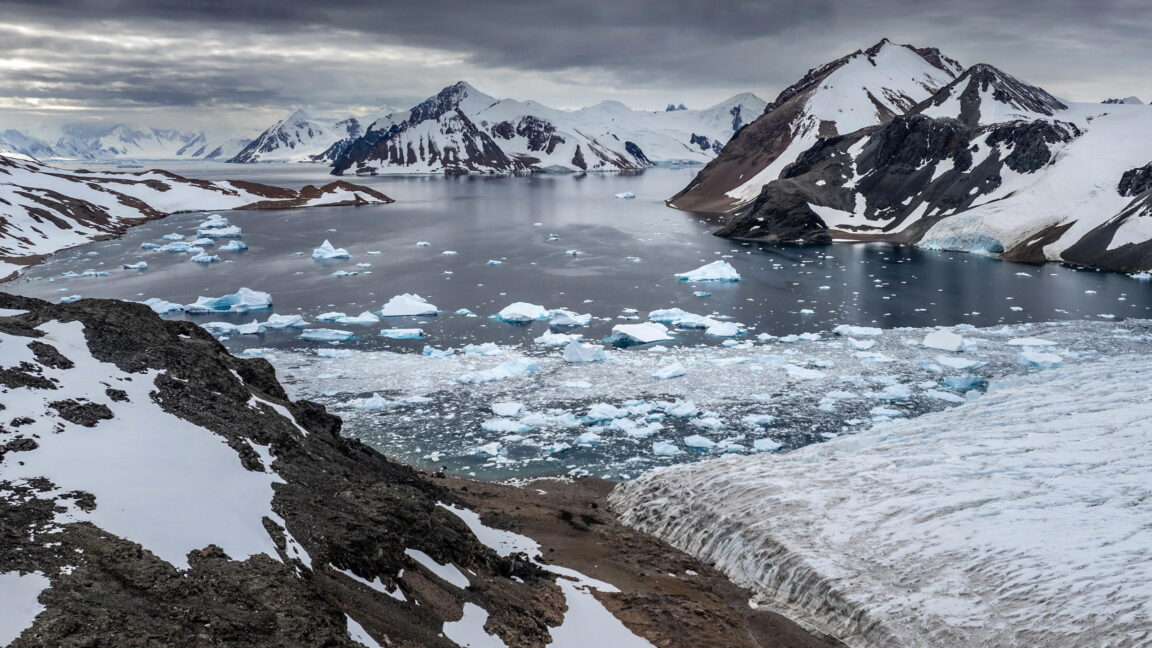
Antarctica‘s Ice Shelves: A Rapidly Changing Landscape
Antarctica, once considered immune to the swift impacts of climate change, is now revealing a startling vulnerability. Stranded remnants of sea ice along the Antarctic Peninsula serve as a potent reminder that the ice surrounding the South Pole is just as susceptible to global warming as its Arctic counterpart, where a meaningful meltdown is already well underway. You might be surprised to learn how quickly things are changing.
A Dramatic Shift in Stability
Recent summers have brought record-breaking temperatures to the region, fracturing a Rhode Island-sized ice slab with cracks and meltwater. This culminated in a near-overnight collapse of a thick,ancient ice dam. Consequently, seven major outlet glaciers behind it have accelerated their flow into the ocean, contributing to rising sea levels as they melt.
The 2002 collapse of the Larsen B ice shelf was a watershed moment for the glaciological community. Scientists were stunned by the speed of the event, unfolding in just six weeks. A series of melt streams and ponds rapidly formed,ultimately leading to the shelf shattering into countless fragments.
previously, glaciologists believed changes in Antarctica would occur over millennia. Though, this event demonstrated that extreme warming can trigger far more rapid transformations.
Understanding the Antarctic Ice Sheet
Current research is heavily focused on the edges of Antarctica, specifically where floating sea ice and narrow outlet glaciers regulate the flow of the ice cap towards the sea. Think of the Antarctic Ice Sheet as a massive reservoir, held back by a series of natural dams.
Here’s a breakdown of what’s happening:
* Ice Shelves as Dams: These floating extensions of the ice sheet act as crucial barriers.
* Outlet Glaciers: These rivers of ice drain from the interior, flowing through the ice shelves.
* Warming Impact: Rising temperatures weaken these dams, accelerating glacial flow.
The Physics of Change
The fundamental principles driving these changes are consistent across both poles. Warming temperatures lead to melting, which weakens the ice structures and accelerates the flow of glaciers into the ocean. It’s a straightforward process with profound consequences.
You may wonder why this is happening now. Glaciologists initially anticipated these changes unfolding over extended periods. However, the Larsen B collapse and subsequent events have revealed a capacity for rapid change that was previously underestimated.
This realization has spurred a new urgency in understanding the dynamics of the Antarctic Ice Sheet and predicting future sea level rise. The future of our coastlines may depend on it.