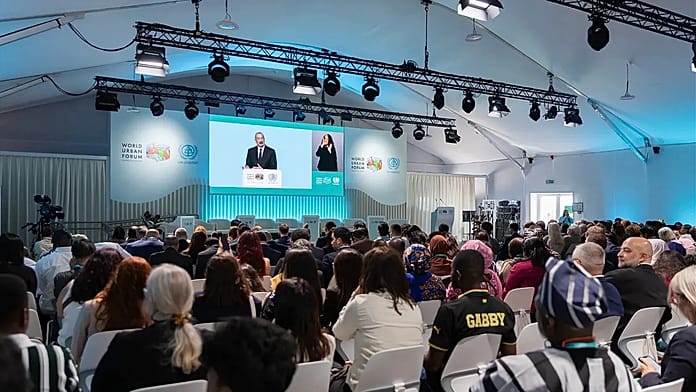
As the global community grapples with rapid urbanization and shifting economic landscapes, the United Nations has issued a stark reminder that the challenges of access to affordable living are not confined to any single region or level of development. Addressing delegates at the 12th session of the World Urban Forum in Baku, Azerbaijan, UN Secretary-General António Guterres emphasized that no society is immune to the escalating global housing crisis.
The event, which serves as the premier global conference on sustainable urbanization, has drawn thousands of participants, including policymakers, urban planners and civil society representatives. The Secretary-General’s remarks underscored the urgency of addressing housing as a fundamental human right, noting that the inability to secure adequate shelter has profound implications for social stability, public health, and economic equity across both developed and developing nations. The 12th session of the World Urban Forum (WUF12), held from November 4 to 8, 2024, focused on the theme “It All Starts at Home: Local Actions for Sustainable Cities and Communities.”
A Universal Challenge: The Scope of the Crisis
The housing crisis is increasingly characterized by a disconnect between rising real estate costs and stagnant wage growth, a trend that has accelerated in the wake of recent global economic fluctuations. Secretary-General Guterres highlighted that the lack of affordable housing is a systemic issue, often exacerbated by speculative investment, insufficient urban planning, and a failure to prioritize social infrastructure.
According to data from UN-Habitat, the agency responsible for promoting socially and environmentally sustainable towns and cities, the world faces a significant shortfall in adequate housing. This deficit is not merely a quantitative problem of supply but a qualitative one, involving access to basic services, security of tenure, and protection against forced evictions. The forum in Baku provided a platform to discuss the “Baku Declaration,” which calls for enhanced international cooperation to strengthen local governance and empower municipal authorities to implement sustainable housing policies.
Local Action and Global Responsibility
While the crisis is global, the solutions discussed at the World Urban Forum are heavily focused on the local level. Speakers at the conference emphasized that national governments must provide the legislative frameworks and financial support necessary for cities to manage land use effectively and protect vulnerable populations. The integration of climate resilience into urban planning was a recurring theme, as cities are increasingly on the front lines of both environmental hazards and population displacement.
For many urban centers, the challenge lies in balancing the need for densification with the requirement for affordable, inclusive spaces. Experts at the forum noted that successful strategies often involve a mix of public-private partnerships, land-value capture mechanisms, and robust rent stabilization policies. These discussions align with the United Nations Sustainable Development Goal 11, which aims to make cities and human settlements inclusive, safe, resilient, and sustainable by 2030.
Key Takeaways from WUF12
- Housing as a Right: Participants reaffirmed that housing is a fundamental human right, essential for the realization of other rights, including health and education.
- The Role of Local Governments: Cities are recognized as the primary actors in implementing sustainable urban development, requiring greater autonomy and financial resources.
- Climate Integration: Urban planning must prioritize climate adaptation to protect the most vulnerable residents from extreme weather events and rising temperatures.
- Inclusive Development: Addressing the housing crisis requires preventing the displacement of low-income residents and ensuring that urban growth benefits all segments of society.
Moving Forward: The Road to 2030
The deliberations in Baku concluded with a renewed commitment to the New Urban Agenda, a roadmap for sustainable urban development adopted at the UN Conference on Housing and Sustainable Urban Development (Habitat III) in 2016. As cities continue to expand, the pressure to provide infrastructure that supports sustainable livelihoods will only intensify. The UN-Habitat continues to monitor progress through its Global Urban Observatory, which provides the necessary metrics to track the effectiveness of national and local interventions.

The next major milestone for global urban policy will involve ongoing reporting on the implementation of the Sustainable Development Goals, with a particular focus on the 2030 Agenda. As the international community looks toward future forums, the central question remains whether governments can translate policy commitments into tangible improvements in the daily lives of urban residents globally.
We invite our readers to share their perspectives on urban development challenges in their own regions. How is your city addressing the demand for affordable housing? Join the conversation in the comments section below.