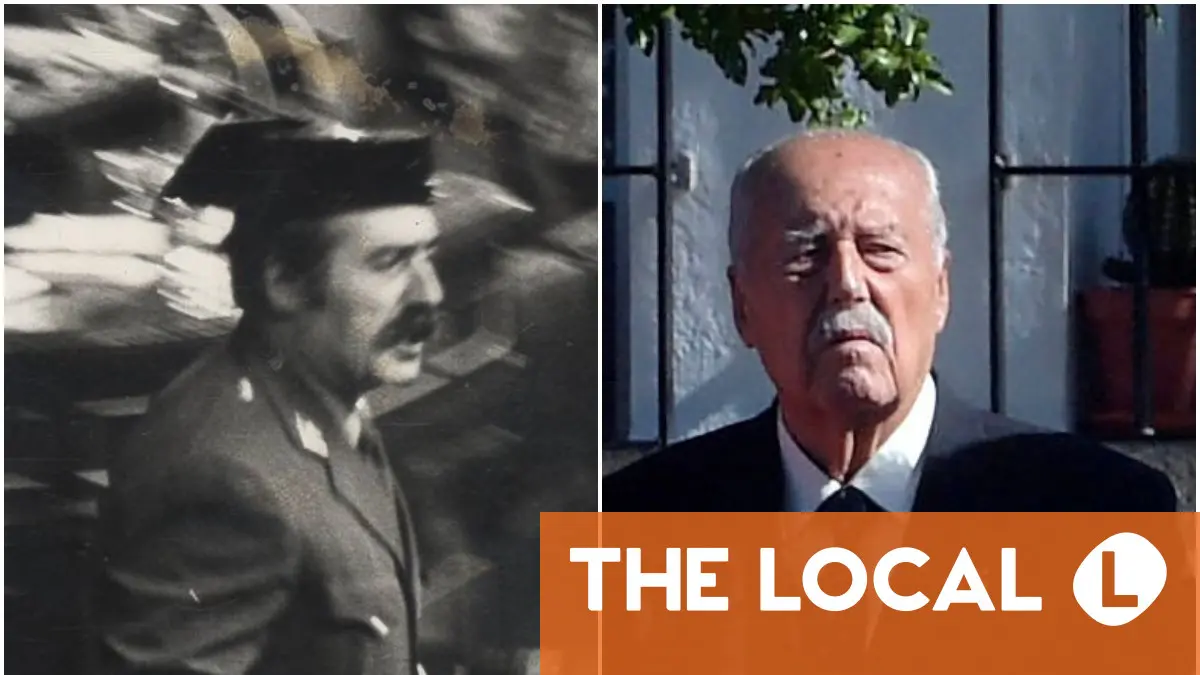
Antonio Tejero, Architect of Spain’s Failed 1981 Coup, Dies at 93
Antonio Tejero Molina, the Spanish Civil Guard lieutenant colonel who led a dramatic and ultimately unsuccessful attempt to overthrow Spain’s nascent democracy in 1981, has died at the age of 93. His death, announced on Wednesday by his family’s lawyer, Luis Felipe Utrera Molina, coincided with the declassification of government documents shedding new light on the events surrounding the coup attempt. Tejero’s actions on February 23, 1981, when he stormed the Spanish Parliament with a group of armed Civil Guards, remain a pivotal moment in modern Spanish history, a stark reminder of the fragility of the country’s transition from the decades-long dictatorship of Francisco Franco.
Tejero’s death marks the end of an era, prompting renewed scrutiny of a period defined by political tension and the struggle to establish a stable democratic order. The timing of his passing, alongside the release of previously classified documents, underscores the ongoing efforts to understand the motivations behind the coup and its lasting impact on Spanish society. The declassification, initiated by Spain’s socialist-led government, aims to provide greater transparency and facilitate a more comprehensive historical account of the events. This move comes as Spain continues to grapple with its complex past and the legacy of Francoism.
The image of Tejero, brandishing a pistol and bellowing “Silence, everyone!” from the podium in the Spanish Congress of Deputies, became instantly iconic, encapsulating the shock and uncertainty that gripped the nation. While the coup ultimately failed, largely due to the decisive intervention of King Juan Carlos I, it served as a critical test for Spain’s young democracy, ultimately strengthening its resolve. The events of February 23rd are now widely considered a “founding myth” of Spanish democracy, a moment when the country collectively reaffirmed its commitment to constitutional rule.
A History of Discontent and a Bold Attempt to Seize Power
Born on April 30, 1932, in Alhaurín el Grande, Málaga, Tejero’s early life was shaped by the Spanish Civil War (1936-1939) and the subsequent 36 years of authoritarian rule under General Francisco Franco. As reported by the New York Times, Tejero dedicated his adult life to the Guardia Civil, Spain’s military police, rising through the ranks while harboring increasingly conservative and anti-democratic views. This background played a crucial role in his decision to lead the coup attempt in 1981.
Tejero’s involvement in anti-democratic activities predated the 1981 coup. In November 1978, he was implicated in “Operation Galaxy,” another failed attempt to overthrow the government, for which he received a seven-month prison sentence. According to The Guardian, Tejero was part of a network of right-wing police and military officers who sought to restore a more traditional, authoritarian order in Spain. This network, fueled by nostalgia for the privileges enjoyed during the Franco regime, saw the democratic transition as a threat to their interests and values.
The 1981 coup unfolded with dramatic speed. On February 23rd, Tejero led approximately 200 armed Civil Guards into the Spanish Parliament during a session where Adolfo Suárez, the Prime Minister, was facing a vote of confidence. The rebels took lawmakers hostage, holding them at gunpoint for nearly 24 hours. The situation remained tense and uncertain until King Juan Carlos I, in a televised address, firmly condemned the coup and ordered the military to uphold the constitutional order. This decisive intervention proved to be the turning point, effectively ending the rebellion.
The King’s Intervention and the Aftermath of the Coup
King Juan Carlos I’s swift and unequivocal condemnation of the coup was instrumental in its failure. His unwavering support for democracy resonated with the Spanish public and galvanized the military to remain loyal to the constitutional government. The King’s actions demonstrated his commitment to the democratic transition and solidified his role as a defender of constitutional rule. This moment is often cited as a defining example of his leadership and a crucial factor in preserving Spain’s fledgling democracy.
Following the collapse of the coup, Tejero was arrested and charged with military rebellion. He was sentenced to 30 years in prison, but was released on parole in December 1996 after serving approximately half of his sentence. According to his Wikipedia entry, he was also expelled from the Civil Guard and stripped of his rank. Despite his conviction and imprisonment, Tejero remained unrepentant, reportedly stating that he would “do the same again” if given the opportunity.
During his time in prison, Tejero surprisingly pursued artistic endeavors, taking up painting and producing nearly 300 artworks. After his release, he continued to paint, reportedly selling his canvases to supporters, although the prices reportedly declined over time. This unexpected turn demonstrated a different side of Tejero, a man who, despite his political convictions, found solace and expression through art.
A Complex Legacy and Ongoing Debate
Antonio Tejero’s legacy remains deeply divisive in Spain. While some view him as a traitor who attempted to undermine democracy, others observe him as a misguided patriot who believed he was acting in the best interests of the country. The declassification of documents related to the coup is expected to fuel further debate and analysis, potentially revealing new insights into the motivations and planning behind the attempt.
Javier Cercas, author of “Anatomy of an Instant,” has argued that the failed coup ultimately served to strengthen Spanish democracy, marking the end of two centuries of military interventionism in the country’s political affairs. As The Guardian reported, Cercas believes that February 23, 1981, was the moment when democracy “truly began” in Spain. This perspective highlights the resilience of Spanish democracy and its ability to withstand challenges from within.
Tejero’s attempt to enter politics after his release from prison, running as a candidate for the far-right Spanish Solidarity party in the 1982 elections, proved unsuccessful. The party failed to win any seats, demonstrating the limited public support for his political views. This outcome further underscored the rejection of the coup attempt and the broader embrace of democratic values in Spain.
Key Takeaways
- Antonio Tejero Molina, the leader of the failed 1981 coup attempt in Spain, died on February 25, 2026, at the age of 93.
- The coup attempt, which involved storming the Spanish Parliament, was thwarted by King Juan Carlos I’s decisive intervention in support of democracy.
- Tejero’s actions were rooted in a network of right-wing officers nostalgic for the Franco regime and opposed to the democratic transition.
- The declassification of documents related to the coup is expected to provide new insights into the events and their lasting impact on Spanish society.
- Tejero remained unrepentant throughout his life, believing he acted to save Spain.
As Spain continues to confront its past, the legacy of Antonio Tejero and the 1981 coup will undoubtedly remain a subject of intense scrutiny and debate. The newly released documents offer a valuable opportunity to deepen our understanding of this pivotal moment in Spanish history and to reaffirm the importance of safeguarding democratic institutions. The ongoing analysis of these events will be crucial for ensuring that the lessons of the past are not forgotten.
Worth a look