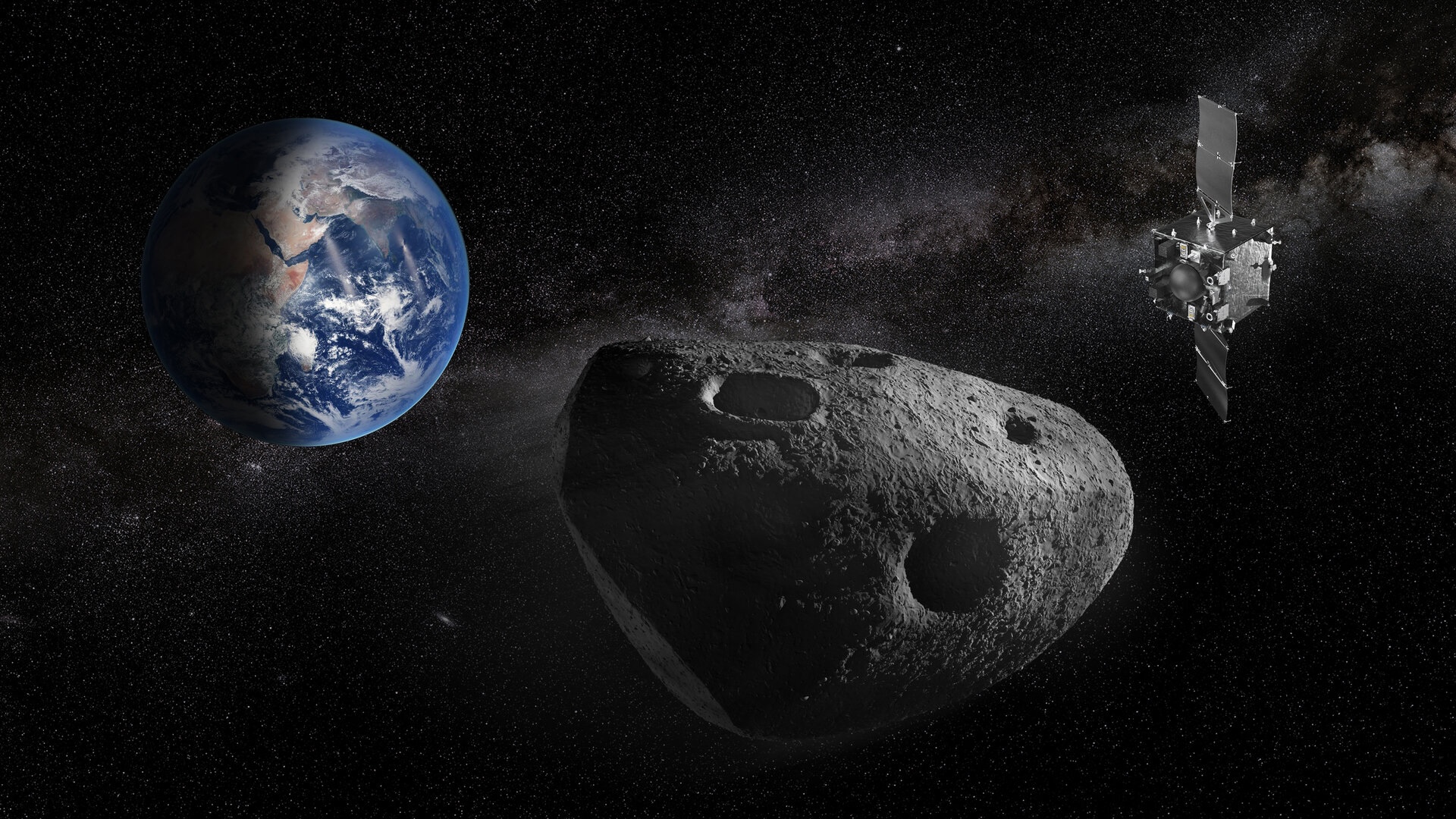
unveiling Apophis: A Unique Chance to Enhance Planetary Defense
A groundbreaking mission to study the near-Earth asteroid Apophis is gaining momentum, poised for a potential launch in spring 2028. If approved by the European Space Agency (ESA) this November, the mission aims to arrive at the asteroid by February 2029, just before its close encounter wiht Earth. This isn’t a response to an immediate threat, but rather a pivotal opportunity to refine our understanding of asteroids and bolster planetary defense strategies.
A Close Encounter: the RAMSES Mission
The proposed mission, known as RAMSES, will offer an unprecedented look at apophis during its flyby. It will hover as close as 3 miles (5 km) to the asteroid between April 12-14, 2029. Scientists plan to meticulously map Apophis’ orbit and investigate any dust clouds generated by Earth’s gravitational pull.
Here’s what the RAMSES mission hopes to achieve:
Precise Orbit Mapping: Determine Apophis’ trajectory with extraordinary accuracy. Tidal Force Inquiry: Analyze how Earth’s gravity reshapes the asteroid.
Surface Interaction: Potentially deploy a small satellite, a cubesat, to touch the surface and detect seismic activity.
This detailed examination will provide invaluable data for future asteroid deflection efforts.
Why Apophis Matters: Beyond a Single Asteroid
While Apophis itself doesn’t currently pose a danger to Earth,it represents a crucial testing ground for planetary defense.You might be wondering why studying a non-threatening asteroid is so critically important.It allows scientists to perfect models and techniques that could be vital if a truly hazardous asteroid is ever discovered on a collision course with our planet.
Consider these key benefits:
Refining Deflection Models: Understanding how tidal forces affect apophis will improve our ability to predict and alter the trajectory of other asteroids.
Developing Response Strategies: The mission will provide practical experience in observing and interacting with a near-Earth asteroid.
Advancing Planetary Science: The data collected will contribute to a broader understanding of asteroid composition, structure, and behavior.
A Proactive Approach to Planetary Protection
It’s critically important to remember that the risk of a catastrophic asteroid impact, while low, is not zero. thus, proactive research and readiness are essential. As a planetary scientist at NASA headquarters emphasized, Apophis presents an “unprecedented opportunity” to learn and prepare.
This mission isn’t about fear,but about knowledge. Asteroids aren’t something to be feared, but rather understood. By investing in research like the RAMSES mission, we are taking responsible steps to safeguard our planet for future generations.
Looking Ahead
The RAMSES mission represents a critically important step forward in our ability to protect Earth from potential asteroid impacts.It’s a testament to the power of international collaboration and the dedication of scientists committed to understanding our place in the cosmos.This mission will not only expand our knowledge of asteroids but also strengthen our ability to respond to the rare, but real, challenge of a potential asteroid threat.
Worth a look