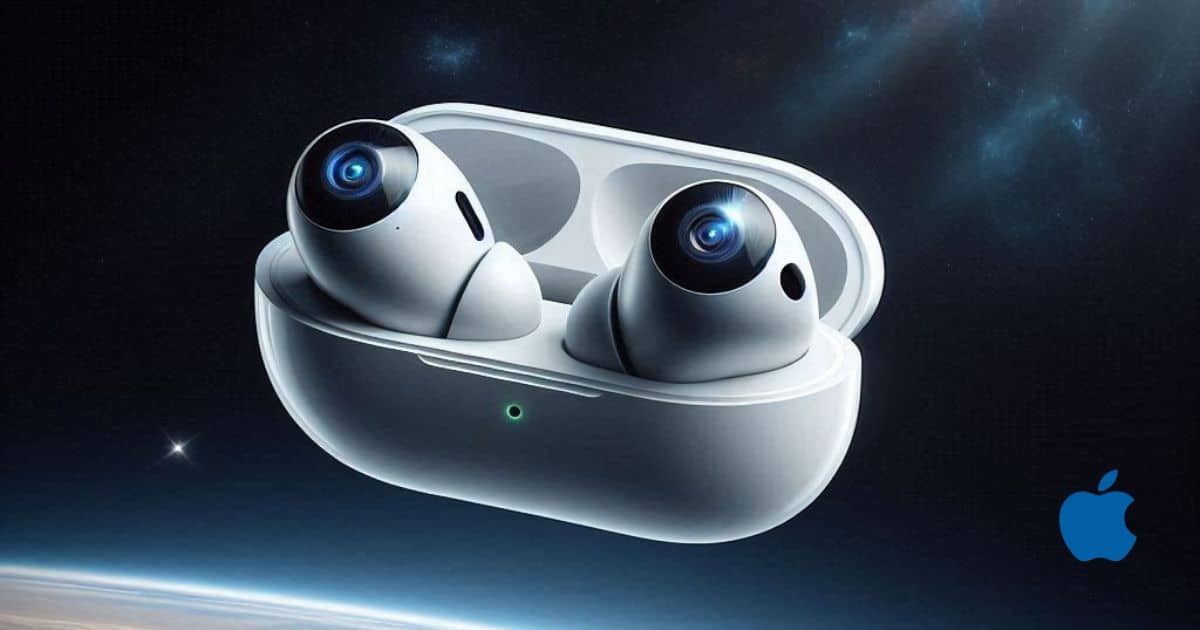
Apple is moving closer to redefining the wearable AI landscape with the development of new AirPods featuring built-in cameras. According to reports from Bloomberg, the project has now entered an “advanced” testing stage, with both the hardware design and the core feature set nearing completion.
Unlike traditional cameras designed for photography, these sensors are intended to serve as the “eyes” for Siri, allowing the digital assistant to perceive the user’s surroundings in real time. This shift represents a significant pivot for Apple, transitioning the AirPods line from a primary audio accessory into a sophisticated piece of AI-enhanced hardware.
The initiative is part of a broader push to integrate “Visual Intelligence” across the Apple ecosystem. By capturing low-resolution visual data, the earbuds will enable users to interact with their environment through voice commands, asking Siri for information about objects they are looking at or requesting real-time assistance based on visual cues.
Hardware Design and Privacy Integrations
While the new device will closely resemble the AirPods Pro 3, there is one distinct physical modification: the stems will be longer to accommodate the camera components. These cameras, located in both the left and right earbuds, are specifically engineered for AI processing and are not capable of recording video or taking photographs.
Addressing the inherent privacy concerns of wearing cameras in public, Apple has integrated a small LED light into the design. This indicator will illuminate whenever the AirPods are transmitting visual information to Siri, providing a clear signal to bystanders that the device is active.
The focus on low-resolution capture suggests that Apple is prioritizing data efficiency and privacy over image quality, ensuring the sensors provide enough context for the AI to function without creating a high-fidelity surveillance tool. This approach aligns with the company’s long-standing emphasis on on-device processing and user privacy.
The Role of Visual Intelligence and Siri
The core utility of the camera-equipped AirPods lies in “Visual Intelligence,” a feature set that allows Siri to interpret the world. This capability is expected to manifest in several practical applications for the end user:
- Environmental Querying: Users can look at an item and ask Siri questions about it, mirroring the experience of uploading a photo to a chatbot.
- Contextual Reminders: The device could offer reminders based on visual triggers in the wearer’s surroundings.
- Enhanced Navigation: Siri may provide more detailed turn-by-turn directions by analyzing the physical environment around the user.
This integration extends beyond the earbuds. The Camera app in the upcoming iOS 27 is reportedly receiving a dedicated “Siri mode” that incorporates Visual Intelligence. This will allow users to perform tasks such as scanning nutrition labels on food packaging for automated calorie tracking, creating a seamless loop between the wearable sensors and the iPhone.
Launch Timeline and AI Delays
Apple originally aimed to bring these camera-equipped AirPods to market in the first half of 2026. However, the launch has been postponed. The delay is attributed to the readiness of the revamped, AI-driven version of Siri, which is essential for the hardware to function as intended.
The updated Siri is now on track for a September release, coinciding with the launch of Bloomberg-reported updates to iOS 27, macOS 27, and iPadOS 27. To power this more capable assistant, Apple has reportedly upgraded its underlying models using technology from Alphabet Inc.
Industry analysts suggest that Apple may further delay the AirPods launch if the quality of the Visual Intelligence features does not meet internal standards. The company is facing stiff competition in the AI hardware space from rivals such as Meta Platforms Inc. And OpenAI, making the precision and reliability of the user experience critical for a successful rollout.
What This Means for the AI Wearables Market
The introduction of cameras into the AirPods line signals a move toward “ambient computing,” where technology disappears into the background and interacts with the user based on context rather than manual input. By leveraging the existing popularity of the AirPods brand, Apple is attempting to vault itself into a leadership position in AI-enhanced hardware.

For the global consumer, this represents a shift in how we interact with digital assistants. Rather than relying solely on voice or text, the assistant becomes an active observer, capable of providing proactive help. The success of this device will likely depend on whether users find the utility of Visual Intelligence outweighs the social and privacy frictions of wearing cameras on their ears.
As Apple prepares for its September software cycle, the tech industry will be watching closely to see if the hardware accompanies the software updates or if the “advanced testing” phase extends further into late 2026.
The next confirmed checkpoint for this technology will be the official release of iOS 27 and the accompanying Siri updates in September, which will provide the first definitive look at the Visual Intelligence capabilities intended for the new AirPods.
Do you think camera-equipped earbuds are the next step in AI, or is the privacy trade-off too high? Share your thoughts in the comments below.
Related reading
- New Colorful Robotic Skin Gives Robots High-Resolution Sense of Touch
- Huawei Nova 16 SE: OLED Screen, 50MP Camera, and Massive 8500mAh Battery
- Federal Judge Halts Large Logging Project in Montana Over US Forest Service Concerns (news-usa.today)
- Smart Glasses Sales Surge 167 Per Cent Amid Privacy Backlash (archyworldys.com)