
Apple has unveiled “Apple Intelligence,” a personal intelligence system integrated across iOS 18, iPadOS 18, and macOS Sequoia, during its Worldwide Developers Conference (WWDC) keynote. The company announced that this suite of generative AI tools will focus on personal context and user privacy, allowing the system to assist with writing, image creation, and more complex Siri requests.
The announcement marks a significant shift in Apple’s software strategy, moving toward deep integration of large language models (LLMs) within its core operating systems. According to Apple, the intelligence system is designed to understand and act on personal information—such as emails, calendar events, and messages—while utilizing a new privacy framework to ensure data remains protected.
What is Apple Intelligence and how does it work?
Apple Intelligence is a personal intelligence system that uses generative models to perform tasks within apps and across the operating system. Unlike general-purpose AI models, Apple stated that this system is built to understand the specific context of a user’s life. For example, the system can prioritize urgent notifications or summarize long email threads based on the user’s known schedule and relationships.
The architecture relies on two primary methods of processing: on-device processing and “Private Cloud Compute.” Apple explained that most tasks are handled directly on the device’s silicon to maintain maximum privacy. When a request requires more computational power than a device can provide, the system uses Private Cloud Compute, which leverages Apple-silicon-powered servers. Apple emphasized that this cloud-based processing does not store user data and is not accessible by Apple, ensuring that even cloud-processed requests remain private.
Key features of Apple Intelligence include:
- Writing Tools: A system-wide capability that allows users to rewrite, proofread, and summarize text in Mail, Notes, Pages, and third-party applications.
- Image Playground: A tool for generating original images in various styles, including animation, sketch, and illustration, directly within apps like Messages.
- Genmoji: A feature enabling users to create custom, AI-generated emojis based on text descriptions.
- Smart Summaries: The ability to provide concise summaries of notifications, emails, and recorded audio in the Notes and Phone apps.
How is Siri being redesigned with AI?
Siri is receiving its most significant update since its inception, gaining the ability to understand more natural language and maintain context throughout a conversation. According to the company, Siri can now follow along even if a user stumbles over words or uses imprecise phrasing. It can also perform “on-screen awareness,” allowing it to understand what a user is looking at and take actions based on that information.
The updated Siri can interact with apps to complete complex tasks. For instance, a user could ask Siri to “send the photos from last night to Sarah,” and the assistant will identify the relevant images and the contact to complete the request. Apple also announced that Siri will have a new visual design, featuring a glowing light that wraps around the edges of the iPhone screen when activated.
To expand its knowledge base, Apple has integrated ChatGPT into Siri. If a user asks a question that requires broader world knowledge, Siri can ask for permission to use ChatGPT’s capabilities to provide an answer. Apple stated that this integration is free to use and does not require a separate account, though users can connect their own ChatGPT Plus accounts to access more advanced models. Apple confirmed that any data sent to ChatGPT is not stored by OpenAI for training purposes when accessed through Siri.
What are the key updates in iOS 18 and macOS Sequoia?
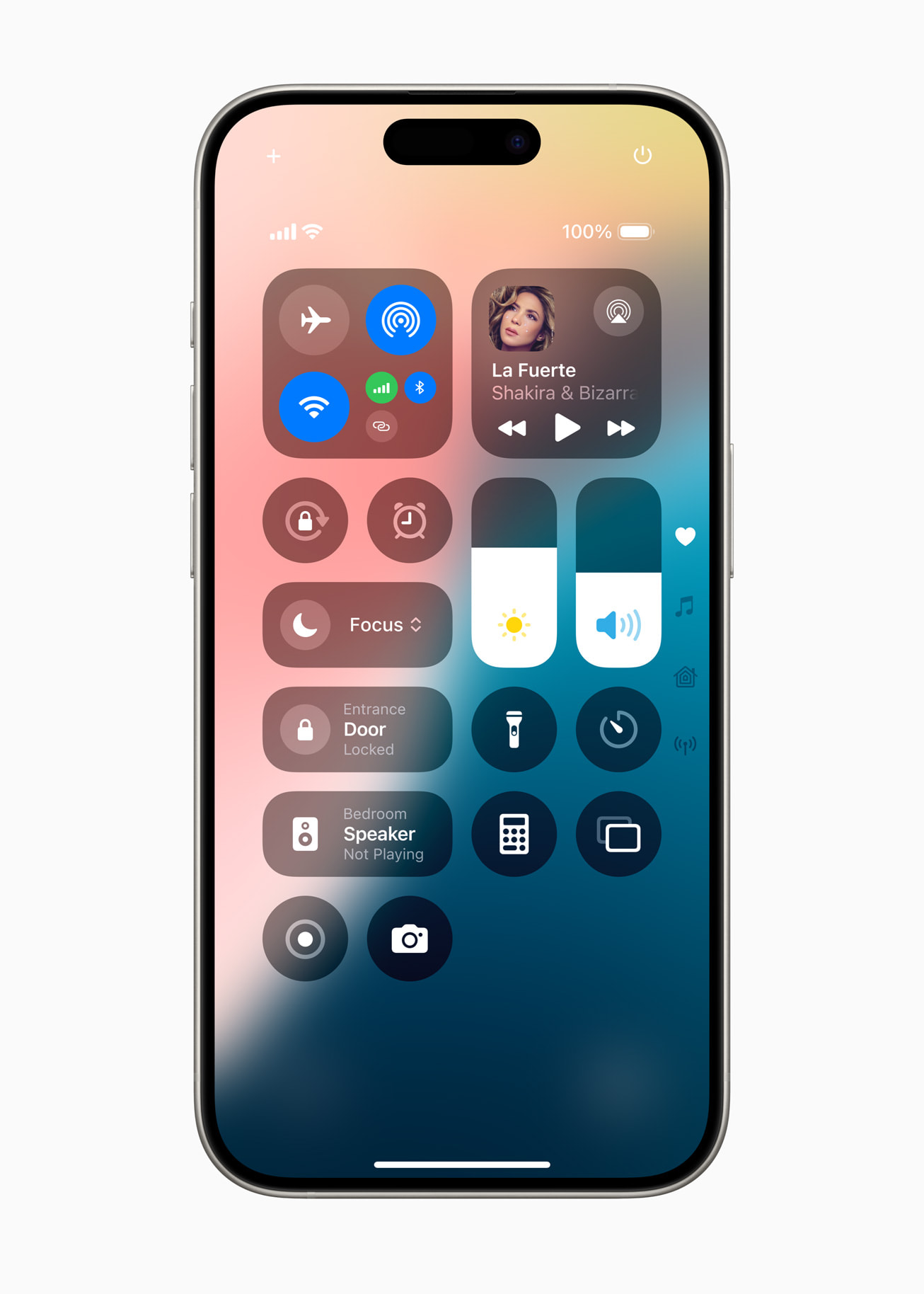
Beyond artificial intelligence, Apple introduced several functional updates to its software ecosystem. iOS 18 focuses heavily on user customization and organizational tools. Users can now place app icons anywhere on the Home Screen and apply color tints to match their wallpapers. The Control Center has also been redesigned to allow for more customizable layouts and multiple groups of controls.
The Photos app in iOS 18 is undergoing its largest redesign to date. Apple stated the new interface aims to make it easier to find specific memories through a unified view and improved organizational collections. Additionally, the Messages app now supports sending messages via satellite for users with compatible iPhone models, even when cellular or Wi-Fi connections are unavailable.
macOS Sequoia introduces “iPhone Mirroring,” a feature that allows users to view and control their iPhone directly from their Mac. This enables users to interact with mobile apps, respond to notifications, and manage their device without picking it up. Apple also noted improvements to Safari, including a “Highlights” feature that uses on-device intelligence to surface key information from web pages, such as directions or summaries of articles.
When will Apple Intelligence and the new OS versions be available?
The rollout of these features will occur in stages. The iOS 18, iPadOS 18, and macOS Sequoia developer betas are available for download immediately. Apple has scheduled the public beta release for later this summer, with the full, stable versions expected to launch to the general public in the fall of 2024.

It is important to note that Apple Intelligence features will not be available on all devices. According to the company, the intelligence capabilities require hardware with high-performance neural engines, specifically the A17 Pro chip or any M-series chip found in iPads and Macs. This means that while iOS 18 will run on older iPhones, the generative AI features will be limited to the iPhone 15 Pro and newer models.
Summary of Software Release Timeline
| Phase | Availability | Target Audience |
|---|---|---|
| Developer Beta | Available Now | Software Developers |
| Public Beta | Summer 2024 | General Public (Testing) |
| Official Release | Fall 2024 | All Compatible Users |
The next major update regarding these software rollouts is expected during the public beta launch later this summer. For developers, official documentation and SDKs are currently available on the Apple Developer website.
How do you feel about Apple’s approach to integrating AI into your daily devices? Share your thoughts in the comments below and share this article with your tech network.
Keep reading