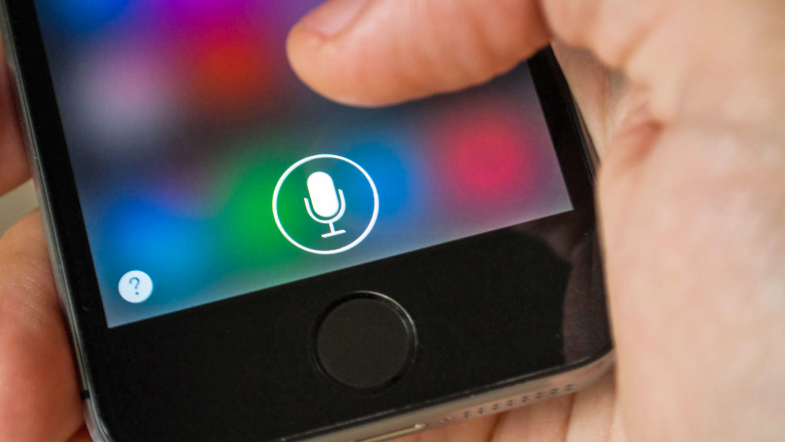
Apple has spent years attempting to modernize its virtual assistant, but the release of Apple Intelligence at WWDC 2024 suggests that the company is playing catch-up in an industry now dominated by generative AI and autonomous agents. While Apple’s latest updates provide Siri with deeper system integration and a more natural language interface, the broader technology market has shifted toward large language models (LLMs) that prioritize reasoning and task automation over simple command-and-control interactions. For users, this means the definition of a “smart” assistant has moved beyond setting timers or checking weather, evolving instead into a proactive tool capable of synthesizing information across multiple applications.
The core challenge for Apple is that consumers now compare Siri against the capabilities of OpenAI’s ChatGPT, Google’s Gemini, and Anthropic’s Claude. According to Apple’s official documentation released during the Worldwide Developers Conference (WWDC) on June 10, 2024, the new iteration of Siri benefits from on-device processing and the ability to leverage “Personal Context” to understand user requests based on their specific screen activity. This marks a significant departure from the original architecture of Siri, which was largely built on a static set of intent-based triggers.
The Shift from Commands to Conversational Reasoning
For over a decade, Siri functioned primarily as a transactional tool. If a user asked to play music or send a text, the system performed a specific function. ChatGPT, by contrast, introduced a paradigm shift by utilizing a transformer-based architecture that predicts the next word in a sequence, allowing for fluid, context-aware dialogue. As noted in a Reuters report from June 2024, Apple’s strategy to bridge this gap involves a hybrid approach: using its own private cloud compute for complex queries while integrating ChatGPT directly into iOS 18 to handle more sophisticated reasoning tasks that Siri cannot manage alone.
This integration acknowledges that Apple’s proprietary models are not yet optimized for the generative capabilities that users have come to expect from modern AI. By allowing users to opt-in to ChatGPT for document drafting, image generation, and complex queries, Apple is effectively outsourcing the “reasoning” layer of its ecosystem to a third party. This move is significant because it prioritizes user utility over the “walled garden” approach that defined the company’s software strategy for years.
Why Autonomous Agents Are the New Benchmark
The tech industry is currently pivoting toward the development of autonomous agents—software that can navigate apps, click buttons, and complete workflows without constant human supervision. While Apple has promised that the new Siri will eventually be able to take actions across apps—such as finding a photo and sending it to a specific contact—these features are slated for a phased rollout. According to Bloomberg’s coverage of the event, many of the most advanced “agentic” capabilities for Siri will not be available until later updates, potentially trailing the rapid development cycles seen at competitors like Microsoft and Google.

The expectation for AI today is “agentic” behavior: the ability to plan, iterate, and execute a sequence of tasks. If a user asks a digital assistant to “plan a trip to Tokyo,” they now expect an itinerary, flight options, and hotel links, rather than a list of web search results. Apple’s challenge is to ensure that its privacy-focused, on-device processing does not limit the assistant’s ability to pull the vast amounts of external data required for these complex tasks.
Privacy as a Competitive Differentiator
Despite the criticism regarding the speed of its AI deployment, Apple continues to emphasize privacy as its primary competitive advantage. The company introduced “Private Cloud Compute,” a system designed to ensure that data sent to the cloud for processing is never stored or accessible to Apple, as detailed in their June 2024 technical disclosure. This is a critical distinction in a market where training data and user history are often harvested to improve model performance.
For the average user, the choice between Apple Intelligence and other AI platforms often comes down to this trade-off: do you prioritize the deep, potentially invasive reasoning of a cloud-native model, or the privacy-first, ecosystem-integrated approach of a hardware-centric company? As of mid-2024, the market remains split, with many professional users choosing to run local, privacy-conscious models on their own hardware while utilizing cloud services for heavy lifting.
What Happens Next in the AI Arms Race
The next major checkpoint for Apple’s AI ambitions is the wider rollout of iOS 18 and macOS Sequoia, expected in the fall of 2024. During this period, the efficacy of the Siri-ChatGPT integration will be tested by millions of users, providing the data necessary for the company to refine its system prompts and cross-app functionality. Developers will also be watching for updates to the App Intents framework, which serves as the bridge allowing Siri to interact with third-party applications.
Whether Apple can successfully rebrand Siri from a simple voice command tool into a robust, agentic AI assistant remains to be seen. The company’s success will likely depend on how seamlessly it can blend the capabilities of third-party LLMs with its own highly secure, hardware-bound software. For now, the tech landscape has clearly moved beyond the era of simple voice assistants, and Apple is currently in the process of proving that its platform can adapt to this new, more complex reality.
We welcome your perspective on these changes. If you have experimented with the latest developer betas or have thoughts on how AI should integrate with your daily workflow, please share your experiences in the comments section below.
Keep reading