Apple Intelligence adn Copyright Lawsuits: A Deep Dive into the Authors’ Allegations
The launch of Apple Intelligence has been met with both excitement and scrutiny. Recently, a class action lawsuit filed by academic authors Susana martinez-Conde and Stephen Macknik has brought to light serious concerns regarding the data used to train Apple’s new AI models. This lawsuit alleges that Apple utilized a repository of books containing pirated copies of their work – “Champions of Illusion” and ”Sleights of Mind” – to develop its Foundation Intelligence Models and OpenELM language models. This article provides a extensive overview of the situation, exploring the legal implications, the potential impact on AI progress, and what this means for content creators.
Understanding the Core of the Dispute: AI Training Data & Copyright
The foundation of any artificial intelligence lies in the data it’s trained on. Large Language Models (LLMs) like those powering Apple Intelligence require massive datasets of text and code to learn patterns, generate responses, and perform tasks. The question of where this data comes from, and whether its use is legally permissible, is becoming increasingly critical.
Did You Know? AI models don’t “read” like humans. They statistically analyze patterns in data.This means even brief exposure to copyrighted material can contribute to the model’s learning process.
The plaintiffs argue that Apple’s use of copyrighted material, even indirectly through a perhaps compromised dataset, constitutes copyright infringement. They specifically allege the material was used both to test model performance and as a filter to prevent the AI from generating outputs that themselves infringe on copyright.This raises complex questions about fair use, derivative works, and the obligation of AI developers to ensure the legality of their training data.
The Specific Allegations: “Champions of Illusion” and ”Sleights of Mind”
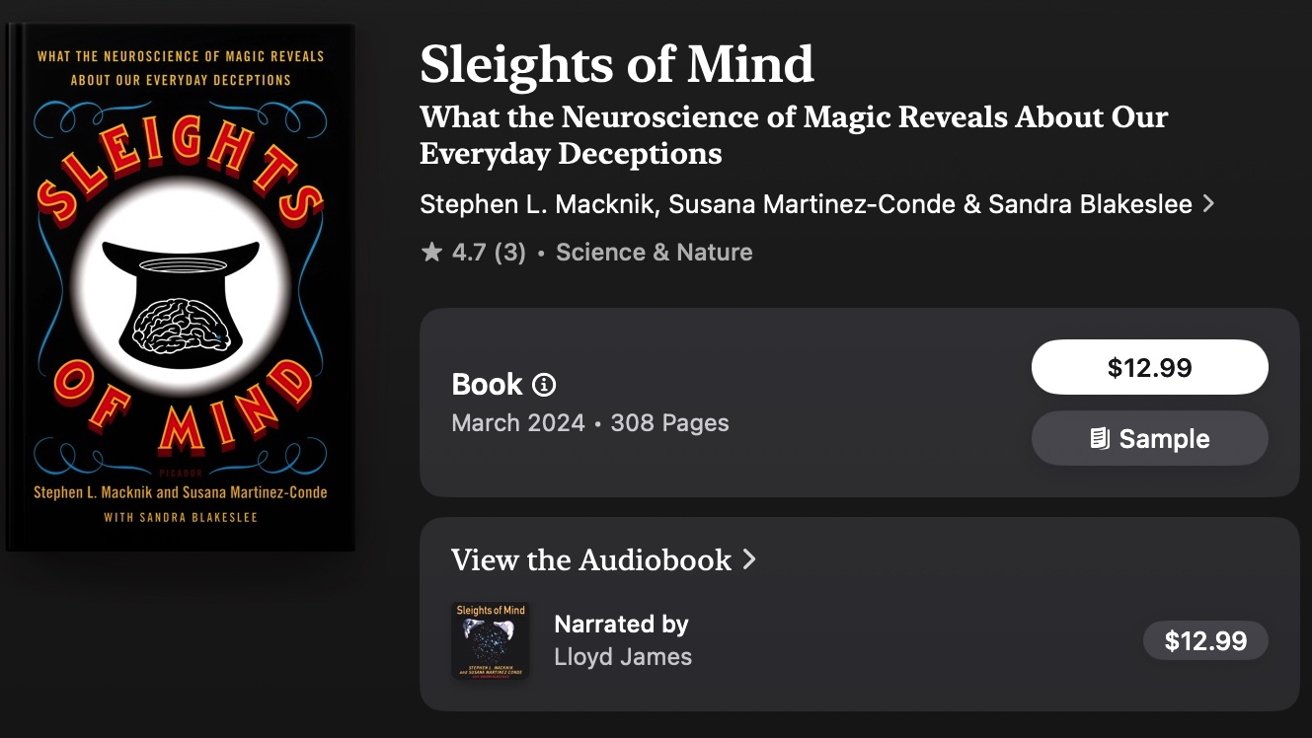
Martinez-Conde and macknik claim their books were “raided” – meaning copied without permission – to train Apple intelligence. Apple does have a license to sell “sleights of Mind” through its Books platform, but the lawsuit contends that this license doesn’t extend to using the book for AI training purposes. The complaint, filed on October 10, 2024, details how the authors discovered their work may have been incorporated into the AI’s training process.
Pro Tip: Content creators should proactively register their copyrights and explore digital rights management (DRM) solutions to protect their work in the age of AI.
The lawsuit isn’t simply about the initial copying of the books. It also focuses on the purpose of that copying.The authors argue that using their work to refine the AI’s ability to avoid generating infringing content doesn’t negate the initial infringement. In essence, they claim Apple is benefiting from their copyrighted work without proper compensation or permission.
Legal Implications and the Broader Landscape of AI Copyright
This lawsuit is far from isolated. It’s part of a growing wave of legal challenges facing AI developers regarding copyright infringement. Several other high-profile cases, including those involving the new York Times and various coding repositories, are currently underway. These cases are attempting to define the boundaries of fair use in the context of AI training.
Here’s a quick comparison of key aspects of recent AI copyright lawsuits:
| Case | Plaintiff | Defendant | Allegation | Status (as of Nov 2024) |
|---|---|---|---|---|
| New York Times v. OpenAI | The New York Times | OpenAI | Copyright infringement through use of NYT articles to train LLMs | Ongoing |
| authors Guild v. OpenAI | Authors Guild | OpenAI | Copyright infringement through use of books to train LLMs | Ongoing |
| Martinez-Conde & Macknik v. Apple | Susana Martinez-Conde & Stephen Macknik | Apple | Copyright infringement through use of books to train Apple Intelligence | Newly Filed |
the outcome of these cases will have important implications for the future of AI development. A strict interpretation of copyright law could severely limit the data available
Keep reading