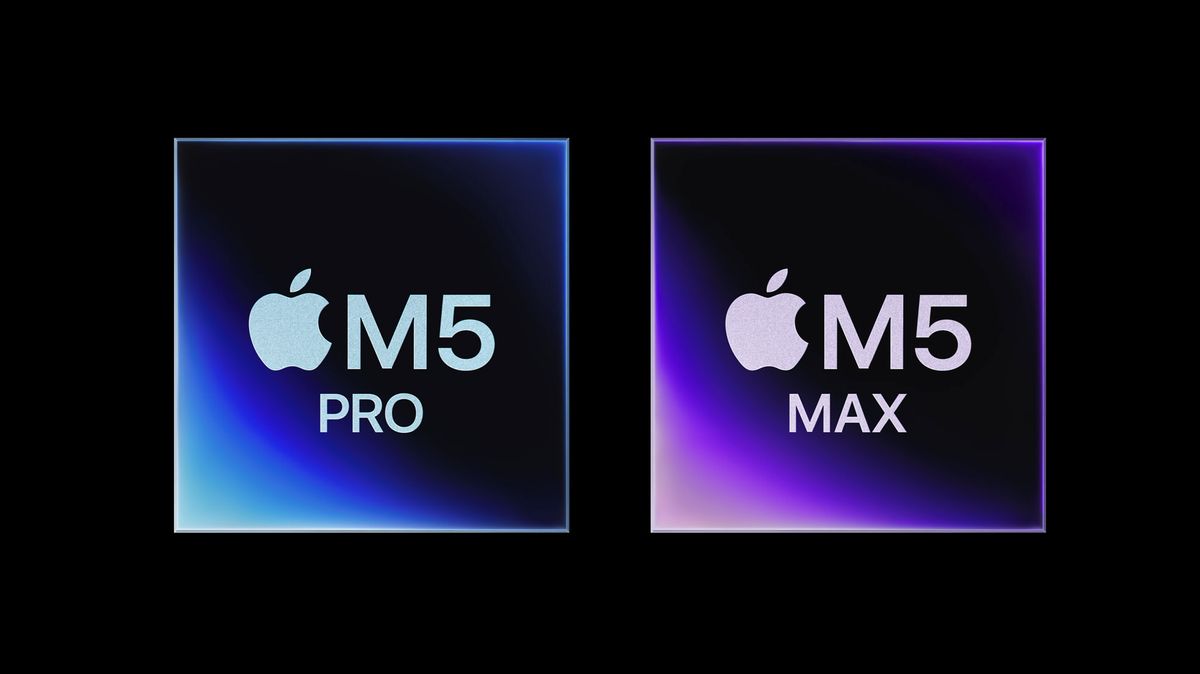
San Francisco, CA – Apple has unveiled its next generation of silicon, the M5 Pro and M5 Max chips, poised to power the latest iterations of the MacBook Pro. The announcement signals a continued commitment to in-house chip development and a strategic focus on artificial intelligence capabilities within its professional-grade laptops. These new chips, built on a cutting-edge 3-nanometer process, promise significant performance gains and enhanced efficiency for demanding creative workflows.
The introduction of the M5 Pro and M5 Max comes as Apple increasingly emphasizes the role of AI in its product ecosystem. While the company has remained relatively quiet about specific AI applications, the enhanced Neural Engine within these chips suggests a growing emphasis on on-device machine learning tasks. This move aligns with a broader industry trend towards integrating AI directly into hardware for faster and more secure processing. The updated MacBook Pro models, featuring these chips, are now available for order, with shipping expected to begin next week, according to Apple’s press release. Apple Newsroom
A New Architecture for Enhanced Performance
At the heart of the M5 Pro and M5 Max lies what Apple describes as a “fusion architecture.” This involves integrating two separate dies into a single system on a chip (SoC). According to Apple, this approach allows for increased performance while maintaining rapid communication between different components. The chips utilize an 18-core CPU, combining six high-performance cores with twelve efficiency cores, designed to handle a wide range of tasks from intensive rendering to everyday applications. Apple claims this combination delivers up to 30 percent faster performance in professional workloads compared to the previous generation. The Verge reports on the details of the new chips.
Graphics and AI Capabilities
The graphics processing unit (GPU) has also undergone a significant overhaul. The M5 Max, in particular, can be configured with up to 40 GPU cores, each equipped with its own dedicated accelerator for AI-related computations. Apple states that this results in a substantial boost in AI performance compared to older chips, potentially offering several times the speed for machine learning tasks. The new chips demonstrate improved performance in applications utilizing ray tracing, with Apple claiming performance increases in the tens of percent. This is particularly relevant for professionals working with 3D rendering and visual effects.
Foto: archiv výrobce
Apple MacBook Pro s čipem M5 Max
M5 Pro vs. M5 Max: Tailored for Different Workloads
The M5 Pro is designed for users who require substantial computing and graphics power without needing the absolute maximum performance. It can be equipped with up to a 20-core GPU and up to 64GB of unified memory with a memory bandwidth of 307GB/s. Apple highlights the chip’s acceleration of multi-threaded tasks, such as working with large datasets, audio post-production, and scientific computing. It also supports hardware-accelerated ray tracing and improved shader units. The M5 Max, targets professionals engaged in 3D animation, application development, or advanced AI modeling. It offers up to twice the number of GPU cores as the Pro version, reaching a maximum of 40, and supports up to 128GB of unified memory with a bandwidth of 614GB/s. This increased memory bandwidth is intended to facilitate work with extensive scenes, large data files, and the generation of outputs from large language models.
Both chips incorporate a 16-core Neural Engine dedicated to accelerating machine learning tasks. A media engine supporting H.264, HEVC, AV1, and ProRes formats is also included, benefiting video creators. The new chips also support Thunderbolt 5, with each port having its own controller directly within the chip. Apple also mentions a technology called Memory Integrity Enforcement, designed to enhance memory security without impacting performance.
Price Increases Reflect Enhanced Technology
Alongside the unveiling of the M5 Pro and M5 Max, Apple has announced price increases across its MacBook lineup. CNBC reports that these increases are attributed to the advanced technology incorporated into the new chips and displays, signaling an “AI-first strategy” for the company. While specific price points vary depending on configuration, the move reflects a broader trend of increasing costs for high-performance computing hardware.
The new M5 Pro and M5 Max processors represent the foundation of the most powerful MacBook Pro configurations. Whether these specifications translate into a tangible advantage over the competition will be determined by independent testing in real-world scenarios. As Apple continues to push the boundaries of silicon design, the MacBook Pro remains a key platform for professionals seeking cutting-edge performance and capabilities.
Apple is expected to provide further details on the M5 family of chips and their integration into other products in the coming months. The company’s continued investment in custom silicon underscores its commitment to controlling the entire hardware and software experience, offering a level of optimization that is demanding for competitors to match. The next step will be to see how these chips perform under rigorous testing and how they impact the workflows of creative professionals.
Key Takeaways:
- The M5 Pro and M5 Max chips utilize a new “fusion architecture” for improved performance.
- Both chips feature enhanced Neural Engines for accelerated AI tasks.
- The M5 Max offers significantly more GPU cores and memory bandwidth than the M5 Pro.
- Apple has increased prices across the MacBook Pro lineup.
- Independent testing will be crucial to assess the real-world performance gains.
Stay tuned to World Today Journal for in-depth reviews and analysis of the new MacBook Pro models as they become available. We will continue to follow Apple’s advancements in silicon technology and their impact on the broader computing landscape. Share your thoughts and questions in the comments below!
Worth a look