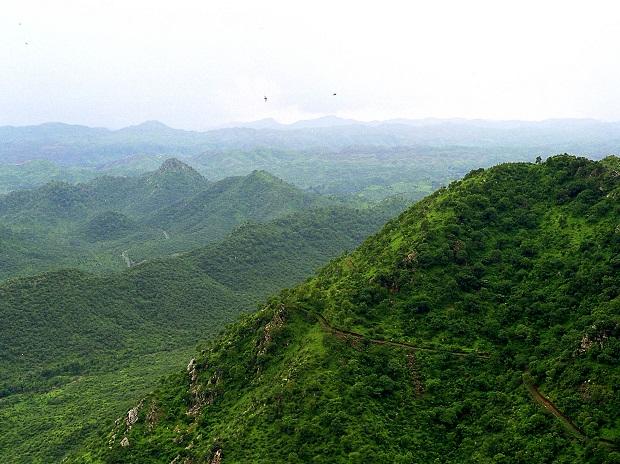
India Imposes Nationwide mining Ban in Aravalli Hills Following Supreme Court Definition
December 24, 2025 – In a decisive move to safeguard a vital ecological region, the Indian government has issued a nationwide ban on all new mining leases within the Aravalli Hills and Range. This directive,released Wednesday by the Ministry of Environment,Forest and Climate Change,aims to halt unregulated mining and preserve the geological integrity of this crucial landscape.
The ban extends across the entire Aravalli region, stretching from Gujarat to the National Capital Region (NCR). It comes on the heels of a recent Supreme Court ruling that sought to clarify – and ultimately standardize – the legal definition of what constitutes an Aravalli hill and range.
Understanding the New Aravalli Definition & Why it Matters
For decades, ambiguity surrounding the Aravalli’s definition has hampered effective conservation efforts. The Supreme Court’s November 2025 ruling, based on recommendations from a Ministry-led commitee, established a clear criterion: any landform rising at least 100 meters above the surrounding terrain qualifies as an Aravalli hill. A range is defined as two or more such hills within 500 meters of each other.
While intended to provide legal clarity, this new definition initially sparked concern among environmental activists.The worry centered on the potential for vast areas of lower-lying hills and ridges to be excluded from protective regulations. This could have opened them up to exploitation.
Strengthening Enforcement & Identifying Critical Zones
the government’s swift action addresses these concerns head-on. The complete ban on new leases is the most immediate step. However, the directive doesn’t stop there.
Existing mining operations will face substantially stricter oversight. State governments are mandated to ensure full compliance with all environmental safeguards, adhering to the Supreme Court’s order. This includes implementing sustainable mining practices and bolstering environmental protection measures.
Furthermore, the Ministry has tasked the Indian Council of Forestry Research and Education (ICFRE) with a critical new assignment: identifying additional zones within the Aravallis where mining should be fully prohibited. This proactive approach signals a commitment to expanding protected areas beyond the current definition.
The aravalli Range: Ecological Significance & Growing Threats
The Aravalli Range isn’t merely a geological feature; it’s a biodiversity hotspot and a crucial ecological lifeline for a large swathe of India. It acts as a natural barrier against desertification, influences regional rainfall patterns, and supports a diverse range of flora and fauna.
However, decades of unchecked mining, quarrying, and real estate progress have severely degraded the range. This has led to:
* Water Scarcity: Mining disrupts natural drainage patterns and depletes groundwater resources.
* Deforestation: Hill removal and associated infrastructure development lead to widespread forest loss.
* Habitat Fragmentation: Mining activities fragment habitats, threatening wildlife populations.
* Air & Water Pollution: Dust and chemical runoff from mines contaminate air and water sources.
What This Ban Means for the future
This extensive ban represents a important turning point in the aravalli’s conservation story.It demonstrates a growing recognition of the range’s intrinsic ecological value and the urgent need for proactive protection.
Though,successful implementation will be key. Effective monitoring, stringent enforcement, and continued scientific assessment – notably through the ICFRE’s ongoing work – will be crucial to ensuring the long-term health and resilience of the Aravalli ecosystem.
The government’s commitment, coupled with continued advocacy from environmental groups and local communities, offers a hopeful path towards preserving this invaluable natural heritage for generations to come.
Worth a look