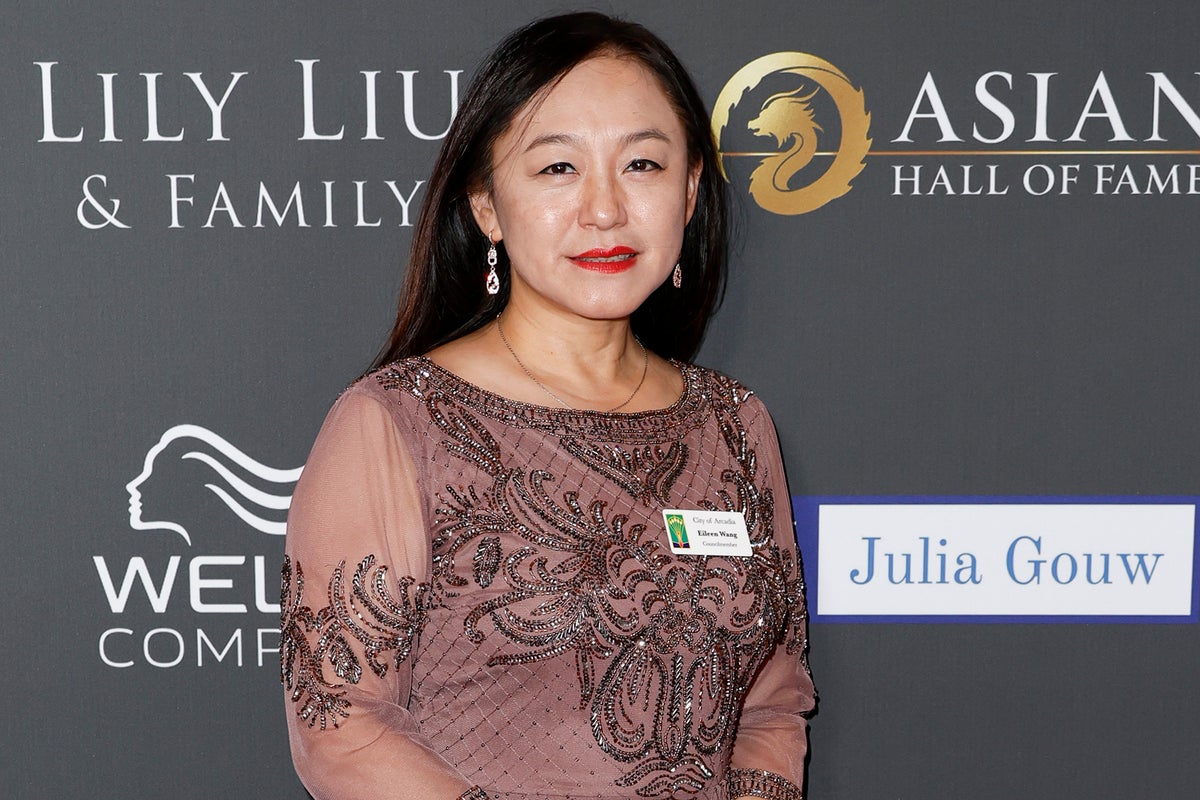
In a case that underscores the growing concerns over foreign influence in local American governance, the former mayor of Arcadia, California, has agreed to plead guilty to acting as an illegal agent of the People’s Republic of China. Eileen Wang, who once held the highest executive office in the Southern California city, resigned her position following revelations that she worked to disseminate pro-Chinese propaganda within the United States.
The legal proceedings, brought forward by the U.S. Department of Justice, reveal a coordinated effort to manipulate public perception through a digital front. According to court documents, Wang collaborated with a former fiancé and campaign staffer to manage a website designed to look like a legitimate news outlet, while in reality, it served as a conduit for directives from Chinese officials. The fallout has left the city of Arcadia grappling with the breach of trust and the federal government highlighting a broader pattern of covert foreign operations targeting U.S. Officials.
Wang now faces a significant legal reckoning, with a potential sentence of up to 10 years in federal prison. Her case is part of a larger crackdown by federal authorities on unregistered foreign agents who operate within the U.S. Political system to advance the interests of adversarial governments without public disclosure.
The Mechanics of a Covert Influence Operation
At the heart of the government’s case is a website known as the U.S. News Center. While the platform presented itself as a source of information, investigators found it was used to push pro-China narratives. The operation relied on a sophisticated pipeline of content: pre-written articles were transmitted via WeChat, an encrypted messaging app, to a group that included Wang and other associates. The Department of Justice detailed how this process allowed foreign officials to dictate the editorial direction of the site.
The level of control exerted by the Chinese government was evidenced by a specific exchange from August 2021. Prosecutors pointed to a communication in which a Chinese official requested that Wang make specific edits to an article. After Wang implemented the changes, the official responded with “Great!”, to which Wang replied, “Thank you leader.” This exchange serves as a critical piece of evidence for prosecutors, illustrating a subordinate relationship between a sitting U.S. Mayor and a foreign government official.
This operation reflects a broader strategy often termed “influence operations,” where foreign entities establish “cut-outs”—such as faux news sites or non-profit organizations—to inject propaganda into the American discourse. By utilizing a local official, the operation gained a veneer of credibility and access that would be impossible for a foreign government to achieve through traditional diplomatic channels.
The Role of Yaoning “Mike” Sun
Eileen Wang did not act alone in this venture. The Department of Justice identified Yaoning “Mike” Sun, Wang’s former fiancé and a member of her campaign staff, as a central figure in the operation. Sun played a pivotal role in managing the U.S. News Center and coordinating with foreign handlers.
The legal consequences for Sun preceded Wang’s plea. Earlier this year, Sun was sentenced to four years in prison for similar charges related to acting as an illegal agent of the People’s Republic of China. The partnership between Sun and Wang suggests a vulnerability in local political campaigns, where personal relationships can be leveraged by foreign intelligence services to gain a foothold in municipal government.
The intersection of personal trust and political influence in this case is a recurring theme. In a statement released by her attorneys following her resignation and plea, Wang’s legal team apologized and attributed her actions to her personal life. The statement claimed that her “trust and love for apparently the wrong person,” referring to Sun, had “led her astray,” necessitating her departure from public service.
National Security Implications and FBI Response
The case has drawn sharp condemnation from federal law enforcement, who view the infiltration of local government as a direct threat to democratic integrity. Patrick Grandy, the Assistant Director in Charge of the FBI’s Los Angeles Field Office, emphasized the gravity of an elected official operating as a foreign asset.
“All Americans should be alarmed to learn an elected official was brazenly spreading propaganda on behalf of the Chinese government,” Grandy stated. He further noted that the FBI remains dedicated to “rooting out those illegally acting as agents of a foreign government as they do the bidding of America’s adversaries.”
The FBI’s focus on “insider threats” has intensified as the U.S. Government identifies more instances of the People’s Republic of China attempting to influence local and state policies. These efforts often target cities with significant immigrant populations or strategic economic ties, using the promise of investment or personal loyalty to recruit unwitting or complicit agents.
Understanding the Legal Framework: Illegal Foreign Agency
To understand why Wang’s actions are criminal, it is necessary to look at the laws governing foreign representation in the U.S. While it is not illegal to advocate for a foreign government, the Foreign Agents Registration Act (FARA) and related statutes require individuals to register with the government if they are acting under the direction or control of a foreign principal to influence U.S. Policy or public opinion.
When an individual acts as an agent—especially a covert one—without this registration, they commit a federal crime. In Wang’s case, the lack of transparency regarding her relationship with Chinese officials transformed her political activity into a criminal enterprise. The severity of the potential 10-year sentence reflects the government’s intent to deter other public officials from entering into similar clandestine arrangements.
This case highlights a critical gap in municipal oversight. Unlike federal officials, local mayors and council members often face fewer stringent vetting processes regarding foreign contacts, making them attractive targets for foreign intelligence services seeking “low-level” entry points into the American political system.
Impact on the City of Arcadia
For the residents of Arcadia, the revelation that their mayor was operating as a foreign agent is a significant blow to local trust. The city now faces the task of auditing any policies or decisions that may have been influenced by Wang’s clandestine activities. While the primary focus of the U.S. News Center was external propaganda, the risk remains that such influence could bleed into local governance, zoning, or economic development projects.
The resignation of Mayor Wang marks the end of a tumultuous chapter for the city’s leadership, but it opens a period of scrutiny. The community must now navigate the aftermath of a leadership vacuum and the realization that their local government was utilized as a tool for foreign geopolitical interests.
As this case moves toward sentencing, it serves as a cautionary tale for municipalities across the United States. The ability of a foreign power to recruit a sitting mayor through a campaign staffer demonstrates that national security is no longer just a matter of federal intelligence, but a concern for every city hall in the country.
The next confirmed checkpoint in this legal process will be the sentencing hearing, where a federal judge will determine the final term of imprisonment for Eileen Wang based on the guidelines for foreign agency and the specifics of her plea agreement.
We invite our readers to share their thoughts on this development in the comments below. How should local governments better vet officials for foreign influence?
Worth a look