
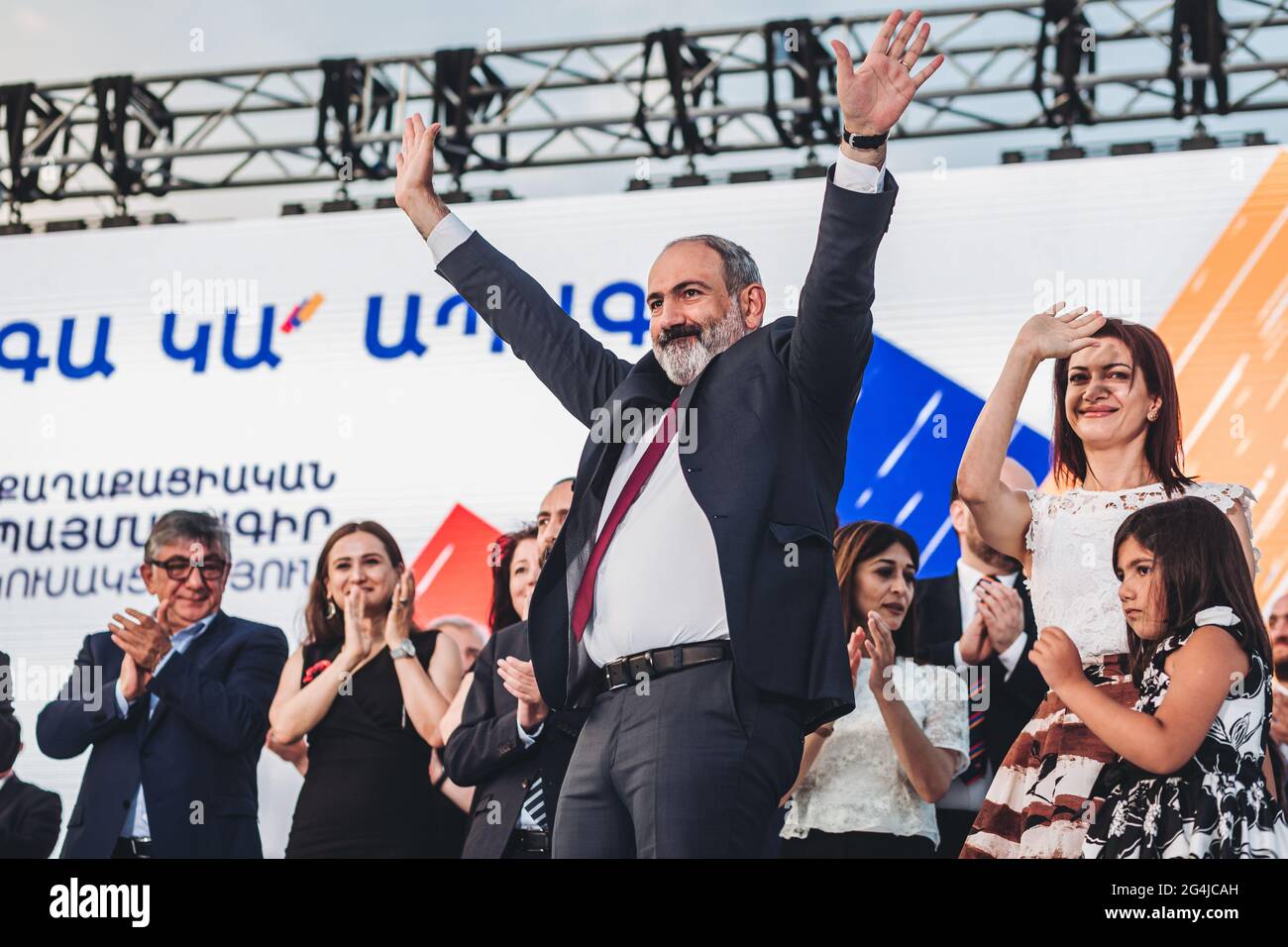
Armenia’s incumbent Civil Contract party, led by Prime Minister Nikol Pashinyan, has maintained a significant lead following parliamentary elections held on June 7, 2026. According to the official results reported by the Central Electoral Commission, the party secured 49.85% of the vote, granting it 61 seats in the 9th convocation of the National Assembly. These results, which reflect a 100% reporting rate as of June 8, 2026, confirm that the party will continue to hold the parliamentary majority required to govern.
The election, which saw a voter turnout of 58.97%, marks a continuation of the political landscape established in the 2021 elections. While Civil Contract remains the dominant force, its seat count decreased by 10 compared to the previous assembly. The opposition landscape also saw shifts, with the Strong Armenia party, led by Samvel Karapetyan, securing 23.31% of the vote and 28 seats, followed by the New Armenia Alliance, headed by Robert Kocharyan, which took 9.95% of the vote and 11 seats. The Prosperous Armenia party, led by Gagik Tsarukyan, rounded out the results with 4.00% of the vote, securing 5 seats, an increase of 5 from their previous standing. Official documentation regarding the election process and the composition of the National Assembly can be accessed through the Central Electoral Commission and related institutional records.
Understanding the Current Parliamentary Landscape
The 2026 parliamentary election was characterized by a contest between the established government and several opposition coalitions. With the Civil Contract party retaining its status as the primary governing body, the focus now shifts toward the assembly’s upcoming legislative agenda. The National Assembly, currently presided over by Alen Simonyan, will oversee the implementation of policies prioritized by the Pashinyan administration. The reduction in the ruling party’s seat count by 10 indicates a more varied, though still controlled, opposition presence within the chamber compared to the previous legislative session.
The electoral process was monitored as a significant event in the nation’s political trajectory, with the results being finalized just over 24 hours after the close of polls. The transition into the 9th convocation is expected to follow standard constitutional procedures, with the President of Armenia, Vahagn Khachaturyan, and the judiciary maintaining their roles in the oversight of governance. For those seeking detailed breakdowns of the legislative makeup, the National Assembly of Armenia provides ongoing updates on parliamentary proceedings and member appointments.
Institutional Context and Governance
Armenia’s political framework operates under a constitution that defines the roles of the President and the Prime Minister. Nikol Pashinyan continues his tenure as Prime Minister, supported by Deputy Prime Ministers Tigran Avinyan and Mher Grigoryan. The government’s continued mandate is tasked with addressing the internal and external challenges facing the nation, including its relationships with various international bodies such as the Council of Europe, the European Union, and the United Nations. These diplomatic relations are managed under the purview of the Ministry of Foreign Affairs, led by Ararat Mirzoyan.
The electoral outcome serves as the latest marker in Armenia’s post-2018 political environment. As the country moves forward, the administration’s focus remains on maintaining stability within the 101-seat assembly. Official records regarding the legislative framework and the administrative divisions of the country, including the governance of its provinces (marz) and municipalities (hamaynk), remain the primary source for understanding the practical application of national policy. Further information on the legal standards governing these elections is available through the official state portals for the Armenian government.
Next Steps for the National Assembly
Following the certification of the results on June 8, 2026, the next phase for the Armenian government involves the formal swearing-in of the 9th convocation members and the resumption of regular legislative sessions. The government has not yet announced a date for the first inaugural session of the new assembly, though it is expected to occur in the coming weeks according to constitutional timelines. Citizens and international observers are encouraged to monitor the official National Assembly website for announcements regarding the inaugural session and the introduction of the first legislative bills of the new term.
As the country transitions into this new parliamentary cycle, we invite our readers to share their perspectives on the potential impact of these results on Armenia’s regional policy and internal development. Please join the conversation in the comments section below to discuss the implications of these developments.
Keep reading