
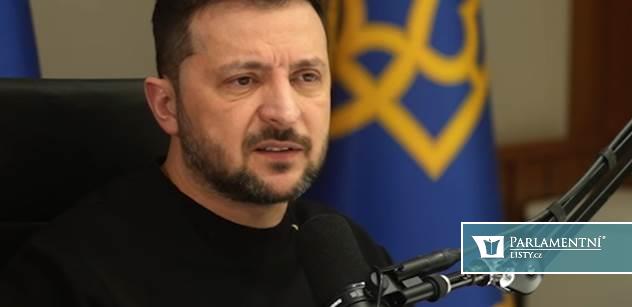
The diplomatic tightrope walked by Yerevan has become increasingly precarious as Armenia attempts to redefine its security architecture in a volatile South Caucasus. Recent frictions between Armenian Prime Minister Nikol Pashinyan and Ukrainian President Volodymyr Zelenskyy have highlighted the growing pains of Armenia’s strategic pivot away from its traditional reliance on Moscow.
At the heart of the tension is a fundamental clash of expectations: Kyiv expects a decisive break from Russian influence, while Yerevan manages a cautious, incremental transition designed to avoid total regional destabilization. This friction has not only strained ties between the two nations but has also invited sharp rebukes from the Kremlin, which views any alignment between Armenia and Ukraine as a direct challenge to Russian hegemony in the Caucasus.
The current diplomatic spat underscores the complexity of Armenia’s position. As the country moves to freeze its participation in the Collective Security Treaty Organization (CSTO), it finds itself caught between the urgent demands of Ukraine’s wartime diplomacy and the lingering, often punitive, influence of the Russian security apparatus. For Pashinyan, the challenge is to secure Western security guarantees without triggering a premature or catastrophic rupture with the neighboring superpower.
The Friction Between Kyiv and Yerevan
Tensions between Armenia and Ukraine have simmered since the start of the full-scale Russian invasion of Ukraine, primarily over Armenia’s historical and institutional ties to Russia. While Armenia has provided humanitarian aid to Ukraine, it has stopped short of the comprehensive diplomatic and strategic alignment that President Volodymyr Zelenskyy has urged.
The friction intensified following a series of diplomatic warnings from Kyiv. Ukrainian officials have repeatedly cautioned Yerevan that relying on Russian security guarantees is a strategic fallacy, citing Russia’s failure to intervene during Armenian security crises in the Nagorno-Karabakh region. These warnings, framed by some as stern critiques of Armenia’s “half-measures,” have created a perception of pressure from Kyiv that does not always align with the internal political realities of the Armenian government.
For Ukraine, Armenia represents a critical opportunity to further isolate Russia in the East. For Armenia, however, the pace of decoupling must be calibrated. The government in Yerevan has expressed that while it seeks a diversified set of partners, the immediate security environment—particularly the ongoing peace negotiations with Azerbaijan—requires a level of pragmatic caution that Kyiv may find frustrating.
The Russian Rebuke and the Geopolitical Squeeze
The diplomatic friction between Armenia and Ukraine has not gone unnoticed in Moscow. The Russian government has historically viewed Armenia as its primary ally in the South Caucasus, and the perceived drift toward the West—and by extension, an alignment with Ukraine—has been met with increasing hostility.
Following reports of tension and the rhetoric emanating from Kyiv, Russian officials have issued rebukes toward the Armenian leadership. These critiques often frame Armenia’s outreach to Western powers and its engagement with Ukraine as “betrayals” of the strategic partnership between the two nations. The Kremlin has used these moments to remind Yerevan of the risks associated with abandoning the CSTO, suggesting that a total break with Russia would leave Armenia vulnerable to regional adversaries.
This “geopolitical squeeze” places Pashinyan in a difficult position. Every step toward a Western security model is interpreted by Moscow as a victory for the West and a loss for Russian influence. The resulting rebukes are not merely rhetorical; they often coincide with Russian efforts to exert pressure through economic levers or by complicating Armenia’s border security arrangements.
Armenia’s Strategic Pivot: From CSTO to the West
The overarching narrative of this conflict is Armenia’s systemic effort to diversify its security dependencies. The disillusionment with the Collective Security Treaty Organization (CSTO) reached a breaking point after the organization failed to provide tangible support during clashes with Azerbaijan. This failure catalyzed a shift in Armenian foreign policy, leading the government to explore security partnerships with the United States, France, and the European Union.
This pivot is not merely about security, but about the survival of the Armenian state in a post-Soviet landscape. By seeking new allies, Yerevan aims to create a deterrent against further territorial losses and to build a more resilient economy. However, this transition is fraught with risk. The process of “de-Russification” of the security sector involves replacing Russian hardware, training, and intelligence frameworks—a task that takes years, not months.
The friction with Ukraine is a byproduct of this transition. Ukraine, fighting for its existence, operates on a timeline of urgency. Armenia, managing a fragile peace process and a precarious border, operates on a timeline of survival. The “rebukes” and “threats” reported in regional media are symptoms of these mismatched timelines.
Implications for the South Caucasus
The instability in Armenia-Ukraine-Russia relations has direct implications for the broader South Caucasus, particularly regarding the peace treaty between Armenia and Azerbaijan. Azerbaijan has closely monitored Armenia’s diplomatic shifts, often using Yerevan’s tensions with Moscow as a talking point to suggest that Armenia is losing its primary protector.
If Armenia successfully navigates this transition without a total collapse of relations with Russia, it could create a new model for other former Soviet republics seeking autonomy. Conversely, if the friction with Ukraine continues to provide Moscow with a pretext to punish Yerevan, the resulting instability could jeopardize the fragile ceasefire and the ongoing delimitation of borders.
the role of the European Union has become central. The EU has increased its monitoring presence in the region and provided significant diplomatic support. The success of the EU’s “Armenia-EU Comprehensive and Enhanced Partnership Agreement” will likely determine whether Armenia can withstand the pressure from both the East and the West.
Key Takeaways of the Diplomatic Crisis
- Kyiv’s Pressure: Ukraine views Armenia’s cautious approach to Russia as a strategic weakness and has urged a more decisive break.
- Moscow’s Response: Russia interprets Armenia’s Western tilt and its friction with Kyiv as a betrayal, responding with diplomatic rebukes and pressure.
- CSTO Decline: Armenia’s move to freeze its CSTO membership is the primary driver of its current geopolitical isolation and its search for new allies.
- Regional Risk: The instability in these relationships complicates the peace process between Armenia and Azerbaijan.
As Armenia continues to recalibrate its foreign policy, the world will be watching how it balances the demands of a wartime ally in Ukraine against the threats of a fading but still dangerous patron in Russia. The ability of the Pashinyan administration to maintain sovereign agency in the face of these competing pressures will define Armenia’s trajectory for the next decade.
The next critical checkpoint will be the upcoming round of bilateral talks between Armenian and Azerbaijani officials, scheduled for later this month, where the influence of external security guarantees will likely be a central, if unspoken, theme.
What do you think about Armenia’s strategic shift? Should Yerevan accelerate its break from Russia, or is a cautious approach more sustainable? Share your thoughts in the comments below.