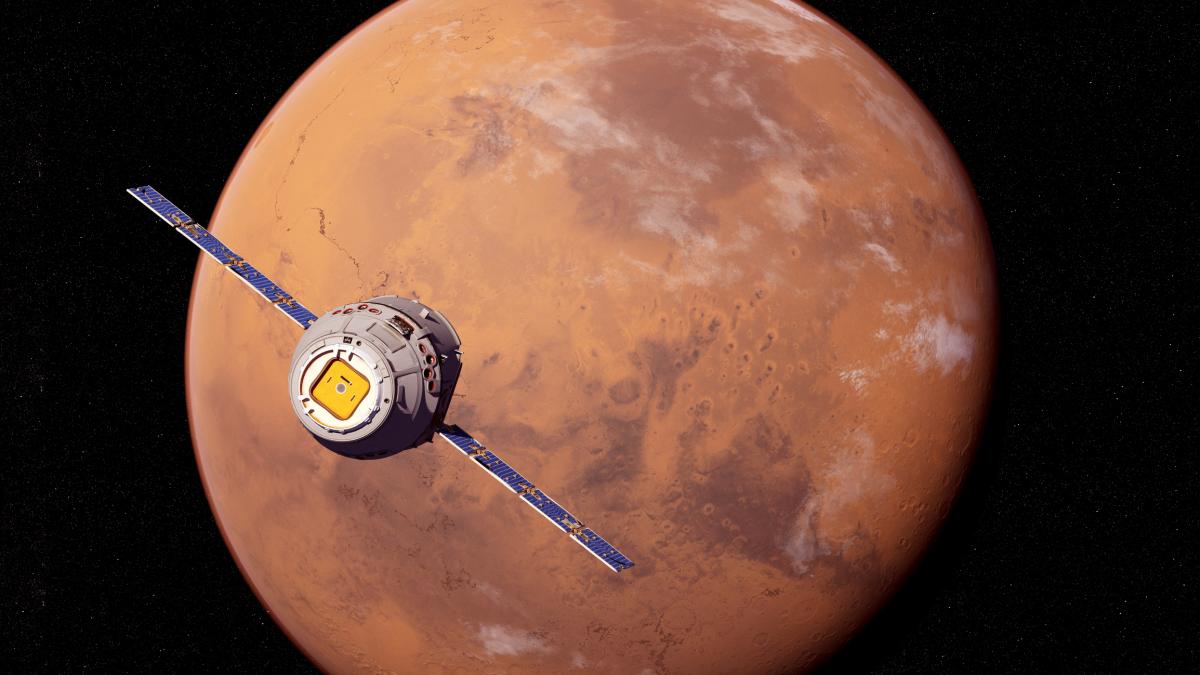
Astrophysicist Rafael Guzmán is leading the ARRAKIHS mission, the first major European Space Agency (ESA) scientific project directed from Spain, aimed at uncovering the mysteries of dark matter. The mission, which stands for Analysis of Resolved Remnants of Accreted galaxies as a Key Instrument for Halo Surveys, seeks to map the distribution of dark matter by observing the faint, outer structures of 80 target galaxies. By utilizing specialized imaging technology, researchers intend to test current cosmological models that predict how galaxies evolve through the accumulation of smaller satellite structures, according to the European Space Agency.
The project represents a significant shift in the European aerospace landscape, marking the first time Spain has held the lead role in a high-level ESA mission. Guzmán, a researcher at the Institute of Astrophysics of Andalusia (IAA-CSIC), has emphasized that the mission demonstrates Spain’s growing capacity to compete with the most advanced international space exploration initiatives. The mission was officially selected by the ESA Science Programme Committee in late 2022, following a rigorous evaluation process that pitted the proposal against several other competitive deep-space concepts, as documented by The Spanish National Research Council (CSIC).
Understanding the Dark Matter Enigma
Dark matter remains one of the most persistent challenges in modern astrophysics, as it does not emit, absorb, or reflect light, making it invisible to traditional telescopes. Scientists infer its existence through its gravitational effects on visible matter, such as the rotation speeds of galaxies and the way light bends around massive objects. ARRAKIHS is designed to observe the “halos” of galaxies—the diffuse, extended regions where dark matter is thought to be concentrated. By capturing images of these low-surface-brightness regions, the mission aims to detect the “fossil” remnants of smaller galaxies that have been consumed by larger ones, a process known as hierarchical galaxy formation.
The mission will utilize a custom-designed camera capable of observing at depths significantly greater than current ground-based observatories. According to technical specifications provided by the ARRAKIHS project team, the instrument must overcome the limitations of atmospheric interference by operating from space, allowing for a clearer view of the faint structures that hold the key to understanding the distribution of matter in the universe. This capability is expected to provide data between 5 and 100 times deeper than existing surveys, offering a unprecedented look at the early stages of galaxy assembly.
Why Spain Leads this ESA Mission
The selection of ARRAKIHS as an ESA mission is a result of years of investment in Spanish astrophysical infrastructure. The mission is not just a triumph for the lead investigators but also for the institutional framework provided by the Institute of Astrophysics of Andalusia and the broader Spanish space sector. By consolidating expertise in instrumentation and theoretical modeling, the team has been able to propose a mission that addresses a fundamental question in cosmology while remaining within the budgetary constraints of an ESA “F-class” (Fast) mission, which requires rapid development and focused objectives.

The involvement of the Teruel-based Javalambre Astrophysical Observatory has also been instrumental, providing the necessary ground-based support and validation for the mission’s observational strategies. As noted by the Center for Physics of the Cosmos of Aragon (CEFCA), the expertise gained through the Javalambre Physics of the Accelerating Universe Astrophysical Survey (J-PAS) has served as a critical foundation for the technical requirements of the ARRAKIHS project. This collaborative model between regional observatories and national research centers has allowed Spain to coordinate a project of this complexity for the first time.
Technical Challenges and Future Milestones
The primary technical hurdle for the mission involves the extreme sensitivity required to detect low-surface-brightness features. Because these structures are so faint, they are often obscured by the glare of the central galaxy or the background noise of the night sky. The ARRAKIHS camera must effectively subtract this interference to reveal the underlying dark matter halos. Development currently involves rigorous testing of sensors and optics to ensure they can survive the launch environment and function reliably in the stable, cold environment of space, according to status updates provided by the ESA Science and Technology department.

The project is currently in the development phase, with key milestones involving the finalization of the satellite’s payload and the selection of mission partners for launch and operations. While specific launch dates are subject to the broader ESA mission schedule, the team continues to refine the observation list of 80 galaxies. Researchers anticipate that the data collected will provide a definitive test for the Lambda-CDM model—the standard theory of cosmology—by confirming whether the observed number of satellite remnants matches theoretical predictions.
The scientific community awaits the next update from the ESA regarding the mission’s transition into its formal implementation phase, which is expected to detail the procurement process for the spacecraft bus and the integration timeline for the scientific instruments. Interested observers can monitor updates through the official ESA portal or the dedicated project pages maintained by the Institute of Astrophysics of Andalusia.
Related reading