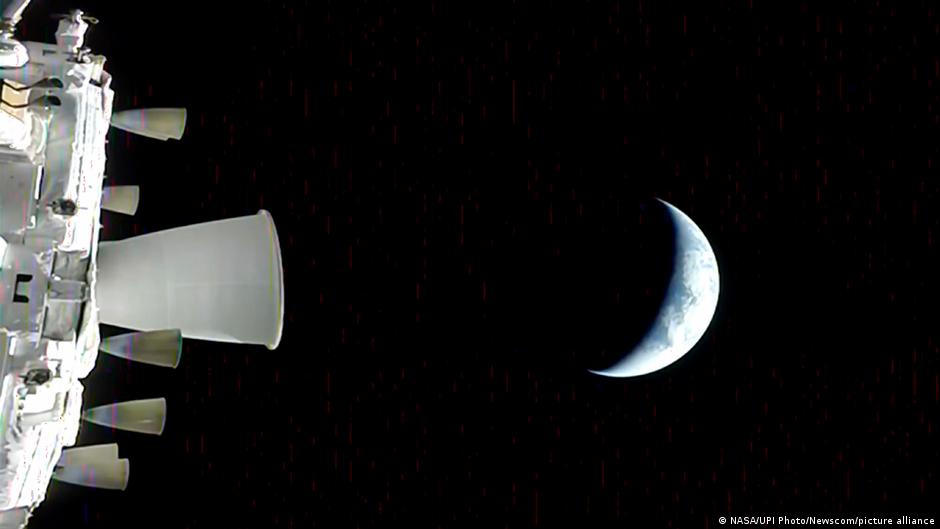
Cape Canaveral, Florida – The Artemis II mission has officially embarked on its journey to the Moon, marking a pivotal moment in NASA’s renewed lunar exploration efforts. After departing Earth orbit, the Orion spacecraft, carrying a crew of four astronauts, is now en route to Earth’s celestial neighbor, a voyage expected to last several days. This mission represents the first crewed flight of the Artemis program, building upon the success of the uncrewed Artemis I mission that orbited the Moon in late 2022. The successful translunar injection (TLI) burn, a critical maneuver to accelerate Orion towards the Moon, was completed without issue, setting the stage for a historic return to lunar proximity.
The four astronauts – Reid Wiseman, Victor Glover, Christina Koch, and Jeremy Hansen – are undertaking a rigorous mission designed not only to test the Orion spacecraft’s life support systems and capabilities in deep space but likewise to pave the way for future, more sustained lunar presence. This mission is a crucial stepping stone towards establishing a long-term human presence on the Moon and, preparing for crewed missions to Mars. The Artemis program, named after the Greek goddess of the Moon, aims to land the first woman and the first person of color on the lunar surface, furthering the goals of diversity and inclusion in space exploration.
A Smooth Departure and Successful TLI Burn
The Orion spacecraft successfully completed the TLI burn, a precisely timed engine firing that propelled it out of Earth orbit and onto a trajectory towards the Moon. This maneuver, executed by Orion’s European Service Module (ESM), was critical for setting the spacecraft on its 238,900-mile journey. According to NASA, the burn occurred precisely as planned, demonstrating the reliability of the spacecraft’s propulsion system. The ESM, built by the European Space Agency (ESA), provides Orion with essential power, propulsion, and thermal control. The successful execution of the TLI burn is a testament to the international collaboration that defines the Artemis program.
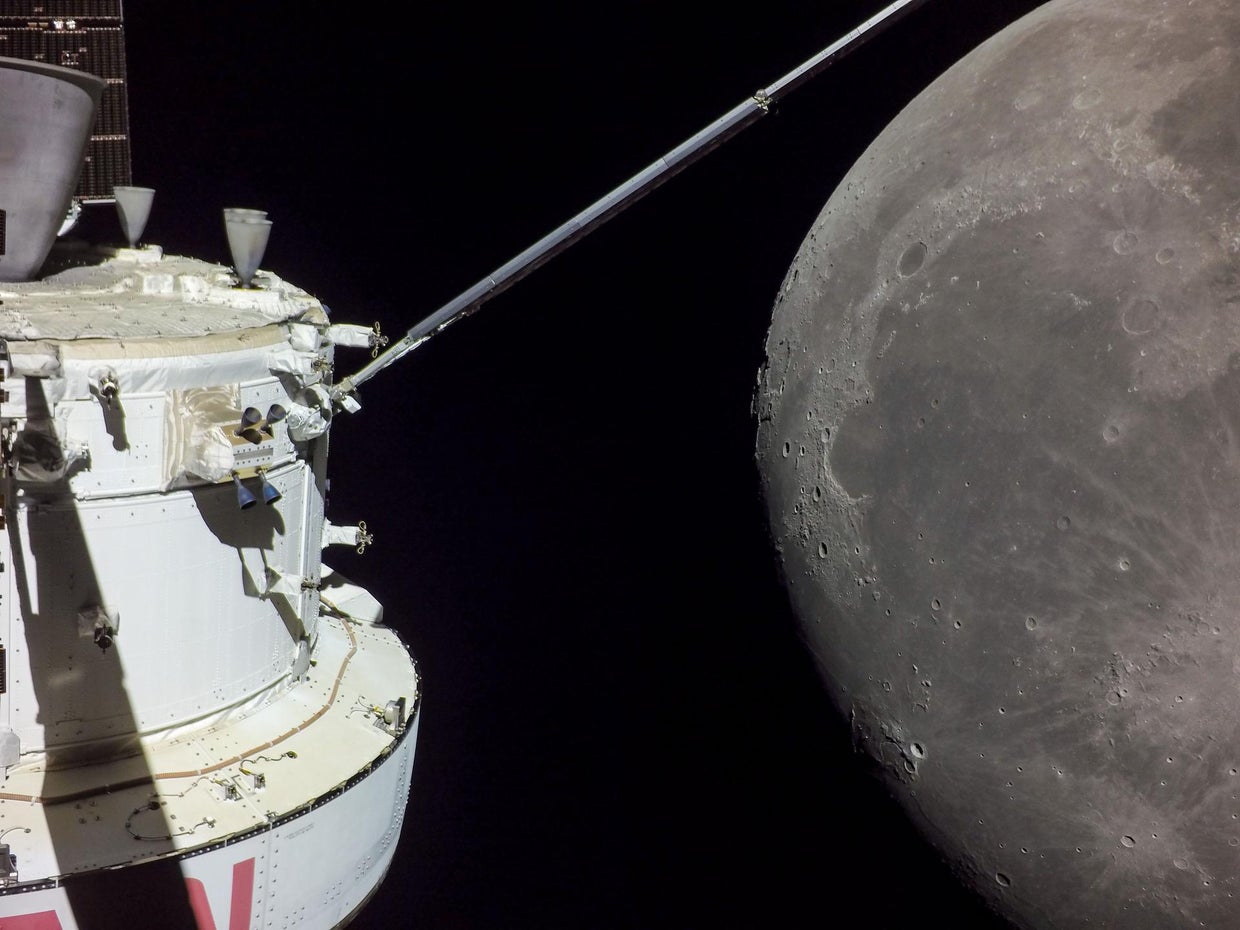
Following the TLI burn, the crew began a series of checks and preparations for the journey ahead. These include monitoring spacecraft systems, conducting scientific observations, and preparing for course correction maneuvers. The astronauts are also experiencing the unique environment of deep space, including exposure to increased levels of radiation. Data collected during the mission will be invaluable in understanding the effects of long-duration spaceflight on the human body and in developing strategies to mitigate these risks for future missions. The crew is currently focused on maintaining optimal conditions within the Orion capsule and ensuring all systems are functioning as expected.
Addressing a Unique In-Flight Challenge: Orion’s Toilet
The mission hasn’t been without its challenges. Early in the flight, the crew encountered an issue with the Orion spacecraft’s toilet system. As reported by NASA, a leak developed within the system, prompting a collaborative effort between the astronauts and ground control teams to diagnose and resolve the problem. The issue involved a component of the toilet’s fluid management system, and the crew successfully implemented a workaround to contain the leak and restore functionality. This incident highlights the importance of robust troubleshooting capabilities and the close partnership between astronauts and mission control in addressing unexpected challenges during spaceflight.
The Artemis II toilet is a significant advancement in space toilet technology. It’s designed to handle both liquid and solid waste in the zero-gravity environment of space, utilizing airflow and suction to collect and contain waste materials. As Scientific American notes, the toilet is a critical component of the spacecraft’s life support system, ensuring the crew’s comfort and hygiene during the extended mission. The successful resolution of the toilet issue demonstrates the resilience and ingenuity of the Artemis II team.
Breaking Records and Capturing the View from Space
Beyond the technical milestones, the Artemis II mission has already achieved a notable first. The crew broke a world record for the highest altitude achieved by a crewed spacecraft in orbit around Earth. This record-breaking feat occurred before the TLI burn and further underscores the mission’s pioneering spirit. The astronauts also shared stunning images of Earth from their unique vantage point, offering a breathtaking perspective of our planet. CNN reported that NASA has released the first images of Earth captured by Orion, showcasing the beauty and fragility of our home planet.
The visual spectacle of the launch itself captivated audiences worldwide. As EL PAÍS described, witnessing a rocket ascend towards the Moon is a truly awe-inspiring experience. NASA provided live coverage of the launch and continues to provide real-time updates on the mission’s progress, allowing the public to follow the journey of the Artemis II crew. The mission is being closely monitored by teams at Johnson Space Center in Houston, Texas, and at other NASA facilities around the world.
The Significance of Artemis II for Future Lunar Exploration
The Artemis II mission is more than just a test flight; it’s a critical step towards establishing a sustainable human presence on the Moon. The data collected during the mission will inform the design and operation of future Artemis missions, including Artemis III, which is planned to land astronauts on the lunar surface near the South Pole. The South Pole is of particular interest to scientists because it is believed to contain significant deposits of water ice, which could be used to produce propellant, oxygen, and other resources needed to support a long-term lunar base.
The Artemis program also aims to develop new technologies and capabilities for deep space exploration, including advanced life support systems, radiation shielding, and autonomous navigation systems. These technologies will be essential for enabling future missions to Mars and beyond. The program is fostering collaboration between NASA and international partners, including ESA, the Japan Aerospace Exploration Agency (JAXA), and the Canadian Space Agency (CSA), demonstrating the power of global cooperation in advancing space exploration.
Key Takeaways
- The Artemis II mission is currently en route to the Moon following a successful translunar injection burn.
- The crew successfully resolved an issue with the spacecraft’s toilet system, demonstrating their problem-solving skills.
- The mission broke a world record for the highest altitude achieved by a crewed spacecraft in Earth orbit.
- Artemis II is a crucial step towards establishing a sustainable human presence on the Moon and preparing for future missions to Mars.
- International collaboration is a key component of the Artemis program.
The Artemis II crew is expected to return to Earth on December 12, 2024, splashing down in the Pacific Ocean. NASA will continue to provide updates on the mission’s progress throughout the journey. For the latest information and updates, visit the official NASA Artemis website: https://www.nasa.gov/artemis. We encourage readers to share their thoughts and excitement about this historic mission in the comments below.
- AirPods 4: Target senkt Preis um 23 Prozent auf 99,99 Dollar – BornCity
- Quién es Tatiana Kaer, la streamer rival de Marta Díaz conocida por sus directos en Twitch y …
- Incendies in France Break 2022 Record for Largest Number of Burned Areas (newsdirectory3.com)
- Argentina’s Falkland Islands Sovereignty Dispute: Latest Updates (archynewsy.com)