Christina Koch, one of the four astronauts selected for NASA’s Artemis II mission, has shared insights into the physical effects of returning to Earth after extended exposure to microgravity, drawing from her record-breaking time aboard the International Space Station. While Artemis II itself has not yet launched — scheduled for no earlier than September 2025 as part of NASA’s crewed lunar flyby mission — Koch’s prior experience provides critical context for understanding the challenges astronauts face when transitioning from space to terrestrial gravity. Her firsthand account, recently highlighted in global media, underscores the physiological toll of spaceflight and the rigorous rehabilitation required upon return.
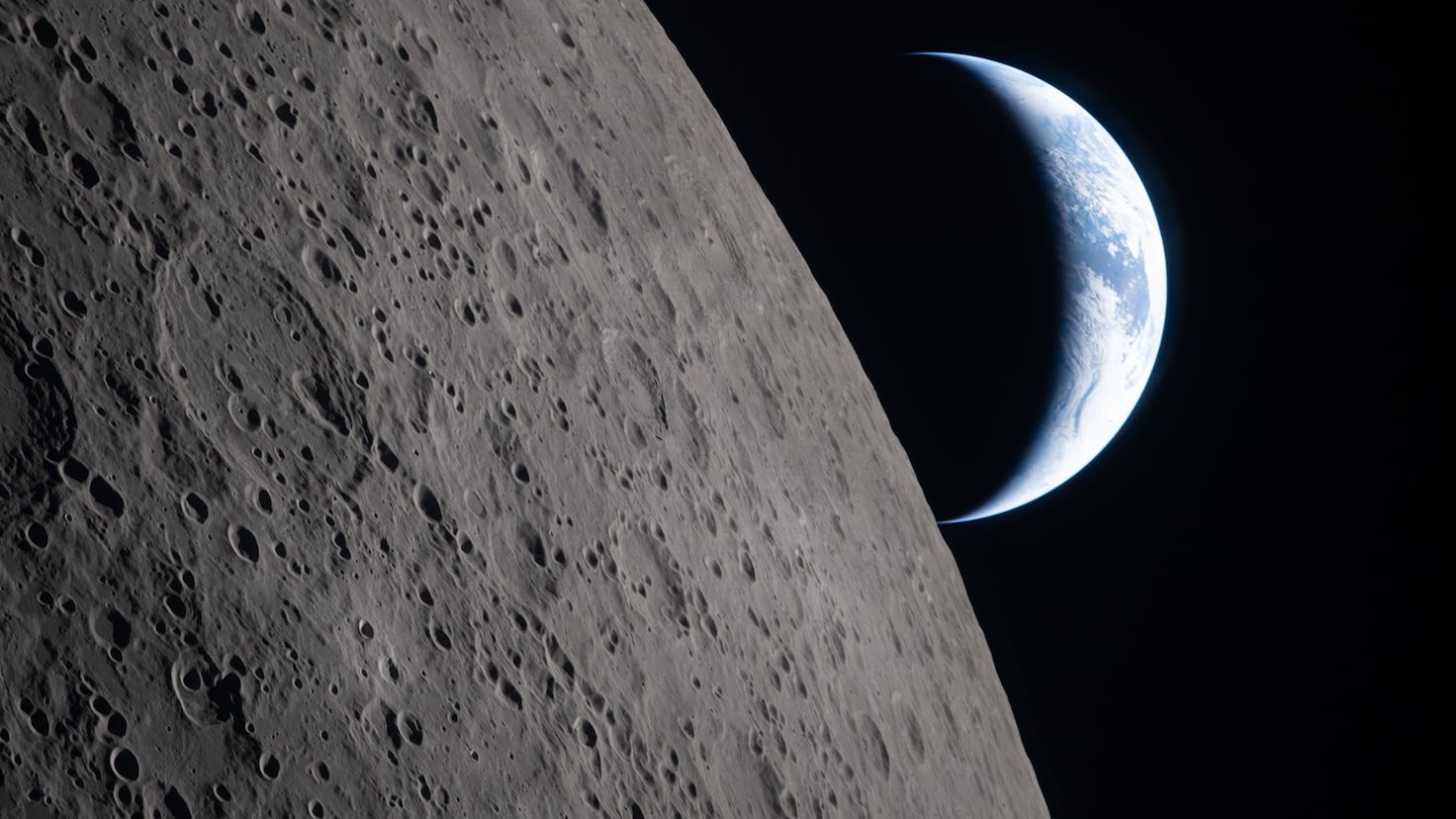
The Artemis II mission, which will send Koch alongside Reid Wiseman, Victor Glover, and Jeremy Hansen on a 10-day journey around the Moon without landing, represents a pivotal step in NASA’s deep space exploration goals. Unlike the Apollo missions, Artemis II will not involve a lunar touchdown but will instead test the Orion spacecraft’s life support, navigation, and crew systems in preparation for future landings. As Koch prepares for this historic flight — set to make her the first woman and first person of color to travel beyond low Earth orbit — her reflections on readaptation offer valuable perspective on what crew members can expect after prolonged weightlessness.
According to NASA’s Human Research Program, astronauts typically experience significant physiological changes during spaceflight, including muscle atrophy, bone density loss, fluid shifts, and cardiovascular deconditioning. In microgravity, the body no longer needs to work against Earth’s gravity, leading to a reduction in muscle mass — particularly in the legs and lower back — and a decrease in bone mineral density at a rate of about 1% per month. These effects are compounded by fluid redistribution toward the upper body, which can cause facial puffiness, vision changes, and increased intracranial pressure, a condition known as Spaceflight-Associated Neuro-Ocular Syndrome (SANS).
Koch, who spent 328 days in space during her 2019–2020 mission — the longest single spaceflight by a woman at the time — described the immediate aftermath of return as profoundly disorienting. In interviews, she has noted that even simple tasks like standing or walking felt alien, as her body struggled to reacclimate to gravity’s pull. “It’s not just about being weak,” she explained in a 2020 NASA podcast. “Your sense of orientation is off. You feel heavy, but not in the way you expect. It’s like your body has forgotten how to be a body on Earth.” These sensations are common among returning astronauts and often require weeks of structured rehabilitation to overcome.
Post-mission recovery typically involves a phased reconditioning program supervised by NASA’s Astronaut Strength, Conditioning, and Rehabilitation (ASCR) team. This includes treadmill walking with harness support, resistance training, balance exercises, and cardiovascular monitoring. For Koch, regaining the ability to walk unassisted took nearly two weeks, a timeline consistent with other long-duration mission veterans. “You’re not just rebuilding muscle,” she said. “You’re retraining your nervous system to interpret signals from your feet, your inner ear, your eyes — all the systems that tell you where you are in space.”
The Artemis II crew has undergone extensive preparation to mitigate these effects, including pre-flight conditioning, in-flight exercise protocols using the Advanced Resistive Exercise Device (ARED), and post-flight recovery planning. NASA emphasizes that countermeasures have improved significantly since the early days of spaceflight, helping astronauts return to baseline function faster and more completely. Still, individual responses vary, and missions beyond low Earth orbit — such as those planned for Artemis III and beyond — will present fresh challenges due to longer durations and deeper space exposure.
Beyond the physical toll, Koch has also spoken about the psychological and sensory disorientation of return. In a 2023 interview with The Washington Post, she described how everyday sensations — like the weight of a blanket or the pressure of shoes — felt unexpectedly intense after months of weightlessness. “Your skin is suddenly aware of things it hasn’t felt in a year,” she said. “It’s overwhelming in a quiet way.” These perceptual shifts, while less documented than musculoskeletal changes, are an active area of study in space medicine, particularly as missions grow longer and more distant.
As Artemis II approaches its launch window, Koch’s experience serves as both a testament to human adaptability and a reminder of the profound demands of space travel. The mission will not only validate Orion’s systems for crewed deep spaceflight but also provide valuable data on how the human body responds to the combined stresses of launch, trans-lunar injection, lunar flyby, and re-entry — all critical for future missions to Mars.
For readers interested in following the mission’s progress, NASA provides real-time updates through its Artemis blog and social media channels. The agency also offers public access to astronaut training logs, medical research summaries, and mission timelines via its official website. As the launch date nears, briefings from NASA’s Johnson Space Center will detail final readiness reviews, weather constraints, and launch countdown procedures.
Christina Koch’s journey — from record-setting station resident to pioneer of the Artemis generation — continues to highlight the intersection of human resilience and technological advancement in space exploration. Her openness about the challenges of readaptation not only informs public understanding but also helps shape better support systems for astronauts venturing farther from Earth than ever before.
Stay informed about Artemis II developments by visiting NASA’s official Artemis mission page, where updates on launch schedules, crew activities, and scientific objectives are regularly posted. Share your thoughts on the mission’s significance in the comments below, and help spread awareness of the incredible effort behind humanity’s return to the Moon.
Christina Koch, one of the four astronauts selected for NASA’s Artemis II mission, has shared insights into the physical effects of returning to Earth after extended exposure to microgravity, drawing from her record-breaking time aboard the International Space Station. While Artemis II itself has not yet launched — scheduled for no earlier than September 2025 as part of NASA’s crewed lunar flyby mission — Koch’s prior experience provides critical context for understanding the challenges astronauts face when transitioning from space to terrestrial gravity. Her firsthand account, recently highlighted in global media, underscores the physiological toll of spaceflight and the rigorous rehabilitation required upon return.
The Artemis II mission, which will send Koch alongside Reid Wiseman, Victor Glover, and Jeremy Hansen on a 10-day journey around the Moon without landing, represents a pivotal step in NASA’s deep space exploration goals. Unlike the Apollo missions, Artemis II will not involve a lunar touchdown but will instead test the Orion spacecraft’s life support, navigation, and crew systems in preparation for future landings. As Koch prepares for this historic flight — set to make her the first woman and first person of color to travel beyond low Earth orbit — her reflections on readaptation offer valuable perspective on what crew members can expect after prolonged weightlessness.
According to NASA’s Human Research Program, astronauts typically experience significant physiological changes during spaceflight, including muscle atrophy, bone density loss, fluid shifts, and cardiovascular deconditioning. In microgravity, the body no longer needs to work against Earth’s gravity, leading to a reduction in muscle mass — particularly in the legs and lower back — and a decrease in bone mineral density at a rate of about 1% per month. These effects are compounded by fluid redistribution toward the upper body, which can cause facial puffiness, vision changes, and increased intracranial pressure, a condition known as Spaceflight-Associated Neuro-Ocular Syndrome (SANS).
Koch, who spent 328 days in space during her 2019–2020 mission — the longest single spaceflight by a woman at the time — described the immediate aftermath of return as profoundly disorienting. In interviews, she has noted that even simple tasks like standing or walking felt alien, as her body struggled to reacclimate to gravity’s pull. “It’s not just about being weak,” she explained in a 2020 NASA podcast. “Your sense of orientation is off. You feel heavy, but not in the way you expect. It’s like your body has forgotten how to be a body on Earth.” These sensations are common among returning astronauts and often require weeks of structured rehabilitation to overcome.
Post-mission recovery typically involves a phased reconditioning program supervised by NASA’s Astronaut Strength, Conditioning, and Rehabilitation (ASCR) team. This includes treadmill walking with harness support, resistance training, balance exercises, and cardiovascular monitoring. For Koch, regaining the ability to walk unassisted took nearly two weeks, a timeline consistent with other long-duration mission veterans. “You’re not just rebuilding muscle,” she said. “You’re retraining your nervous system to interpret signals from your feet, your inner ear, your eyes — all the systems that tell you where you are in space.”
The Artemis II crew has undergone extensive preparation to mitigate these effects, including pre-flight conditioning, in-flight exercise protocols using the Advanced Resistive Exercise Device (ARED), and post-flight recovery planning. NASA emphasizes that countermeasures have improved significantly since the early days of spaceflight, helping astronauts return to baseline function faster and more completely. Still, individual responses vary, and missions beyond low Earth orbit — such as those planned for Artemis III and beyond — will present new challenges due to longer durations and deeper space exposure.
Beyond the physical toll, Koch has also spoken about the psychological and sensory disorientation of return. In a 2023 interview with The Washington Post, she described how everyday sensations — like the weight of a blanket or the pressure of shoes — felt unexpectedly intense after months of weightlessness. “Your skin is suddenly aware of things it hasn’t felt in a year,” she said. “It’s overwhelming in a quiet way.” These perceptual shifts, while less documented than musculoskeletal changes, are an active area of study in space medicine, particularly as missions grow longer and more distant.
As Artemis II approaches its launch window, Koch’s experience serves as both a testament to human adaptability and a reminder of the profound demands of space travel. The mission will not only validate Orion’s systems for crewed deep spaceflight but also provide valuable data on how the human body responds to the combined stresses of launch, trans-lunar injection, lunar flyby, and re-entry — all critical for future missions to Mars.
For readers interested in following the mission’s progress, NASA provides real-time updates through its Artemis blog and social media channels. The agency also offers public access to astronaut training logs, medical research summaries, and mission timelines via its official website. As the launch date nears, briefings from NASA’s Johnson Space Center will detail final readiness reviews, weather constraints, and launch countdown procedures.
Christina Koch’s journey — from record-setting station resident to pioneer of the Artemis generation — continues to highlight the intersection of human resilience and technological advancement in space exploration. Her openness about the challenges of readaptation not only informs public understanding but also helps shape better support systems for astronauts venturing farther from Earth than ever before.
Stay informed about Artemis II developments by visiting NASA’s official Artemis mission page, where updates on launch schedules, crew activities, and scientific objectives are regularly posted. Share your thoughts on the mission’s significance in the comments below, and help spread awareness of the incredible effort behind humanity’s return to the Moon.
Related reading