
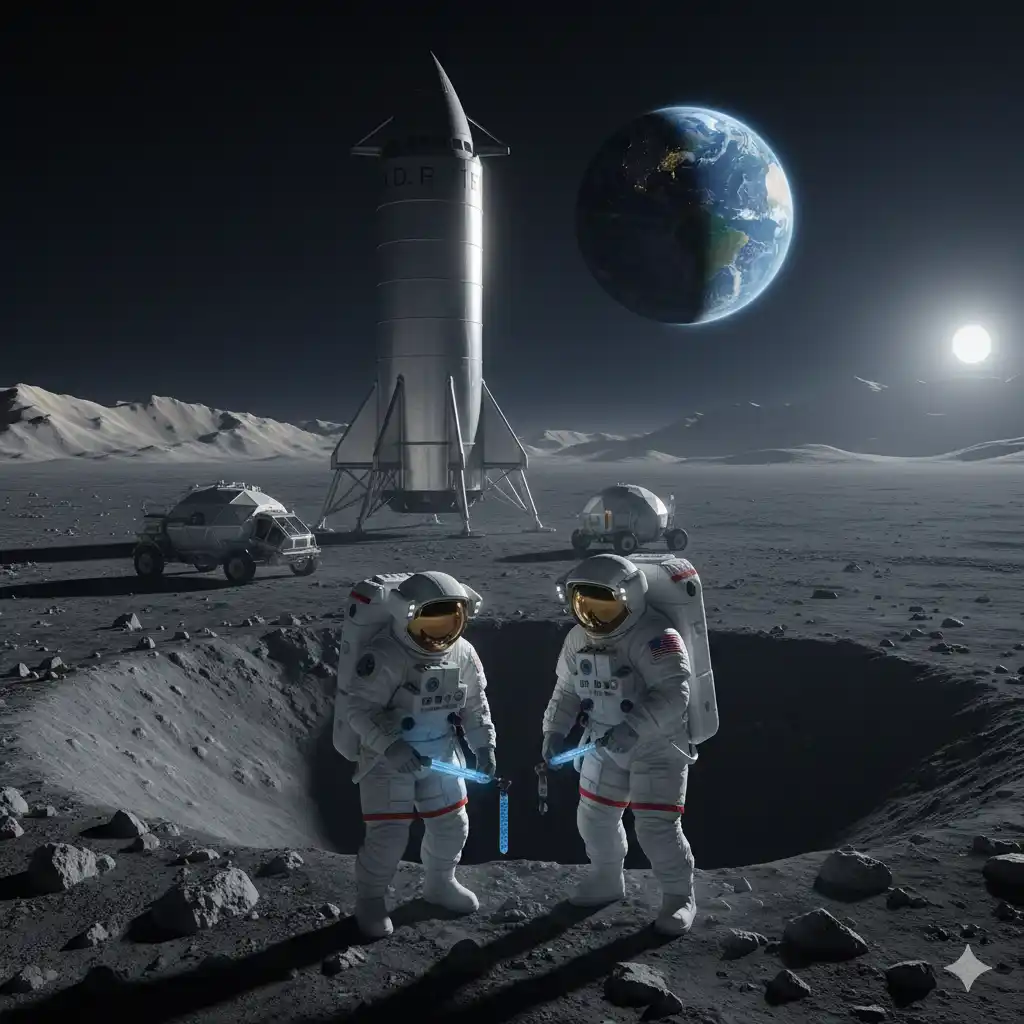
The return of the Artemis II crew to Earth marks more than just a technical victory for NASA; it represents a profound human transition. After a record-setting journey that pushed the boundaries of crewed lunar exploration, the astronauts have splashed down and reunited with their families in Houston, transitioning from the stark isolation of deep space to the intimate warmth of home.
This mission, the first crewed flight of the Artemis program, serves as the critical bridge between the robotic precursors of the past and the sustainable human presence NASA envisions for the future. Although the mission’s success is measured in telemetry and orbital precision, the emotional aftermath—the “welcome home” moments—highlights the psychological toll and the enduring human drive to explore the unknown while remaining tethered to the people they love.
As the crew begins the process of debriefing, the focus has shifted from the mechanical performance of the spacecraft to the human experience of the voyage. The return of these “Moonfarers” to Earth underscores a recurring theme in space exploration: the more distant the destination, the more precious the return to family becomes.
The Human Element of Lunar Exploration
The transition from the Orion spacecraft back to the surface of Earth is a jarring experience, both physically and emotionally. For the crew of Artemis II, the journey involved navigating the void beyond the Moon, a feat that required immense psychological resilience. The reunion with families in Houston serves as the final, most vital stage of the mission, reminding both the astronauts and the global public that the goal of exploration is not merely to leave Earth, but to expand our understanding of it.

The Artemis II mission was designed to test the capabilities of the Orion spacecraft and the Space Launch System (SLS) with a human crew on board. With a crew capacity of four, the mission pushed the limits of long-term survival in deep space, where the crew lived in a confined environment far from the immediate rescue capabilities available in Low Earth Orbit (LEO).
The emotional weight of such a mission is often overshadowed by the technical milestones. However, the act of reuniting with loved ones after a record-setting flight emphasizes the inherent tension of the astronaut’s life: the desire to pioneer recent frontiers versus the instinctual need for human connection. This duality is a cornerstone of the human experience in space, where the “cosmic perspective” of seeing Earth as a fragile blue marble often intensifies the longing for the familiar.
Building the Foundation for Mars
The Artemis II mission is not an isolated event but a strategic step in a larger architectural plan. Under the Artemis program, NASA is sending astronauts on increasingly difficult missions to explore the Moon for scientific discovery and economic benefits, using the lunar surface as a testing ground for the first crewed missions to Mars .
To ensure this exploration is sustainable and peaceful, NASA worked in coordination with the U.S. Department of State and seven other initial signatory nations to establish the Artemis Accords in 2020 . These agreements provide a framework for international cooperation, ensuring that the return to the Moon is a collaborative effort rather than a competitive race.
The program’s trajectory is clear: by standardizing the Space Launch System (SLS) rocket configuration and increasing the cadence of missions, NASA aims to maintain superiority in exploration and discovery. The lessons learned from the Artemis II crew’s experience—both the technical data and the psychological insights—will be instrumental in designing the habitats and life-support systems required for a multi-year journey to Mars.
Technical Milestones and Infrastructure
The success of the April 1, 2026, crewed flight was made possible by a massive investment in infrastructure and technology . The mission relied on the Space Launch System (SLS), the most powerful rocket currently in operation, to propel the Orion spacecraft on its journey beyond the Moon.
The financial scale of the program reflects its ambition. The Artemis program has seen a cost of approximately US$93 billion between 2012 and 2025, with $53 billion allocated specifically for the 2021–2025 window . This investment supports not only NASA but a network of partners, including the ESA, JAXA, DLR, UKSA, ASI, ISA, MBRSC, KARI, and CSAP.
Beyond the SLS, the program integrates various crewed vehicles and commercial launch options to ensure redundancy and efficiency. While Orion serves as the primary crew vehicle, the program also incorporates Starship HLS and Blue Moon for lunar landing capabilities, alongside launch vehicles like Falcon Heavy and New Glenn .
Key Mission Specifications
| Component | Detail |
|---|---|
| First Crewed Flight Date | April 1, 2026 |
| Primary Spacecraft | Orion |
| Launch Vehicle | Space Launch System (SLS) |
| Crew Capacity | 4 Astronauts |
| Primary Goal | Crewed lunar orbit and return |
The technical success of the splashdown and the subsequent recovery of the crew in Houston verify that the Orion spacecraft can safely transport humans through the extreme thermal and radiation environments of deep space. This verification is essential before NASA proceeds to land astronauts on the lunar surface.
As the Artemis II crew settles back into terrestrial life, their experiences will provide the roadmap for future explorers. The psychological data regarding their isolation and their subsequent reunion with family will likely influence how NASA manages crew mental health for the even longer durations required for a Mars transit.
The next confirmed checkpoint for the program involves the continuing standardization of the SLS rocket configuration and the preparation for subsequent Artemis missions, which will aim to land American astronauts on the surface of the Moon .
What are your thoughts on the psychological challenges of deep space exploration? Share your views in the comments below or share this article with your network.