
In a display of resilience that has surprised many veteran market observers, Asia-Pacific equities staged a notable recovery this week. Investors appear to be recalibrating their risk appetite, effectively shrugging off renewed geopolitical friction in the Middle East as optimism surrounding potential ceasefire developments takes center stage. This sentiment shift has propelled major benchmarks, most notably South Korea’s Kospi and Japan’s Topix, to impressive heights, signaling a robust appetite for regional growth despite the underlying volatility in global energy markets.
The recent performance of the Kospi and Topix reflects a broader trend among institutional investors who are increasingly prioritizing corporate governance reforms and domestic economic indicators over external geopolitical noise. While the threat of escalation involving Iran and Israel remains a staple of daily briefings, the markets are currently anchored by the tangible progress of corporate earnings and expectations of shifting monetary policies. As we analyze these movements, it becomes clear that the “fear premium” typically associated with regional conflicts is being heavily discounted in favor of long-term structural value.
For global investors, these record highs represent more than just a momentary rally; they are a testament to the maturation of Asian markets. As the Topix index continues to navigate the complexities of a weakening yen and the Kospi benefits from a resurgence in semiconductor demand, the narrative is shifting from defensive positioning to strategic accumulation. Understanding these dynamics is essential for any portfolio manager looking to navigate the current economic landscape.
Understanding the Market Resilience
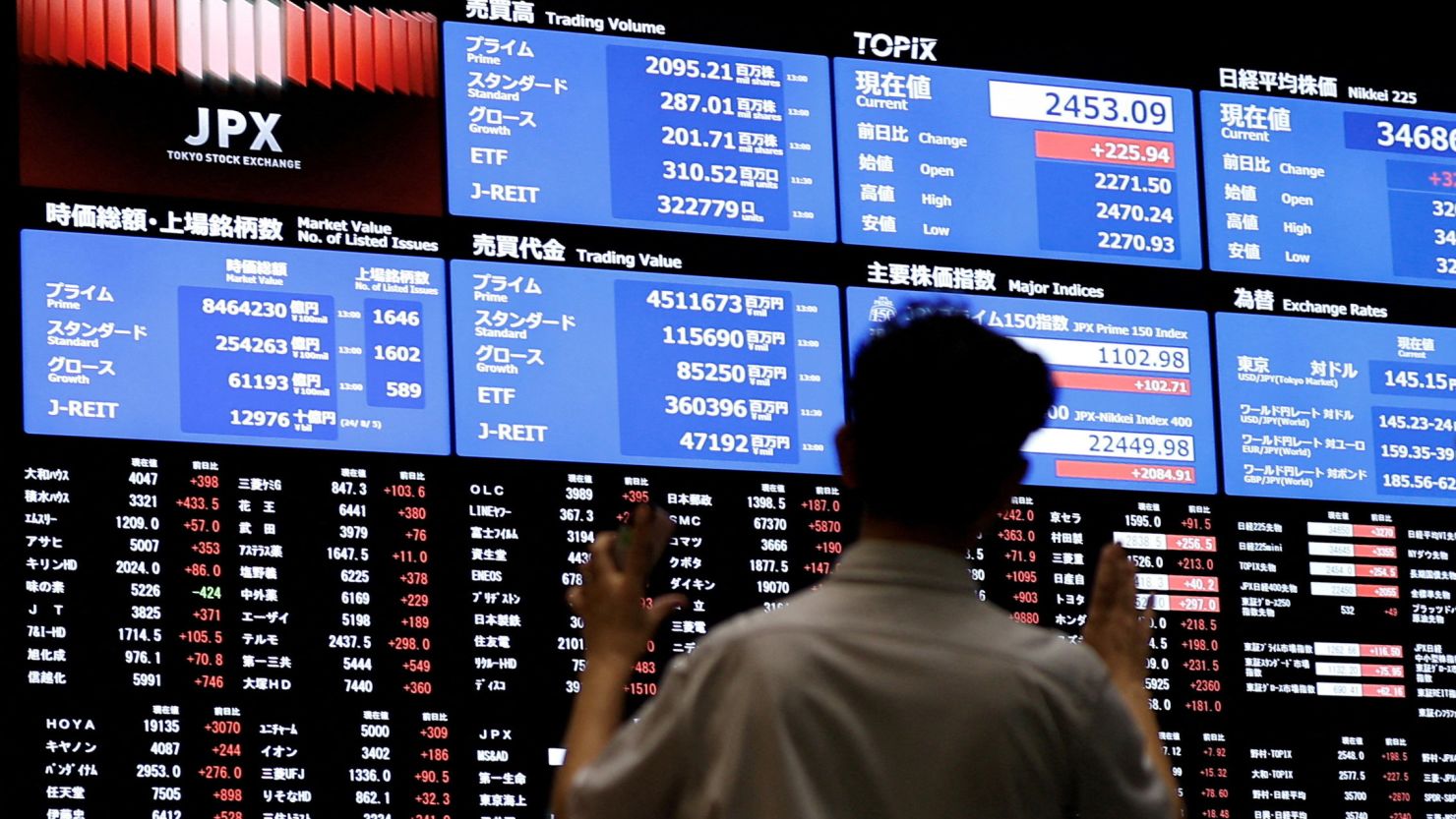
The upward trajectory of the Topix—Japan’s broadest measure of stock performance—has been largely underpinned by a mix of corporate governance improvements and the persistent weakness of the Japanese yen, which boosts the bottom lines of major exporters. According to data from the Japan Exchange Group, the push by the Tokyo Stock Exchange to encourage companies to improve their price-to-book ratios has been a primary catalyst for domestic and foreign inflows. This structural reform, coupled with a cautious yet optimistic view on the Bank of Japan’s path, has created a fertile ground for equity growth.

Similarly, South Korea’s Kospi has found support in the global appetite for high-bandwidth memory chips and artificial intelligence hardware. The index, which tracks the performance of the Korea Exchange, has benefited from the strong performance of bellwether stocks that are central to the global supply chain. While geopolitical tensions occasionally introduce intraday volatility, the long-term outlook for the index remains tied to the recovery of the global tech cycle and the resilience of the South Korean export sector.
Key Takeaways for Global Investors
- Geopolitical Decoupling: Markets are increasingly separating localized conflict risks from macroeconomic fundamentals, provided those conflicts do not disrupt major energy shipping lanes.
- Governance as a Catalyst: In Japan, the structural push for better capital efficiency is proving to be a stronger driver of value than interest rate speculation alone.
- Tech-Led Recovery: South Korean indices remain highly sensitive to the global semiconductor cycle; continued demand for AI-related hardware remains the primary floor for the Kospi.
- Currency Dynamics: The yen’s current valuation continues to serve as an unconventional tailwind for large-cap Japanese exporters, balancing inflationary pressures.
The Role of Ceasefire Optimism
The market’s ability to “look through” the headlines regarding Iran stems from a widely held expectation that major powers will work to prevent a full-scale regional conflagration that could destabilize global oil supplies. When investors perceive that a ceasefire or a de-escalation is within the realm of diplomatic possibility, risk assets—particularly in the Asia-Pacific region—tend to recover rapidly. This behavior is not necessarily a dismissal of the tragedy of conflict, but rather a cold, calculated assessment of the probability of economic disruption.
Energy prices, which typically spike during periods of heightened tension in the Middle East, have shown signs of stabilizing, providing a sigh of relief to energy-import-dependent economies like Japan and South Korea. When crude oil benchmarks remain within a predictable range, central banks are less pressured to tighten monetary policy in response to imported inflation. This stability is the quiet engine behind the current record-setting performance of these indices.
What Happens Next?
Looking ahead, the next major checkpoint for these markets will be the upcoming quarterly earnings season and the subsequent policy meetings of the Bank of Japan and the Bank of Korea. Investors will be scrutinizing forward guidance for any signs of margin compression due to rising commodity costs. Any official updates regarding the stability of regional trade routes will be monitored closely by the International Monetary Fund, which continues to provide periodic outlooks on global trade and regional stability.
As we continue to monitor these developments, while the current sentiment is bullish, the environment remains sensitive to sudden shifts in central bank rhetoric. For those of you tracking these trends, I encourage you to keep a close watch on the official filings from the Tokyo Stock Exchange and the Korea Exchange for the most accurate data on institutional flows. I welcome your thoughts on how these regional shifts might impact your own investment strategy—please share your insights in the comments section below.