
Asian nations continue to invest heavily in advanced air defense systems amid evolving regional security challenges, with two prominent platforms drawing consistent attention: China’s HQ-9 missile system and India’s Akash missile system. Both systems serve as foundational components of their respective countries’ layered air defense architectures, yet they differ significantly in design philosophy, operational range, and intended battlefield roles.
According to verified defense analyses, the Chinese HQ-9 is classified as a long-range surface-to-air missile system designed to provide strategic-area defense, capable of engaging targets at distances exceeding 200 kilometers in its latest iterations. Developed by China Aerospace Science and Industry Corporation (CASIC), the system incorporates advanced passive electronically scanned array (PESA) radar technology and vertical launch configurations, enabling simultaneous tracking of multiple aerial threats including fighter jets, drones, and cruise missiles.
In contrast, India’s Akash system functions as a medium-range air defense solution focused on protecting high-value assets and critical infrastructure. Developed by the Defence Research and Development Organisation (DRDO) and produced by Bharat Dynamics Limited (BDL), the Akash employs a command-guided missile approach with indigenous radar systems, offering effective engagement ranges typically cited between 25 to 30 kilometers for standard variants, with extended-range versions under development reaching up to 45 kilometers.
The HQ-9’s mobility and modular design allow for rapid deployment and repositioning, making it suitable for wide-area theater operations and deterrence postures. Meanwhile, the Akash emphasizes integration with lower-tier systems like the Akash-Naval variant for maritime protection and is being upgraded with active radar homing seekers in its Akash-1S iteration to improve accuracy against maneuvering targets.
Both systems have undergone export efforts, with the HQ-9BE variant finding international customers and the Akash securing interest from several friendly nations seeking cost-effective, domestically produced air defense options. However, neither system has been publicly confirmed to have seen combat use as of April 2026.
Technical Comparison: Range, Guidance, and Radar Integration
The operational envelope of these systems reflects their distinct doctrinal purposes. The HQ-9’s long-range capability stems from its two-stage solid-fuel missile design and inertial navigation system updated via mid-course data links, terminally guided by active radar homing in later models. This enables engagement of high-altitude, high-speed targets at significant standoff distances, aligning with China’s emphasis on anti-access/area denial (A2/AZ) strategies.
The Akash, by comparison, relies on a ramjet-propelled sustainer motor allowing it to maintain speed during flight, guided initially by ground-based radar commands before switching to terminal active radar homing in improved versions. Its launchers typically carry three missiles each, mounted on modified BMP-II or Tata trucks, providing shoot-and-scoot capability suitable for tactical battlefield air defense.
Radar integration further highlights the divergence: the HQ-9 is often paired with the Type 360 or SLC-7 radar systems capable of tracking hundreds of targets simultaneously, while the Akash utilizes the Rajendra multifunction radar—a passive electronically scanned array developed by DRDO—which handles target acquisition, tracking, and missile guidance for multiple engagements.
Operational Deployment and Strategic Implications
China has deployed HQ-9 systems across its eastern coastal regions, along the Line of Actual Control with India, and in the South China Sea, reflecting its use as a strategic deterrent and perimeter defense tool. Reports indicate mobile battalions are regularly exercised in joint drills with fighter squadrons and naval units to simulate integrated air defense operations.
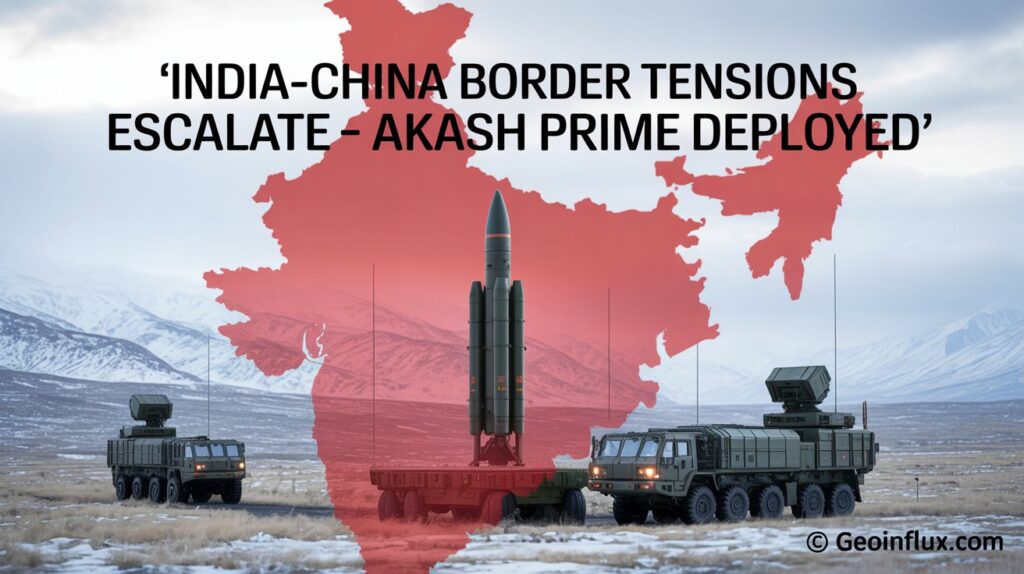
India fields Akash squadrons primarily along its northern and western borders, with additional deployments protecting major cities and military headquarters. The system has been integrated into the Indian Air Force’s lower-tier defense layer, working alongside systems like the Spyder and forthcoming medium-range systems to counter low-to-medium altitude threats.
Neither system currently incorporates hypersonic glide vehicle interception as a primary capability, though both nations are pursuing next-generation defenses. China is testing the HQ-19 system for exoatmospheric interception, while India is advancing the Project Kusha long-range surveillance and missile system intended to eventually complement or supplement existing layers.
Cost considerations too differentiate the two: the Akash benefits from high indigenous content—estimated over 90% in later variants—reducing lifecycle expenses and enhancing self-reliance, whereas the HQ-9, while effective, involves higher complexity in radar and missile electronics that may increase sustainment demands for export clients.
Regional Context and Defense Modernization Trends
The comparison between HQ-9 and Akash reflects broader trends in Asian defense modernization, where nations are investing in tiered air defense networks to counter increasingly sophisticated aerial threats, including stealth aircraft, drone swarms, and precision-guided munitions. Both China and India are pursuing indigenous development paths to reduce foreign dependency, though with varying degrees of success in technology absorption and production scaling.
Analysts note that while the HQ-9 offers superior reach and altitude performance, the Akash provides a more affordable, easier-to-maintain option for countries seeking credible air defense without the logistical burden of long-range systems. This distinction influences export prospects, with the Akash finding traction in markets prioritizing offset agreements and local production, while the HQ-9 appeals to those requiring deep-strike interception capabilities.
As of April 2026, both systems remain in active service with ongoing upgrade programs. The Akash-1S, featuring an indigenous active radar seeker and improved electronic counter-countermeasures (ECCM), is undergoing user trials, while the HQ-9 continues to receive software and radar enhancements to counter low-observable targets.
No official announcements regarding direct comparative testing between the two systems have been made public, and claims of head-to-head performance evaluations remain unverified by credible defense sources.
What This Means for Regional Security
The continued development and deployment of systems like the HQ-9 and Akash underscore the growing importance of integrated air defense in maintaining strategic stability. As aerial threats evolve with advances in drone technology, hypersonics, and electronic warfare, the ability to detect, track, and intercept across multiple layers becomes critical.

For policymakers and defense planners, the choice between long-range strategic systems and medium-range tactical solutions depends on threat perception, geographic depth, budget constraints, and alliance structures. Neither system alone provides complete coverage, reinforcing the necessity of networked defense architectures that combine long-range interceptors, medium-range buffers, and short-range point defense.
Moving forward, transparency in testing data, export criteria, and interoperability standards will be key to assessing how these systems contribute to regional deterrence dynamics. Observers recommend monitoring upcoming defense expos, such as Defexpo India and Zhuhai Airshow, for public demonstrations of upgraded variants and potential international collaborations.
As both nations refine their capabilities, the focus remains on ensuring defensive credibility without triggering arms race instabilities—a balance that requires not only technological advancement but also strategic restraint and diplomatic engagement.
For official updates on system deployments, test flights, or export developments, readers are encouraged to consult verified sources including the Defence Research and Development Organisation (DRDO) website, China Aerospace Science and Industry Corporation (CASIC) press releases, and authoritative defense journals such as Janes Defence Weekly and Military Balance publications.
Stay informed, share insights, and join the conversation on how evolving defense technologies shape security in Asia and beyond.