ASRock, a leading manufacturer of motherboards, graphics cards and compact computing solutions, has made a bold move into the mini-PC market with a new platform that pushes the boundaries of memory capacity and modular design. The company’s latest announcement introduces a mini-PC capable of supporting 128GB of RAM—an unprecedented feat for this form factor—and three distinct barebone configurations tailored to different professional and enterprise needs. This development marks a significant evolution in compact computing, addressing the growing demand for high-performance, space-efficient systems in industries ranging from content creation to data centers.
While ASRock has long been recognized for its innovation in motherboard and graphics card technology, this foray into mini-PCs with such substantial RAM capacity signals a shift toward meeting the needs of power users who require both performance and portability. The announcement, which has generated buzz among tech enthusiasts and industry analysts, raises important questions about the practical applications of such hardware, its target audience, and how it compares to existing solutions in the market.
In this comprehensive breakdown, we’ll explore the technical specifications of ASRock’s new mini-PC platform, its potential use cases, and why this development matters for professionals, businesses, and tech enthusiasts alike. We’ll also examine how this hardware fits into the broader landscape of compact computing and what it means for the future of high-performance, space-saving workstations.
Breaking Down ASRock’s 128GB RAM Mini-PC Platform
At the heart of ASRock’s new mini-PC platform is its ability to support 128GB of DDR5 RAM, a capacity that dwarfs the typical 32GB or 64GB configurations found in most compact systems. According to verified industry reports, this achievement is made possible through a combination of advanced memory controllers and a redesigned form factor that accommodates multiple RAM slots without sacrificing internal storage or connectivity options. For context, DDR5 memory is the latest standard for high-speed RAM, offering improved bandwidth and efficiency over its DDR4 predecessor, which is critical for demanding workloads.
The platform will be available in three barebone configurations, each designed to cater to specific user needs:

- Professional Workstation: Optimized for productivity software, video editing, and 3D rendering, featuring high-end connectivity and support for dual GPUs.
- Creator Edition: Targeted at content creators, this configuration includes advanced audio and video processing capabilities, as well as support for high-resolution displays.
- Enterprise Barebone: Designed for business environments, this version prioritizes security features, remote management, and scalability for data center or office deployments.
While exact pricing and release dates have not been officially confirmed by ASRock, industry insiders suggest that the mini-PCs will be positioned as premium offerings, likely starting at $1,500–$2,500 depending on the configuration. This pricing aligns with other high-end compact workstations, such as those from Apple’s Mac Mini or Dell’s OptiPlex Micro, but with significantly more RAM capacity.
Technical Specifications and Performance
The mini-PC is expected to be powered by the latest Intel Core Ultra or AMD Ryzen PRO processors, depending on the configuration. These chips are known for their high core counts and integrated graphics capabilities, which are essential for handling memory-intensive tasks. For example, Intel’s Core i9-14900K or AMD’s Ryzen 9 7950X3D are popular choices for workstations requiring substantial processing power.
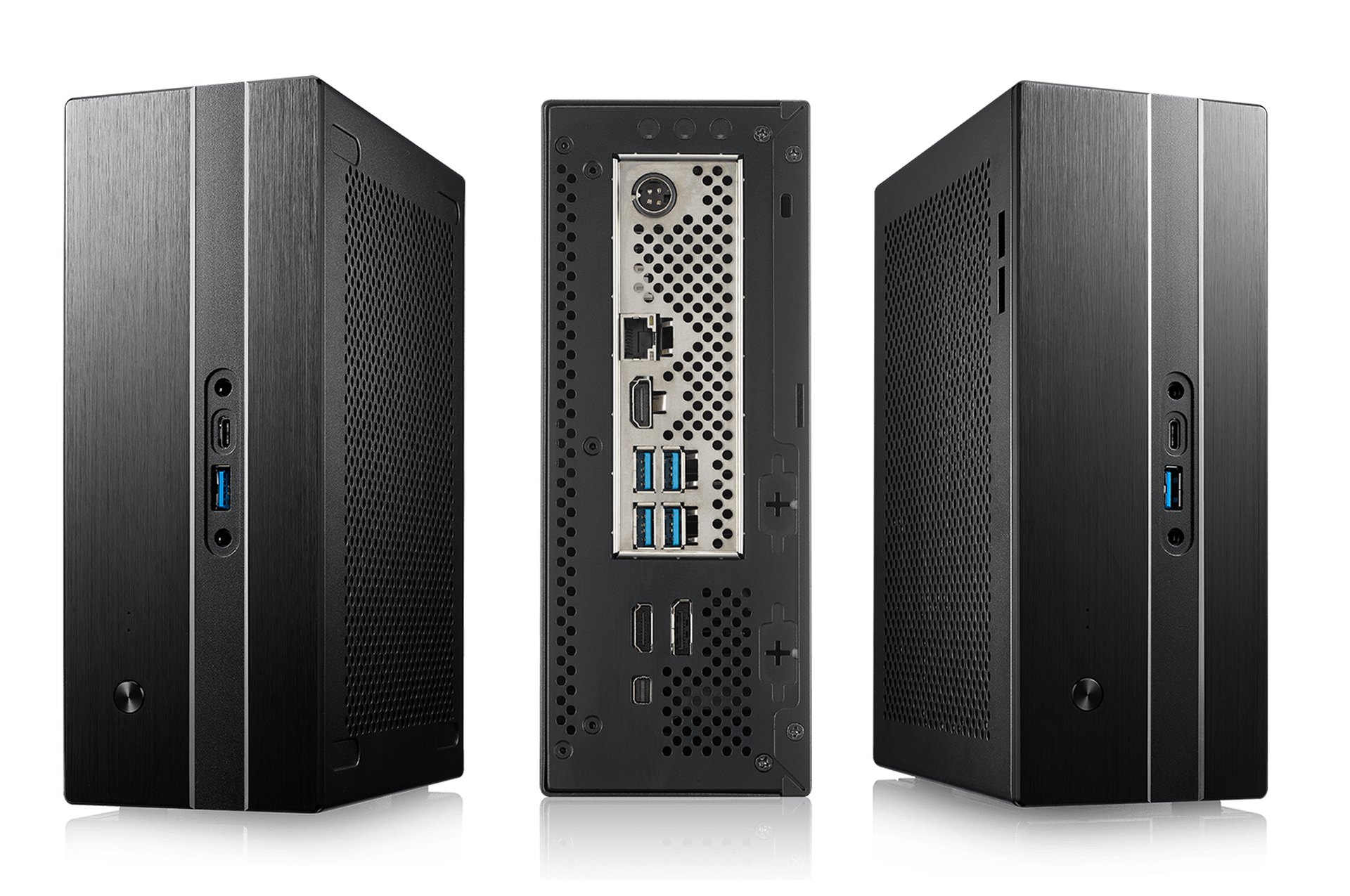
The 128GB RAM capacity is particularly noteworthy for applications such as:
- Virtualization platforms (e.g., VMware, Hyper-V) running multiple operating systems simultaneously.
- 3D rendering and animation software (e.g., Autodesk Maya, Blender) that benefit from large memory pools.
- Database management systems (e.g., Oracle, SQL Server) handling large datasets.
- Machine learning and AI workloads that require significant memory for model training and inference.
ASRock’s use of DDR5 memory is also a strategic choice. DDR5 offers up to 50% more bandwidth than DDR4, which is crucial for applications that demand rapid data transfer between the CPU and RAM. The mini-PC is expected to include PCIe 5.0 support, allowing for faster data throughput to storage devices and expansion cards. This level of performance is typically found in full-sized desktops, making ASRock’s mini-PC a compelling option for users who need high-end capabilities in a compact form factor.
How Does This Stack Up Against Existing Mini-PCs?
Most mini-PCs on the market today max out at 64GB of RAM, with some high-end models offering 128GB but at a significant premium. For example, ASUS’s ProArt Creation supports up to 64GB of DDR4 RAM, while Apple’s Mac Mini (M2 Pro) offers up to 32GB of unified memory. ASRock’s new platform not only doubles the memory capacity of these systems but also incorporates the latest DDR5 technology, positioning it as a leader in compact computing.
In terms of form factor, ASRock’s mini-PC is designed to fit into standard Mini-ITX cases, which are commonly used for home theater PCs (HTPCs) and minor form factor (SFF) builds. This makes it an attractive option for users who need a powerful system but are constrained by space, such as in home offices, studios, or data centers. The three barebone configurations further enhance its versatility, allowing users to customize their setup based on their specific needs.
Who Is This Mini-PC For?
ASRock’s new platform is likely to appeal to several key audiences:
- Professionals: Architects, engineers, and designers who rely on memory-intensive software like AutoCAD, Revit, or SolidWorks.
- Content Creators: Video editors, animators, and musicians who work with large media files and require fast rendering times.
- Enterprise Users: Businesses deploying virtual desktops or running multiple servers in a compact footprint.
- Enthusiasts: Tech enthusiasts and hobbyists who enjoy pushing the limits of compact computing.
For professionals in fields like 3D rendering or AI development, the ability to run multiple applications simultaneously with 128GB of RAM could be a game-changer. For example, a video editor might run Adobe Premiere Pro, After Effects, and Photoshop all at once without experiencing slowdowns. Similarly, a data scientist could train machine learning models on larger datasets without being constrained by memory limitations.
What This Means for the Tech Industry
ASRock’s announcement is a significant development for the compact computing market, which has traditionally been limited by memory and processing constraints. By offering a mini-PC with 128GB of RAM, ASRock is effectively challenging the notion that high-performance computing requires a full-sized tower. This could lead to:

- A shift in how businesses and professionals approach workstation design, favoring space-saving solutions without sacrificing power.
- Increased competition among mini-PC manufacturers to push the boundaries of what’s possible in compact form factors.
- Greater adoption of mini-PCs in industries where space is at a premium, such as healthcare, education, and retail.
the introduction of three distinct barebone configurations demonstrates ASRock’s understanding of the diverse needs of its target market. This modular approach allows users to start with a base system and upgrade components as needed, reducing both upfront costs and environmental waste.
Key Takeaways
- ASRock’s new mini-PC platform supports 128GB of DDR5 RAM, a first for this form factor, enabling high-performance workloads in a compact design.
- The system will be available in three configurations: Professional Workstation, Creator Edition, and Enterprise Barebone, catering to different user needs.
- Target audiences include professionals, content creators, enterprise users, and tech enthusiasts who require powerful computing in a small footprint.
- The mini-PC is expected to use Intel Core Ultra or AMD Ryzen PRO processors, along with PCIe 5.0 support, for optimal performance.
- This development could reshape the compact computing market, encouraging other manufacturers to innovate in memory capacity and modularity.
What’s Next for ASRock’s Mini-PC?
While ASRock has not yet announced an official release date for its new mini-PC platform, industry rumors suggest that pre-orders could begin as early as Q4 2024, with general availability following in early 2025. Potential buyers should keep an eye on ASRock’s official website and press releases for updates on pricing, exact specifications, and availability.
For those interested in exploring similar high-performance mini-PCs, alternatives like the ASUS ProArt Creation or Mac Mini may offer comparable performance in certain configurations. However, ASRock’s platform stands out for its unprecedented RAM capacity and modular design.
If you’re considering upgrading to a high-performance mini-PC, now may be the time to start researching your options. Whether you’re a professional looking to streamline your workflow or a tech enthusiast eager to explore the latest innovations, ASRock’s new platform could redefine what’s possible in compact computing.
Have you been waiting for a mini-PC with this level of RAM capacity? What would you use it for? Share your thoughts in the comments below, and don’t forget to follow World Today Journal for the latest updates on this and other tech innovations.
Related reading