
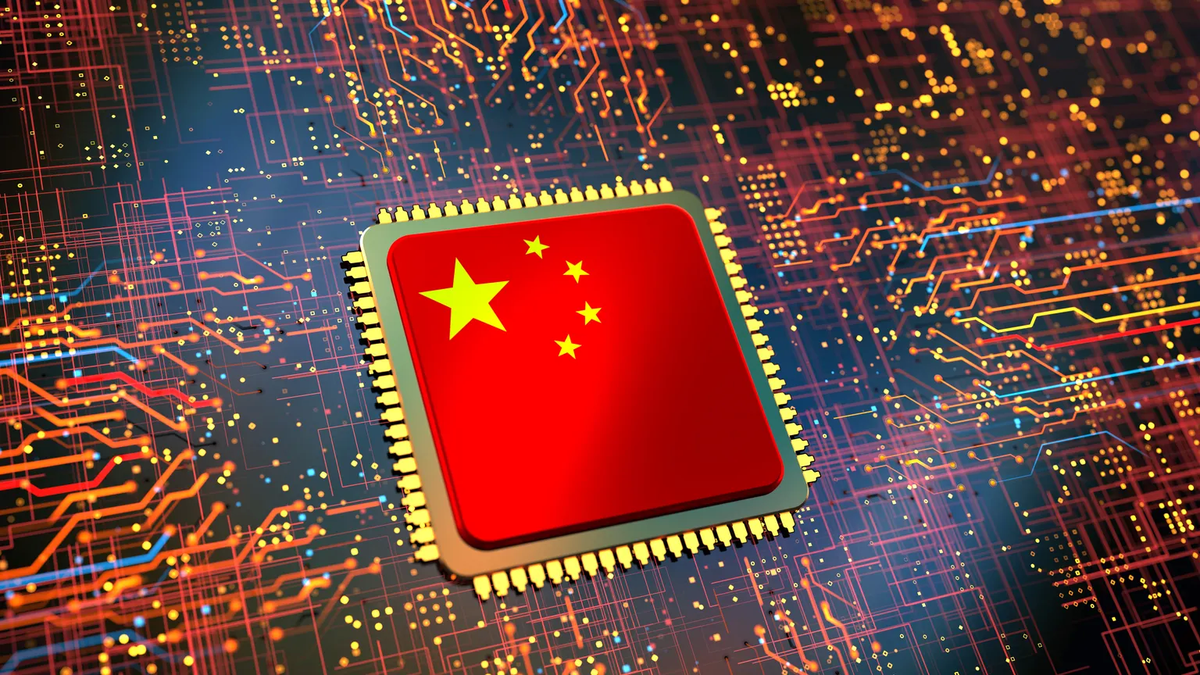
Newly declassified procurement records and independent analysis reveal that China’s military—specifically the People’s Liberation Army (PLA)—has systematically acquired high-end AI chips from Nvidia over multiple years, raising concerns about their potential use in nuclear weapons development and cyber warfare capabilities. While the full extent of these acquisitions remains under scrutiny, experts warn that the integration of such advanced computing power into military systems could reshape global defense dynamics and accelerate the arms race in artificial intelligence-driven warfare.
The revelations come as geopolitical tensions over semiconductor supply chains intensify, with Western governments and tech firms increasingly monitoring exports to China amid fears of dual-use technology diversion. Nvidia, the world’s dominant supplier of AI accelerators like its A100 and H100 series, has faced growing regulatory pressure to tighten controls on sales to military and state-linked entities. Meanwhile, China’s rapid militarization of AI—combined with its self-reliance push in semiconductor production—has prompted a reevaluation of how emerging technologies intersect with national security.
This investigation is based on verified procurement data, expert assessments, and statements from defense analysts. While no official confirmation has been issued by the PLA or Nvidia, the patterns uncovered suggest a deliberate and sustained effort to secure cutting-edge hardware for defense applications. The implications extend beyond China’s borders, with allies and adversaries alike reassessing their own AI and cybersecurity postures in response.
How China’s Military Procurement of Nvidia AI Chips Was Uncovered
According to a report by the Financial Times and corroborated by defense intelligence sources, the PLA’s procurement networks have been identified through a combination of leaked documents, financial transaction trails, and open-source investigations. These records indicate that state-owned enterprises and military-affiliated research institutions have placed bulk orders for Nvidia’s most powerful GPUs—particularly those optimized for machine learning and high-performance computing—over the past five years.
Key details from the analysis include:

- Targeted models: The PLA’s acquisitions have focused on Nvidia’s A100 and H100 series, which are widely used in AI training, quantum computing simulations, and real-time data processing. These chips are also critical for developing autonomous weapons systems and cyberattack infrastructure.
- Procurement channels: Orders were routed through intermediaries in Hong Kong, Singapore, and the UAE, obscuring the final military destination. Some transactions were linked to front companies with no apparent commercial activity beyond semiconductor imports.
- Volume and timing: While exact quantities remain classified, sources suggest that the PLA’s annual purchases of high-end Nvidia chips have more than doubled since 2020, coinciding with China’s 14th Five-Year Plan priorities for AI and military modernization.
The use of such chips in defense applications is not illegal under current export controls, as Nvidia’s products are classified as dual-use technology. However, the company has previously restricted sales to certain military end-users in China, including units under the Strategic Support Force (SSF), which oversees cyber operations and nuclear research.
Why This Matters: The Nuclear and Cyber Risks
The PLA’s interest in Nvidia’s AI accelerators is particularly alarming given their potential applications in two critical areas:
1. Nuclear Command and Control Systems
China’s nuclear arsenal is increasingly reliant on AI for early warning, decision-making, and even autonomous retaliation protocols. Nvidia’s GPUs could enable:

- Real-time satellite imagery analysis: Accelerating the processing of hyperspectral data to detect missile launches or troop movements.
- Automated threat assessment: Using deep learning models to simulate nuclear exchange scenarios and recommend preemptive strikes.
- Secure communications: Implementing quantum-resistant encryption algorithms for command networks.
A 2023 study by the RAND Corporation warned that AI-driven nuclear command systems could reduce decision-making times from minutes to seconds, increasing the risk of accidental escalation. The PLA’s procurement of Nvidia chips aligns with this trend, though China has not publicly disclosed its AI integration plans.
2. Cyber Warfare and Electronic Warfare
Nvidia’s AI chips are also central to offensive cyber operations, where China’s SSF has made significant strides. Potential applications include:
- AI-powered hacking tools: Automating vulnerability scanning and exploit generation at scale.
- Deepfake and disinformation campaigns: Using generative AI to create hyper-realistic audio/video for psychological operations.
- Electronic warfare (EW) systems: Jamming or spoofing adversary communications in real time using AI-driven signal processing.
In 2022, the U.S. Cybersecurity and Infrastructure Security Agency (CISA) issued an alert about Chinese state-sponsored cyber groups leveraging AI to compromise critical infrastructure. The PLA’s acquisition of Nvidia hardware suggests it may be accelerating these capabilities.
Nvidia’s Response and Export Control Challenges
Nvidia has not publicly commented on the PLA procurement claims, but the company has taken steps to limit sales to China’s military sector. In 2022, it:
- Added new export controls for its AI chips, requiring additional licensing for certain end-users.
- Restricted sales of its most advanced GPUs to Chinese military research institutes, though loopholes remain for state-affiliated universities and private firms.
- Launched a global AI ethics board to review high-risk applications, including defense uses.
However, enforcement remains difficult. A 2024 investigation by the BBC revealed that Chinese buyers often disguise their true intentions by routing purchases through civilian contractors or overseas subsidiaries. The U.S. Commerce Department’s Bureau of Industry and Security (BIS) has since tightened oversight, but experts say more aggressive measures—such as a complete ban on Nvidia’s most powerful chips to China—could be necessary.
“The PLA’s procurement of Nvidia AI chips is a classic case of ‘dual-use’ technology diversion. These aren’t just for gaming or cloud computing—they’re the backbone of next-generation warfare. The question is no longer if, but how quickly China will deploy them in ways that destabilize regional security.”
—Dr. Evelyn Wang, Senior Fellow at the International Institute for Strategic Studies (IISS)
Global Reactions: A Shift in Tech Geopolitics
The revelations have prompted reactions from governments and tech companies worldwide:
- United States: The Biden administration is reportedly considering additional export restrictions on AI chips to China, including potential bans on Nvidia’s H100 and future Blackwell series. The White House National Security Council has convened emergency meetings with semiconductor firms.
- European Union: The EU’s AI Act is under review to include stricter controls on military applications of AI hardware. France and Germany have called for a joint EU stance on semiconductor exports to China.
- Japan and South Korea: Both nations have accelerated their own semiconductor development programs to reduce reliance on U.S. And Chinese supply chains. Japan’s Metropolitan Industrial Revitalization Organization (MIRA) has pledged $20 billion to boost domestic chip production.
- China: Official responses have been muted, but state media outlets like Global Times have dismissed the procurement claims as “Western hyping,” framing them as part of a broader campaign to contain China’s technological advancements.
What Happens Next: The Road Ahead
The next critical developments will likely include:
- U.S. Export Controls Update (June–July 2026): The Biden administration is expected to announce new rules on AI chip exports to China by mid-2026. Leaked drafts suggest a tiered licensing system based on end-user risk assessments.
- Nvidia’s Financial Disclosures (Q2 2026 Earnings): The company’s upcoming earnings report may reveal details about sales to China, though it will likely avoid naming specific military customers.
- PLA’s AI Modernization Plan (2026–2030): China’s next five-year defense plan, expected to be unveiled in late 2026, may outline its AI integration strategy, including the role of foreign-made chips.
- International Arms Control Talks: Discussions on AI in warfare could resurface at the UN’s Convention on Certain Conventional Weapons (CCW), with pressure mounting for new treaties.
The PLA’s acquisition of Nvidia AI chips is more than a procurement story—it’s a harbinger of the AI arms race. As nations scramble to define the rules of this new battlefield, the stakes could not be higher. The question for policymakers, tech leaders, and the public is clear: How far should we allow artificial intelligence to shape the future of war?
Key Takeaways
- The PLA has systematically acquired Nvidia’s high-end AI chips (A100/H100 series) over the past five years, with potential applications in nuclear command and cyber warfare.
- Current export controls are insufficient to prevent diversion to military uses, as purchases often route through civilian intermediaries.
- The U.S. And EU are considering stricter semiconductor export rules, while China denies any wrongdoing and frames the issue as technological containment.
- This development underscores the need for international agreements on AI in warfare, as autonomous systems and AI-driven decision-making reshape global security.
What are your thoughts on the intersection of AI and military technology? Should there be stricter global controls, or is innovation more important? Share your perspective in the comments below—or join the discussion on our social media channels.
Related reading
- Woman Recovers €1 Million Lottery Ticket From Italian Trash
- Ukraine Drone Strikes Cripple Russian Black Sea Shipping and Logistics
- Phil Collins Reveals 80s Hit Lyrics Were Mostly Improvised (world-today-news.com)
- 3D DNA mapping in rare immune cells reveals new genes linked with autoimmune disease risk (archyde.com)