San Francisco, CA – Concerns about a potential impact between the Moon and asteroid 2024 YR4 have been alleviated, according to recent observations from the European Space Agency (ESA) and NASA. Initially flagged as a potentially hazardous near-Earth object, the asteroid, estimated to be approximately 60-100 meters in diameter, sparked worry due to a calculated, though relatively little, chance of collision with Earth’s lunar companion. Still, new data confirms that 2024 YR4 will safely pass the Moon in 2032, at a distance exceeding 20,000 kilometers (12,400 miles). This news provides reassurance to satellite operators and scientists alike, as a collision could have generated debris potentially disrupting critical space infrastructure.
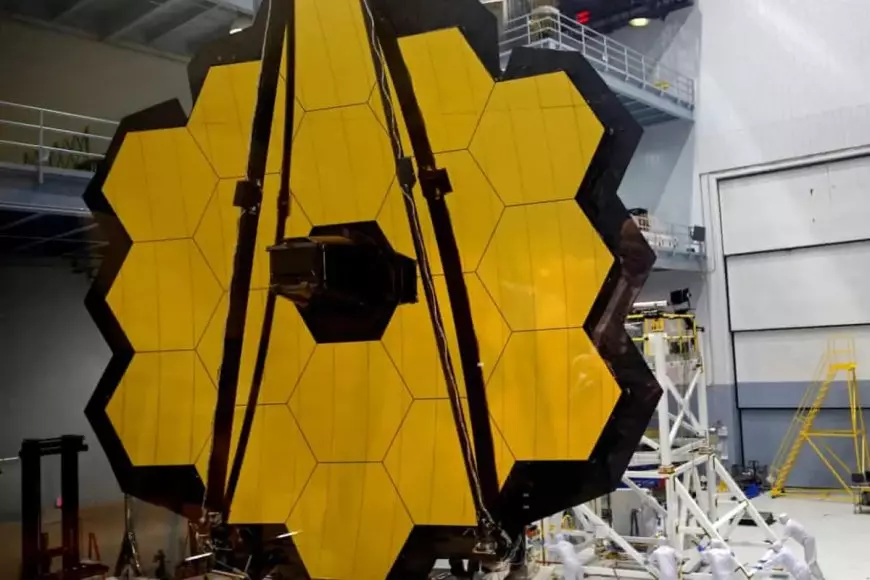
The story of asteroid 2024 YR4 highlights the ongoing efforts in planetary defense – the global initiative to detect, track, and characterize near-Earth objects (NEOs) that could pose a threat to our planet. Discovered in December 2024, the asteroid quickly gained attention when initial calculations suggested a 3.1% probability of impacting Earth in 2032. While those fears were quickly dismissed with more precise observations, a subsequent analysis revealed a 4.3% chance of a lunar impact. This prompted a focused effort to refine the asteroid’s trajectory, utilizing the powerful capabilities of the James Webb Space Telescope (JWST).
Refining the Trajectory with the James Webb Space Telescope
Pinpointing the orbit of 2024 YR4 proved to be a significant challenge. After the asteroid faded from view in the spring of 2025, astronomers anticipated a wait until 2028 for another opportunity to observe it as it returned into Earth’s line of sight. However, an international team of astronomers identified two narrow, five-hour windows in February 2026 where the JWST might be able to detect the incredibly faint object. As noted by ESA, the asteroid was four billion times fainter than the dimmest star visible to the naked eye, making the observation exceptionally difficult. The JWST’s Near-Infrared Camera (NIRCam) was crucial in this endeavor, leveraging its sensitivity and stability to track the asteroid against a backdrop of well-charted stars thanks to ESA’s Gaia mission. ESA details the challenges and success of this observation.
“Webb is the only observatory that could do this measurement, as it’s the only one with the sensitivity and stability needed, combined with the precise tracking of moving targets required to follow and study objects like this,” explained Dr. Andy Rivkin of Johns Hopkins University and Professor Julien de Wit of MIT, who led the observations. This successful tracking allowed scientists to refine the asteroid’s orbit, definitively ruling out a collision with the Moon in 2032. The precision required to achieve Here’s a testament to the advancements in astronomical technology and international collaboration.
The Importance of Planetary Defense
The near-miss with 2024 YR4 underscores the importance of continued investment in planetary defense programs. While a lunar impact wouldn’t have posed a direct threat to Earth, the resulting debris field could have damaged or destroyed satellites vital for communication, navigation, and weather forecasting. The potential disruption to these systems highlights the interconnectedness of our technological infrastructure and the vulnerability to space-based hazards. The Guardian reports on the ESA’s continued commitment to monitoring NEOs.
Colin Snodgrass, a professor of planetary astronomy at the University of Edinburgh, acknowledged a tinge of disappointment among some scientists, stating, “It would’ve been a incredibly interesting science experiment but probably, given the small risk of debris, it wouldn’t be one we’d want to try out.” However, he also emphasized that the incident demonstrates the effectiveness of current tracking and prediction capabilities. As telescopes like the JWST and the future Vera Rubin Observatory come online, our ability to detect and characterize potentially hazardous asteroids will continue to improve.
Future Risks and Ongoing Monitoring
While the immediate threat from 2024 YR4 has been eliminated, the perform of planetary defense is far from over. Snodgrass predicts that as our observational capabilities increase, we may identify more objects that initially raise concerns. “We might experience more events that cause a little bit of worry,” he said, “But we also have the technology to track these things much better and usually quickly rule them out.” The ESA’s Planetary Defence team continues to diligently detect and track NEOs, ensuring that we are prepared for any future potential threats. Currently, the probability of 2024 YR4 impacting the Moon has been reduced to negligible levels, but continued monitoring will be essential.
NASA has also been actively involved in tracking 2024 YR4. As of February 25, 2025, NASA reported the odds of a strike in 2032 were reduced to 0.0017%, effectively eliminating the threat of impact for the next century. However, a small 1.7% chance of a lunar impact on December 22, 2032, remained at that time, though NASA expects those odds to diminish further. According to reporting from the Trinidad and Tobago Guardian, Paul Chodas, who heads NASA’s Center for Near Earth Object Studies, stated there is no chance the odds will rise at this point.
The successful tracking of 2024 YR4 serves as a powerful example of international collaboration and the benefits of investing in advanced astronomical infrastructure. The James Webb Space Telescope, a joint project of NASA, ESA, and the Canadian Space Agency (CSA), has proven its value not only in studying distant galaxies but also in safeguarding our planet from potential cosmic hazards. The data gathered from this observation will contribute to a more comprehensive understanding of NEOs and improve our ability to predict and mitigate future risks.
Key Takeaways:
- Asteroid 2024 YR4 will not impact the Moon or Earth in 2032.
- The James Webb Space Telescope played a crucial role in refining the asteroid’s trajectory.
- Continued investment in planetary defense programs is essential for protecting Earth and its infrastructure.
- International collaboration is vital for effective NEO detection and tracking.
The ESA’s Planetary Defence team will continue to monitor 2024 YR4 as it moves further away from Earth. The next opportunity to gather more precise data on the asteroid’s size and composition is anticipated in 2028, when it returns to a more favorable viewing position. For the latest updates on NEOs and planetary defense efforts, please visit the ESA’s Planetary Defence website and NASA’s Center for Near Earth Object Studies website. What are your thoughts on the importance of planetary defense? Share your comments below.