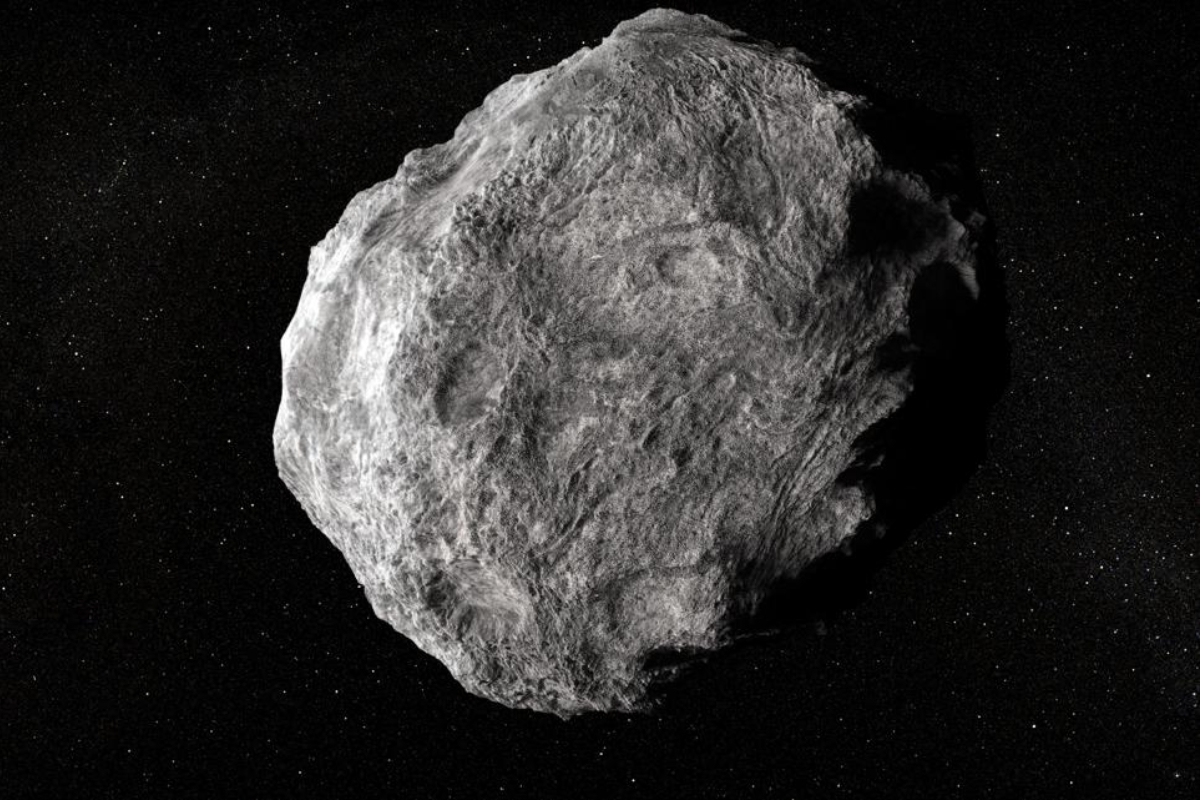
A relatively small asteroid, designated 2026 EG1, made a close approach to Earth on March 12, 2026. Although the proximity might sound alarming, scientists at the National Aeronautics and Space Administration (NASA) have confirmed that the asteroid posed no threat to our planet. This event highlights the ongoing work in near-Earth object (NEO) detection and tracking, a crucial component of planetary defense efforts.
The asteroid 2026 EG1 reached its closest point to Earth at 23:27 EDT (03:27 GMT on March 13, 2026), coming within approximately 197,466 miles (317,791 kilometers). This is closer than the average distance between the Earth and the Moon, which is about 238,900 miles (384,400 kilometers). Despite this relatively close approach, the asteroid’s size and trajectory meant it presented no risk of impact. Understanding these close approaches is vital for refining our models of asteroid behavior and improving our ability to predict potential future encounters.
Asteroid 2026 EG1: Size and Speed
NASA estimates that asteroid 2026 EG1 measured between 10 and 22 meters in diameter, roughly the size of a bus. During its closest approach, the asteroid was traveling at a considerable speed of approximately 34,621 kilometers per hour relative to Earth. This high velocity underscores the importance of accurate tracking and trajectory calculations. The Center for Near Earth Object Studies (CNEOS) at NASA’s Jet Propulsion Laboratory is responsible for calculating these trajectories and assessing potential risks. CNEOS provides detailed information about near-Earth objects, including their orbits and potential hazards.
Discovery and Orbit
Asteroid 2026 EG1 was first detected on March 8, 2026. Initial observations revealed that it follows an elliptical orbit around the Sun, completing one orbit approximately every 655 days. This orbit takes the asteroid from regions near Earth’s orbit to beyond the orbit of Mars. The asteroid’s orbital path is not confined to the plane of the Earth’s orbit, adding complexity to tracking and prediction. The Vera Rubin Observatory, a new telescope currently under construction, is expected to significantly enhance our ability to detect and track NEOs, potentially discovering around 2,000 new objects in the solar system from its initial observations. The Vera C. Rubin Observatory will play a critical role in expanding our knowledge of the near-Earth object population.
Future Encounters and Planetary Defense
Following its close approach to Earth, asteroid 2026 EG1 continued its journey away from our planet. The next close approach to a planet is predicted to occur on September 13, 2186, when the asteroid is expected to pass approximately 12.1 million kilometers from the surface of Mars. While this is a distant encounter, it demonstrates the long-term tracking capabilities required for NEO monitoring.
Currently, NASA and other astronomical institutions worldwide are monitoring over 41,000 near-Earth asteroids. This ongoing surveillance is essential for identifying potential threats and developing strategies for planetary defense. The successful DART (Double Asteroid Redirection Test) mission in 2022 demonstrated the feasibility of altering an asteroid’s trajectory, providing a proof-of-concept for future planetary defense efforts. The DART mission intentionally impacted the asteroid Dimorphos to test the kinetic impactor technique for asteroid deflection.
The Bigger Picture: Assessing Asteroid Risk
Despite the large number of monitored asteroids, scientists emphasize that Notice currently no known large asteroids on a collision course with Earth for the next 100 years. However, the possibility of an impact, while low, remains a concern. NASA, in collaboration with international partners, continues to refine its planetary defense strategies. These strategies include not only tracking and characterizing NEOs but also developing simulations of potential impact scenarios and exploring methods for deflecting asteroids if a credible threat is identified. These methods include kinetic impactors, like the DART mission, and potentially gravity tractors, which would use the gravitational pull of a spacecraft to slowly alter an asteroid’s path.
The close approach of asteroid 2026 EG1 serves as a valuable opportunity to test and refine these systems. It highlights the importance of continued investment in NEO detection, tracking, and mitigation technologies. The ability to accurately predict and potentially alter the course of an asteroid is a critical step in protecting our planet from a potentially catastrophic event. The ongoing work in this field is a testament to the dedication of scientists and engineers around the world who are committed to safeguarding Earth from the hazards of space.
Key Takeaways
- Asteroid 2026 EG1 passed safely by Earth on March 12, 2026, posing no threat to our planet.
- NASA continuously monitors over 41,000 near-Earth asteroids to identify and track potential hazards.
- The DART mission successfully demonstrated the ability to alter an asteroid’s trajectory, a crucial step in planetary defense.
- While no large asteroids are currently predicted to impact Earth in the next 100 years, ongoing monitoring and research are essential.
The next major milestone in planetary defense will be the continued operation and data analysis from the Vera C. Rubin Observatory, which is expected to significantly increase the rate of NEO discovery. Regular updates on near-Earth object observations and risk assessments can be found on the NASA CNEOS website.
What are your thoughts on the importance of planetary defense? Share your comments below, and please share this article with anyone interested in learning more about this fascinating field.
Worth a look