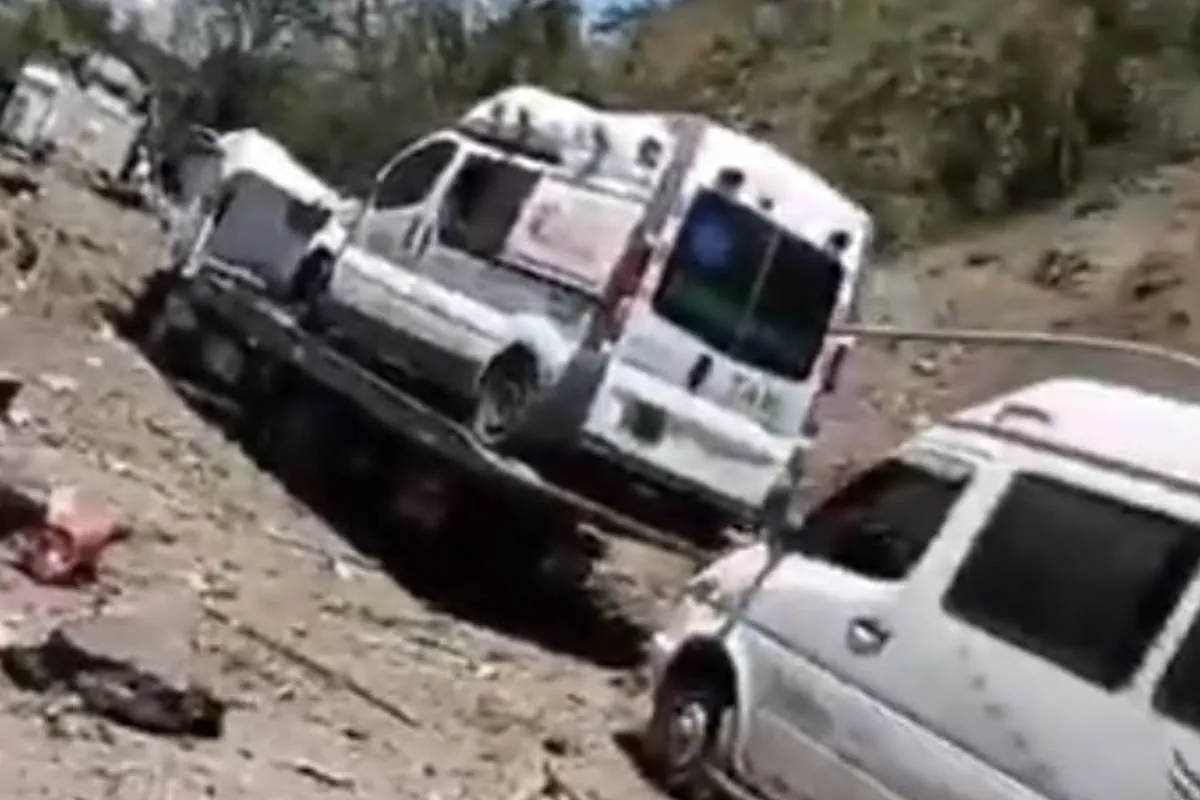
At least seven people were killed and more than 20 others injured in a terrorist attack involving an explosive device on Colombia’s Pan-American Highway on Saturday, April 25, 2026. The blast occurred in the municipality of Cajibío, located in the Cauca department in the country’s southwest, when a cylinder bomb detonated near a bus traveling between Cali and Popayán.
The explosion, which took place in an area known as El Túnel, destroyed the bus and several other vehicles, leaving a large crater in the roadway and disrupting traffic on a key national route. Colombian authorities confirmed the casualty figures, with the Cauca governor, Octavio Guzmán, stating in a post on X that the attack left seven civilians dead and more than 20 seriously injured.
According to official reports cited by multiple news agencies, presumed guerrillas launched the explosive cylinder onto the highway, where it struck the passing bus. The force of the blast not only destroyed the vehicle but also caused significant damage to surrounding infrastructure, prompting an immediate halt to all vehicular movement in the zone whereas emergency teams responded to the scene.
The attack has been attributed to dissident factions of the FARC guerrilla group by Colombian officials, who described the act as an indiscriminate targeting of civilians. Governor Guzmán condemned the violence, calling it “a tragedy that tears us apart as a department and deeply mourns our families,” and emphasized the lasting emotional toll on the affected communities.
Cajibío, situated approximately 35 kilometers from Popayán, the capital of Cauca, lies along the Pan-American Highway, a vital corridor connecting major cities in southwestern Colombia. The highway’s interruption has raised concerns about regional mobility and security, particularly in a zone that has seen recurring incidents of armed conflict despite ongoing peace efforts.
Representatives from the Unit for Land Restitution (URT) also voiced strong condemnation, with director Giovani Yule, a native of the region, rejecting the terrorist act and highlighting its impact on civilian populations striving to rebuild their lives in the aftermath of years of violence.
As of the latest updates, investigators remain on-site gathering evidence, and no arrests have been publicly reported in connection with the bombing. Authorities continue to urge the public to avoid the area while cleanup and forensic operations proceed, with alternative routes being advised for travelers between Cali and Popayán.
The incident adds to a pattern of sporadic violence in Colombia’s rural regions, where illegal armed groups occasionally resort to explosive attacks despite the country’s broader progress toward stability following the 2016 peace accord. Observers note that such acts aim to disrupt state presence and instill fear in local populations, even as government forces increase patrols in vulnerable zones.
For ongoing developments, the public is directed to official communications from the Colombian National Police and the Cauca Department’s emergency management office, which are providing real-time updates on casualty figures, road closures, and investigative progress through verified social media channels and press releases.
We encourage readers to share verified information and engage in respectful dialogue about the event’s implications for peace and security in Colombia. Your thoughts and reflections assist foster a global understanding of how communities confront and recover from acts of violence.