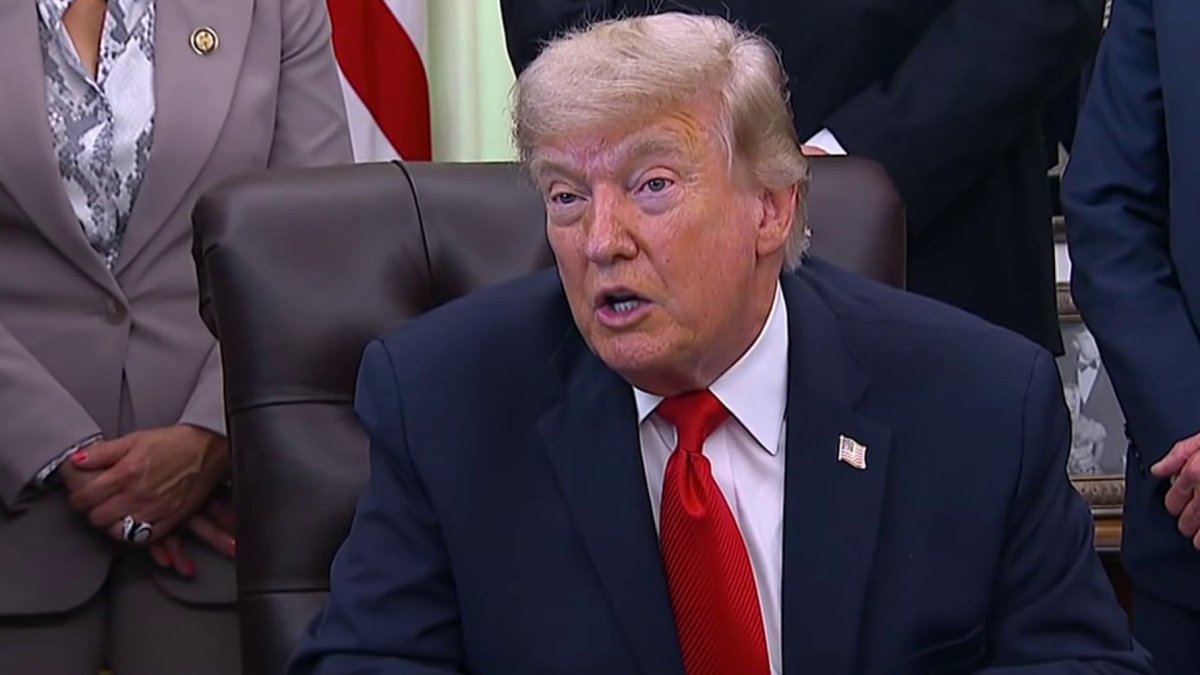
President Donald Trump suggested Thursday that the federal government could revoke Washington, D.C.’s home rule authority, citing his disapproval of potential political outcomes in the city’s upcoming mayoral race. Speaking from the Oval Office, the President indicated that he would consider a federal takeover of the nation’s capital if he determines the local administration is failing to align with his policy preferences.
The comments come as the District of Columbia approaches its Democratic primary, a contest that has drawn attention regarding the city’s future management and its relationship with the federal government. This is not the first time the President has floated the idea of federalizing local operations; he previously deployed federal resources, including elements of the National Guard and federal law enforcement, into the District during periods of civil unrest and high-profile demonstrations.
The Legal and Political Reality of D.C. Home Rule
Washington, D.C.’s governance is structured under the District of Columbia Home Rule Act, a 1973 federal law that grants the city a degree of autonomy to elect a mayor and a city council. However, because the District is not a state, Congress retains ultimate authority over its budget and local legislation. Any effort to revoke or fundamentally alter home rule would require an act of Congress, as established by the District of Columbia Home Rule Act. While the President can exert significant pressure through executive agencies and federal law enforcement, the formal dissolution of the city’s self-governing status remains a legislative hurdle.

Currently, the political landscape in Washington complicates such a move. While the House and Senate have historically shown a willingness to intervene in D.C. affairs, any formal takeover would be a departure from decades of established municipal governance. The President’s remarks regarding a “federal basis” for running the city have drawn sharp criticism from local political figures who argue that such threats undermine the democratic rights of District residents.
Local Reaction and the Mayoral Primary
The President’s comments were made in response to questions about Janeese Lewis George, a candidate in the upcoming primary whose platform includes progressive policies that have faced opposition from federal officials. In a formal statement following the President’s remarks, Lewis George characterized the threat as an “attack on democracy itself,” arguing that the federal government should not dictate local outcomes based on ideological disagreements.
Kenyan McDuffie, another candidate in the Democratic primary, also issued a response defending the city’s autonomy. His campaign emphasized that the decision of who leads the District rests with its residents, not with the White House. The tension reflects a long-standing friction between the District’s local government and the federal executive branch, particularly regarding the scope of federal oversight in local policing and economic policy.
The debate has intensified as the city continues to navigate complex issues, including budget allocations for charter schools and the role of federal agencies in local law enforcement. According to reporting by local media outlets, families and advocates have expressed frustration over the current budget, with some residents labeling the financial priorities “unfair” to the public education system.
Historical Precedents for Federal Intervention
The threat to “take back” Washington is consistent with the President’s past rhetoric, which has frequently characterized the city’s governance as inefficient or prone to crime. During his tenure, the President has utilized several mechanisms to bypass local control, most notably the federalization of the Metropolitan Police Department during specific protests and the establishment of task forces aimed at increasing federal visibility in downtown areas. These actions, while limited in scope, have served as the primary tools for the current administration to influence the city’s internal affairs without formally repealing the Home Rule Act.

For residents, the uncertainty surrounding the future of home rule remains a primary concern. The legal framework governing the District is detailed in the District of Columbia Self-Government and Governmental Reorganization Act, which serves as the primary safeguard for local authority. As the primary election approaches on Tuesday, the discourse is expected to center on how the city can maintain its independence while operating within the unique jurisdictional challenges of the nation’s capital.
Official updates regarding the District’s upcoming election procedures and polling information are available through the District of Columbia Board of Elections. Residents are encouraged to monitor the board’s portal for verified information regarding candidate platforms and voting requirements as the primary date nears.
Keep reading
- Lotofácil 3750 Results: Winning Numbers and Prize Breakdown for Today’s Draw
- CIBC Launches AI 2.0 Agentic AI Workspace
- At typically tranquil Camp David, Trump publicly lashes out at political enemies (archyworldys.com)
- Trump Orders New Strike on Iran as Conflict Enters Sixth Month (world-today-news.com)