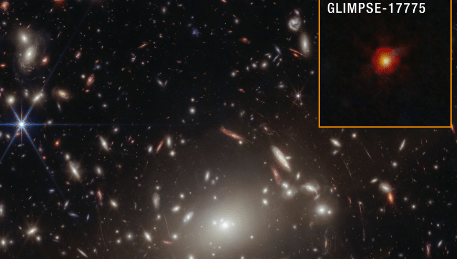
The James Webb Space Telescope (JWST) has identified a series of compact, intensely red celestial objects in the early universe, challenging long-standing models of galaxy and black hole formation. These observations, which astronomers describe as “little red dots,” appear to host supermassive black holes that are unexpectedly large relative to the mass of their host galaxies, according to research published by the National Aeronautics and Space Administration (NASA).
For decades, standard cosmological models suggested that galaxies grew gradually alongside their central black holes. However, data from the JWST’s Near-Infrared Camera (NIRCam) indicates that these primordial black holes may have reached significant sizes much earlier than previously theorized. This discovery forces a re-evaluation of how the first structures in the universe assembled shortly after the Big Bang, approximately 13.8 billion years ago, as reported by the European Space Agency (ESA).
The Mystery of the “Little Red Dots”
The term “little red dots” refers to a population of compact, high-redshift objects that appear unusually bright in infrared light. While they were initially categorized as distant, compact galaxies, spectral analysis has revealed that their light is dominated by the signatures of active galactic nuclei—the intense radiation emitted as matter falls into a supermassive black hole. According to findings published in Nature, the extreme redness of these objects is likely caused by dense clouds of cosmic dust obscuring the central engine of the black hole.
This dust acts as a filter, blocking shorter, bluer wavelengths of light while allowing longer, redder wavelengths to pass through. By utilizing the JWST’s sensitive infrared instruments, researchers can peer through this obscuration to measure the mass of the central black hole and the surrounding stellar population. The data suggests that for some of these objects, the black hole mass is nearly equal to the mass of all the stars in the galaxy combined—a ratio significantly higher than what is observed in the local, modern universe.
Challenging Galaxy Formation Models
In the local universe, the mass of a supermassive black hole typically accounts for about 0.1% of the mass of its host galaxy’s central bulge. The observations from the JWST suggest that in the early universe, this ratio was much higher, suggesting that black holes might have begun their growth before their host galaxies fully formed. This phenomenon is often referred to as “black hole seeds” growing at an accelerated rate, a topic currently under intense study by the JWST science working groups.
One prevailing theory is that these black holes formed from the direct collapse of massive gas clouds, rather than from the remnants of the first generation of stars. If these black holes were “born big,” they would have had a head start in their growth process. This contradicts the traditional hierarchical model of galaxy assembly, where black holes grow slowly through the gradual accretion of matter and the merging of smaller galaxies over billions of years.
Extreme Feeding and Accretion
The intense brightness of these “little red dots” indicates that the black holes are feeding at extreme rates, potentially approaching or exceeding the Eddington limit—the theoretical maximum rate at which a black hole can consume matter before its own radiation pressure pushes the gas away. According to a study detailed by the Space Telescope Science Institute (STScI), this rapid accretion could explain the enormous size of these objects within such a short cosmic timeframe.
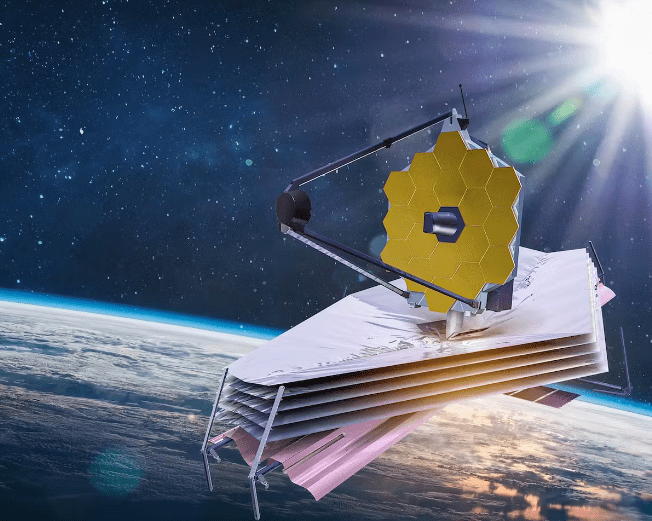
The process of “extreme feeding” creates powerful outflows of gas, which can either starve the galaxy of the material needed to form new stars or trigger star formation by compressing surrounding gas clouds. Understanding this feedback loop is critical to determining how these early black holes influenced the evolution of their host galaxies. Astronomers continue to analyze spectroscopic data to determine the exact composition of the gas and dust surrounding these objects.
What Happens Next in Early Universe Research
The scientific community is now focused on obtaining deeper spectroscopic observations to refine mass estimates for both the black holes and the host galaxies. Ongoing cycles of the JWST observation schedule are dedicated to surveying larger fields of view to determine how common these “little red dots” are throughout the cosmos. According to NASA’s project updates, these surveys are essential for building a statistically significant sample size to test new cosmological simulations.
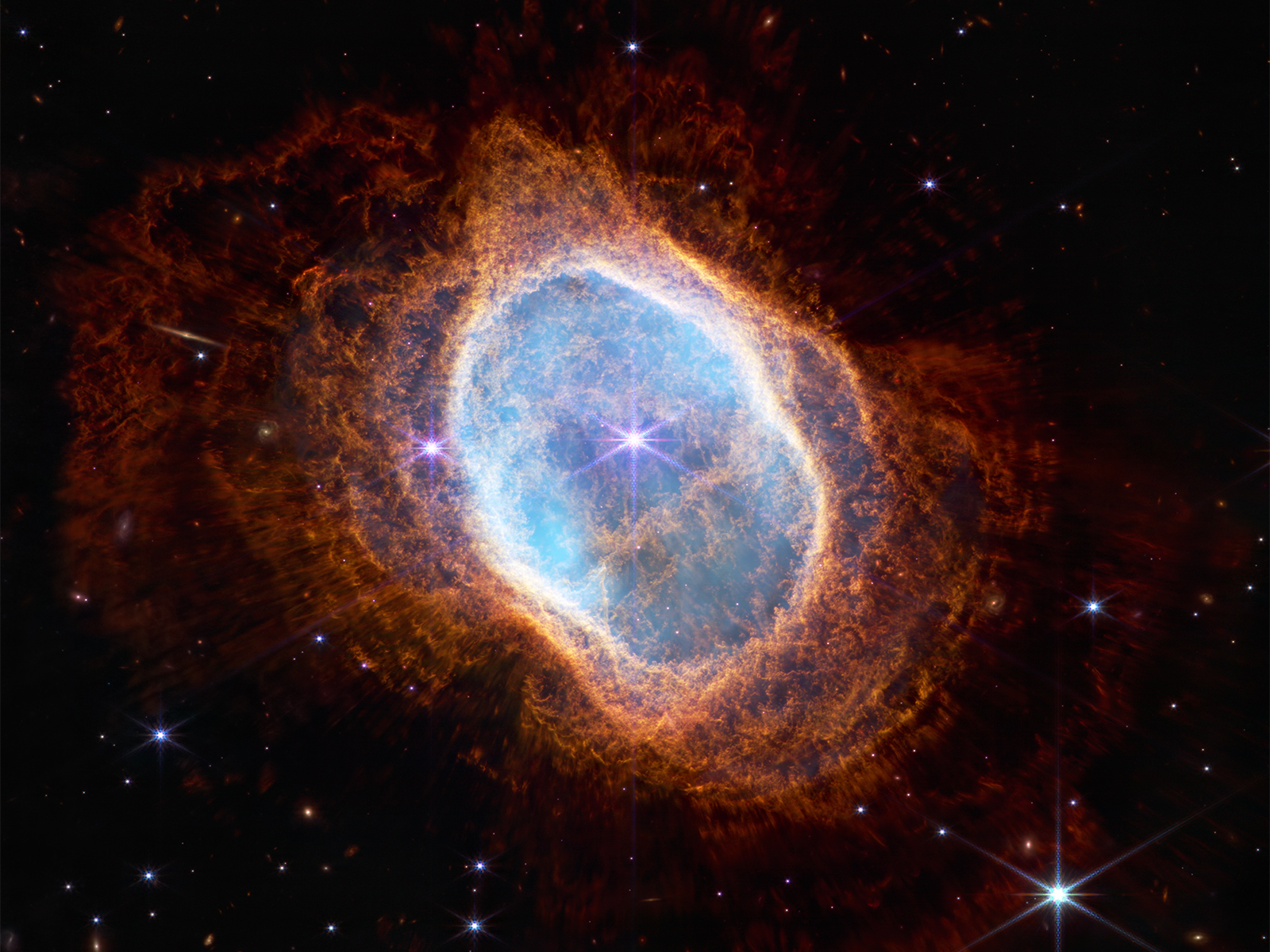
Researchers are also cross-referencing these findings with data from other observatories, including the Atacama Large Millimeter/submillimeter Array (ALMA), to better understand the cold gas reservoirs in these early systems. As more data becomes available, the goal is to create a unified timeline that explains how the universe transitioned from a state of primordial gas to a complex web of galaxies and supermassive black holes. Readers interested in the latest raw data releases and upcoming observation schedules can follow updates from the official James Webb Space Telescope portal.
We invite readers to share their thoughts on these findings in the comments section below. How do you think these discoveries will change our understanding of the early universe?
Keep reading
- LG erlaubt Ads auf Smart-TVs zu deaktivieren – Teil 2Borns IT- und Windows-Blog – BornCity
- Warner Bros. and Paramount Battle for Rights to ‘A Nightmare on Elm Street’ Revival
- Amtrak Offers LeBron James a Ride Amid NYC-Philadelphia Commute Rumors (archynewsy.com)
- Boston Bruins Draft James Hagens: Key Details and Outlook (news-usa.today)