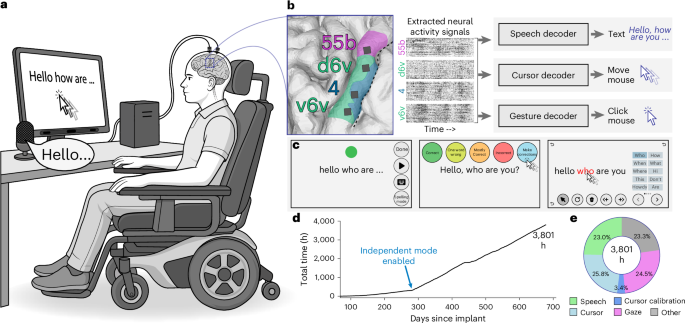
A person living with severe dysarthria caused by amyotrophic lateral sclerosis (ALS) has successfully demonstrated the long-term, independent use of an intracortical brain–computer interface (BCI) to restore speech and computer control without researcher intervention. This development marks a transition from laboratory-supervised trials to autonomous, home-based assistive technology, according to recent clinical findings published in Nature Medicine.
The system allows the user to operate a computer cursor and generate synthetic speech by translating neural signals directly into digital commands. By removing the need for daily assistance from technical teams, this approach addresses a primary barrier to the practical, real-world adoption of neuroprosthetic devices. The study highlights the potential for patients with profound motor impairment to maintain digital autonomy through high-bandwidth neural decoding.
How the intracortical BCI functions
The device functions by recording electrical activity from the motor cortex via a surgically implanted microelectrode array. These neural signals are processed by an algorithm that decodes the user’s intended movements and speech patterns, converting them into actionable outputs on a standard computer interface. Unlike earlier iterations of BCI technology that required constant recalibration by clinical staff, this system utilizes an automated architecture designed for stability over extended periods.

According to the clinical documentation, the interface provides consistent performance for both communication and digital navigation. The ability to perform these tasks independently is a significant milestone in neurotechnology, as it extends the utility of the device beyond the controlled environment of a research facility. The system’s design emphasizes user agency, allowing the participant to initiate and manage the technology during daily routines at home.
Clinical significance for ALS patients
Amyotrophic lateral sclerosis is a progressive neurodegenerative disease that frequently results in the loss of speech and the ability to control limbs. For individuals with severe dysarthria—the inability to produce intelligible speech—the isolation caused by communication breakdown is a major clinical challenge. The integration of a BCI that facilitates both text-to-speech generation and cursor control offers a versatile tool for restoring social interaction and environmental engagement.
The long-term reliability of the system is central to its therapeutic value. By demonstrating that the interface remains accurate and functional without frequent technical oversight, researchers are providing evidence that such devices can be integrated into the standard of care for chronic, degenerative conditions. This shift toward “plug-and-play” neural interfaces represents a departure from traditional models that relied on tethered, research-heavy setups, as noted in the data provided by the research team.
Advancing autonomous neural interfaces
The transition to home-based use is supported by improvements in signal decoding stability and automated software updates. The study participants were able to operate the system independently, which indicates that the software can handle the natural fluctuations in neural signal quality that occur over time. This robustness is critical for the long-term viability of implanted medical devices.

While the current results are promising, the broader implementation of such BCIs remains subject to ongoing clinical investigation and regulatory review. The path forward involves refining the surgical procedures for implantation and ensuring that the software remains compatible with evolving computer operating systems. Future research will likely focus on increasing the speed and accuracy of the speech synthesis components to further improve the user experience, as reported by clinical investigators in the field.
The future of home-based neurotechnology
The next phase for this technology involves larger-scale clinical trials to assess safety and efficacy across a broader demographic of patients with ALS and other motor neuron diseases. Regulatory bodies, such as the U.S. Food and Drug Administration (FDA) and the European Medicines Agency (EMA), continue to monitor developments in brain-computer interface technology to ensure that patient safety remains the priority as these devices move closer to commercial availability. Interested readers can find updates on clinical trial progress through the U.S. National Library of Medicine, which maintains a comprehensive registry of ongoing medical research.

As the field matures, the focus is expected to shift toward minimizing the physical footprint of the hardware and improving the wireless capabilities of the implants. By reducing the physical burden on the user, researchers aim to make BCIs a standard assistive option rather than an experimental rarity. Continued investment in this area is essential for translating these laboratory successes into life-changing products for the thousands of patients living with paralysis and communication disorders globally.
Have you found this report on neural interface technology helpful? Please share your thoughts or questions in the comments section below to join the conversation on the future of medical innovation.
Keep reading