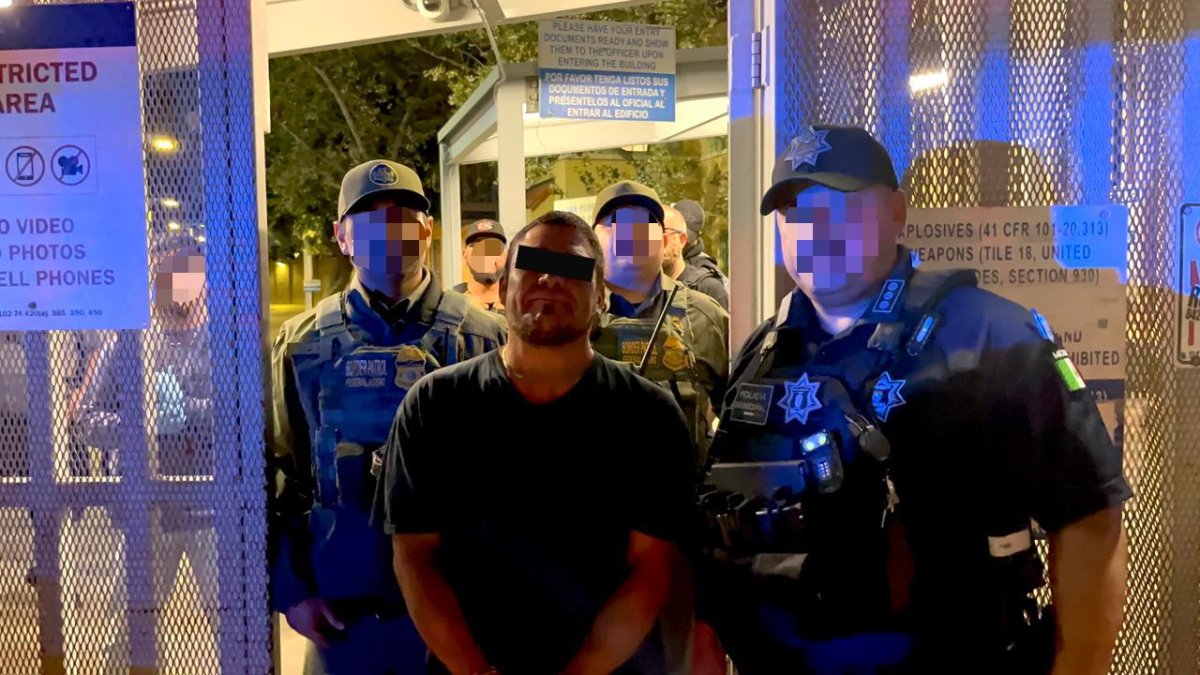
Mexican authorities in Baja California formally transferred a suspect to United States custody on Friday, following an investigation into a homicide that occurred in Riverside, California. The individual, identified by local officials as Adolfo “N,” was wanted in connection with a fatal assault that took place on June 28, according to reports from the Fiscalía General de la República (FGR).
The transfer took place at the San Ysidro Port of Entry, a primary crossing point between Tijuana and San Diego, where Mexican immigration and law enforcement officials coordinated the handover with U.S. federal authorities. This operation underscores the ongoing bilateral cooperation between Mexican security agencies and the U.S. Marshals Service in tracking fugitives who cross international borders to evade prosecution.
The Legal Basis for the Extradition
The arrest and subsequent transfer of the suspect were facilitated through established international protocols for the rendition of criminal fugitives. According to the U.S. Attorney’s Office for the Central District of California, such cooperation is governed by extradition treaties that allow for the legal transfer of individuals accused of serious crimes, including homicide, to face trial in the jurisdiction where the offense was allegedly committed.
Adolfo “N” had been the subject of an intense search following the incident on June 28. While specific details of the assault remain restricted due to the active nature of the investigation in Riverside County, Mexican authorities confirmed that the suspect was located within Baja California before being detained. The Instituto Nacional de Migración (INM) played a key role in the administrative processing required to move the suspect from Mexican territory into the custody of U.S. agents.
Cross-Border Cooperation in Criminal Justice
The collaboration between the Baja California state authorities and U.S. law enforcement agencies is a frequent occurrence in the border region. When a suspect flees across the border, the Bureau of International Narcotics and Law Enforcement Affairs notes that information sharing between the two nations is vital to ensure that suspects are held accountable. In this instance, the exchange was conducted under the oversight of the FGR, which handles federal-level crimes and international cooperation in Mexico.
The process of transferring a fugitive often involves several months of verification, intelligence gathering, and legal documentation. By utilizing the San Ysidro crossing, authorities ensured a secure and orderly transition of custody. This procedure is designed to respect the sovereignty of both nations while prioritizing the rule of law in high-profile criminal cases.
What Happens Next in the Riverside Case
Following his transfer to U.S. custody, the suspect is expected to be transported to Riverside County, where he will face formal charges. The judicial process will move into the local court system, where a judge will preside over initial hearings. According to the Superior Court of California, County of Riverside, defendants in homicide cases are entitled to a preliminary hearing where the prosecution must demonstrate sufficient evidence to proceed to trial.
The defendant will be provided with legal counsel, and the court will schedule subsequent appearances to determine bail status and the timeline for the trial. As the case moves forward, updates regarding court filings and hearing dates will be made available through the Riverside County court’s public portal. Public interest in the case remains high, given the violent nature of the alleged crime and the international effort required to secure the suspect’s arrest.
This is a developing story. Readers interested in following the progress of the legal proceedings can monitor the official docket via the Riverside County Superior Court website for future hearing notifications. Share your thoughts or questions in the comments section below.