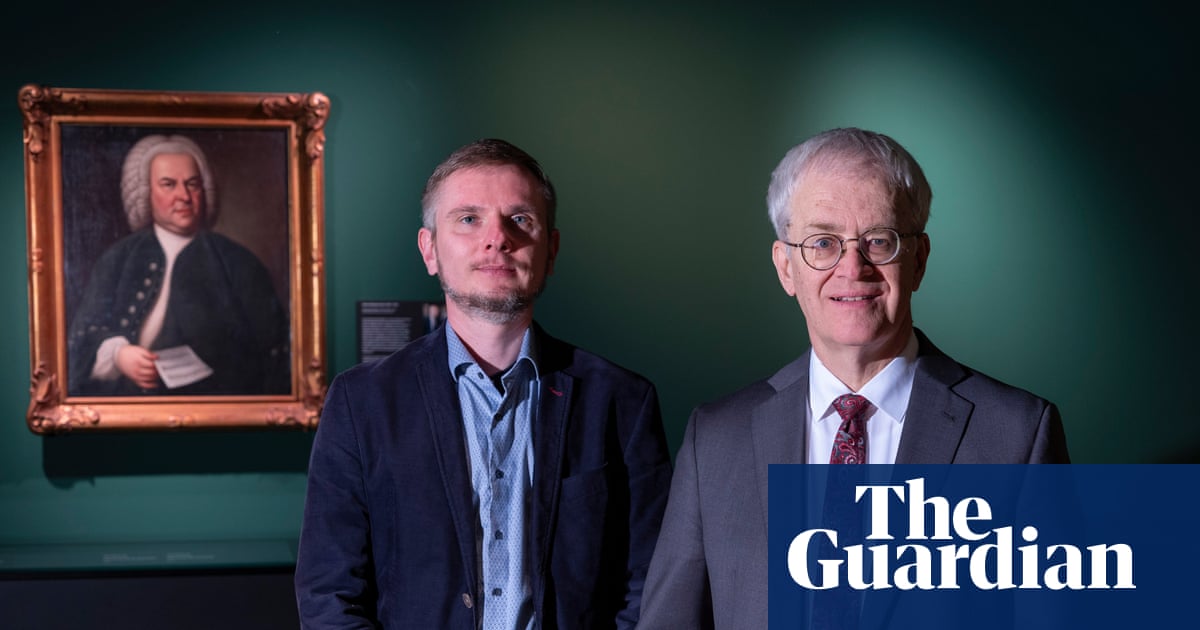
Unmasking the Copyist: A 35-Year Quest to Reveal the Hand Behind Bach’s Early Works
For decades, the origins of two captivating chaconnes – musical pieces attributed to Johann sebastian Bach – remained shrouded in mystery. These weren’t questions about bach’s compositional genius, but about who meticulously transcribed his work into beautifully crafted scores. A painstaking, 35-year inquiry has finally revealed the identity of this dedicated copyist, offering a fascinating glimpse into the world of 18th-century music and the often-unsung heroes who preserved it.
A Detective Story in Musical Handwriting
The journey began with a single,intriguing document. musicologist Ulrich Wollny stumbled upon a handwritten score of the chaconnes in Brussels,sparking a curiosity that would consume him for over three decades.He realized the value of understanding the process of musical transmission – how compositions were copied and disseminated before modern notation.
Wollny’s initial approach was unique: he believed that by meticulously transcribing the music by hand, he could gain a deeper understanding of the copyist’s skill and mindset. Over time, he unearthed 20 more documents bearing the same distinctive handwriting in archives across Leipzig, Berlin, and Winterthur, Switzerland. these documents spanned from 1705 to 1715, revealing a pattern and hinting at the copyist’s professional life.
Building a Profile, Piece by Piece
These weren’t simply blank copies. Many included lyrics and introductory texts, allowing Wollny to build a profile of the individual. He began to understand their duties and interests, painting a picture of a skilled professional deeply involved in the musical world. Though, a crucial piece of the puzzle remained elusive: the copyist’s name.
Initially, Wollny suspected a cousin of Bach, but this theory proved incorrect. A breakthrough came in 2012, thanks to a colleague, when a 1727 letter surfaced. It was an request for an organist position from a Salomon Günther John.
The handwriting and the Connections
The handwriting in the letter matched the scores wollny had been studying with remarkable consistency. Furthermore, the letter revealed John had studied under an organist in Arnstadt – the very town where Bach began his career as an organ teacher. Suddenly, the pieces began to fall into place.
Researchers briefly considered the possibility that John composed the works himself, rather than simply copying them. However, subtle errors in the notation – incorrect octave placements, for example - quickly dismissed this idea. The music clearly originated with Bach, but the meticulous transcription was John’s work.
A Moment of Quiet Confirmation
Wollny remained cautious, questioning his own assumptions. He understood the weight of his potential finding. “If a doctor makes a mistake it’s not such a big deal,” he reflected, “But as a musicologist, if I make an error it will sit in books in libraries for hundreds of years.”
The final confirmation arrived unexpectedly in 2023. A court document penned by John in 1716,lost during World War II and recently restored,provided an undeniable match to the handwriting in the Brussels chaconnes. It was a moment of quiet satisfaction for Wollny. He didn’t celebrate with fanfare, but simply “sat there with a grin and contentedly turned the pages.”
The Future of musicological Research
This painstaking investigation highlights the enduring value of traditional scholarship.While artificial intelligence promises to accelerate research in the future, Wollny remains optimistic. He acknowledges that AI might accomplish in hours what took him decades, but believes that’s a positive growth.
Ultimately, the story of Salomon Günther John is a testament to the importance of recognizing the contributions of those who work behind the scenes. It’s a reminder that preserving musical heritage requires not only the genius of composers, but also the dedication of skilled copyists who ensured their works would endure for generations to come.
Worth a look