
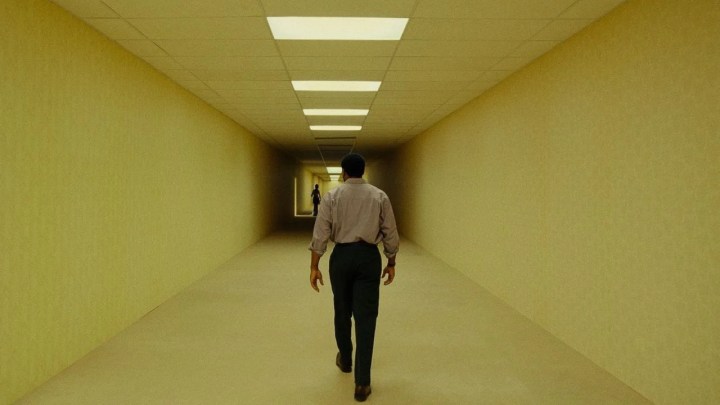
The feature-length adaptation of Backrooms, an internet-born horror concept, shifts from the original short-form web series’ focus on environmental dread to a character-driven psychological study. Directed as a transition from viral YouTube content to feature cinema, the film centers on the internal collapse of its protagonist, Clark, and his therapist, Mary, as they navigate an inexplicable, shifting reality. By centering the narrative on human frailty and denial, the film attempts to translate the surrealist “liminal space” aesthetic into a structured commentary on personal accountability and trauma.
At its core, the film explores the concept of the Backrooms as a manifestation of a character’s internal state. Much like the 1978 version of Invasion of the Body Snatchers used the backdrop of San Francisco to examine the loss of identity in urban life, this iteration of Backrooms uses its distorted, infinite office corridors to reflect the protagonists’ inability to confront their own pasts. The narrative structure relies on the friction between Clark’s perception of his failed marriage and the reality of his own toxic behaviors, a conflict that serves as the film’s primary engine.
The Psychological Framework of the Backrooms
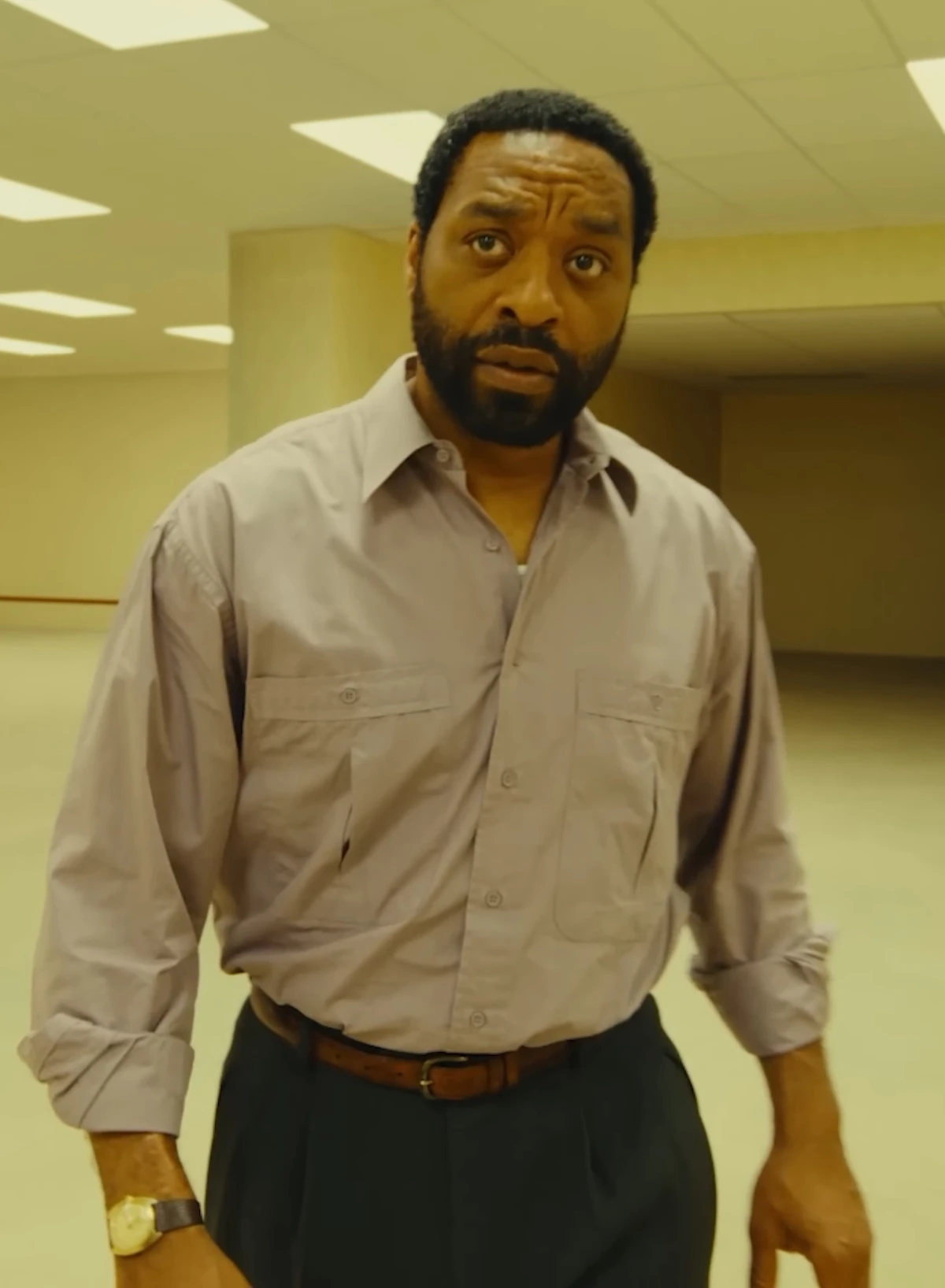
The film follows two primary characters: Clark, a furniture salesman navigating a contentious divorce, and Mary, his therapist. The central tension is established early through a fight between Clark and his wife—an incident the audience never witnesses directly, but experiences solely through Clark’s biased recollection. According to the film’s narrative, Clark’s account of the argument is unreliable, serving as a defense mechanism to shift blame for his professional failures and marital dissolution onto others.

The Backrooms themselves function as a “misremembered reality.” The environment mimics familiar spaces—offices, streets, and domestic interiors—but does so with unsettling inaccuracies. This serves as a visual metaphor for Clark’s psychological state; he is trapped within a distorted version of his own life because he refuses to acknowledge his personal shortcomings. When he attempts to use the discovery of this dimension to gain validation from Mary, his refusal to accept accountability ultimately forces their relationship into a dangerous, confrontational dynamic.
Character Contrasts: Clark vs. Mary
While Clark represents the refusal to change, Mary serves as the story’s moral center. Her background, defined by trauma from an abusive mother, provides her with the tools to identify toxic patterns in others. A critical plot point involves Mary’s childhood home being demolished, leaving her with only a physical totem—a handprint in concrete—as a connection to her past. This object is significant because, unlike the shifting, unreliable nature of the Backrooms, the handprint remains a static, verifiable piece of reality.

The collision between these two characters occurs when they are confronted by the physical manifestation of the Backrooms’ threat. The creature that haunts the space is revealed to be a distorted reflection of Clark himself, specifically dressed in the promotional attire he used for his business. This imagery suggests that the monster is not an external force, but an embodiment of his own darker, abusive nature. When Clark eventually surrenders to this creature, he does so by claiming it is simply “the way we’re wired,” a final rejection of the possibility of personal growth.
Narrative Resolution and Thematic Legacy
The final act of the film shifts into a surreal chase, with Mary utilizing her totem to survive. Her ability to distinguish between her lived memory and the distorted environment of the Backrooms allows her to escape. The film concludes with a sequence suggesting that while Mary has exited the space, the Backrooms remain, continuing to cycle through recreations of her life and the lives of others. This ending highlights the film’s thesis: some patterns of behavior, if left unaddressed, persist like the lingering echoes of past traumas.
By focusing on character-based horror, the production moves away from the pure, non-narrative mystery of the original internet shorts. The film stands as a case study in how modern creators are adapting viral, non-linear internet lore into traditional dramatic structures. For viewers looking for further updates on the film’s release or official production notes, information is typically aggregated through major film distribution databases and official studio announcements on platforms like IMDb or industry trade publications such as Variety. The transition of these digital-native concepts into feature-length narratives continues to be a significant trend in contemporary cinema, offering a new lens through which to examine universal anxieties regarding memory, identity, and the difficulty of self-reflection.