
Bahraini security forces have dismantled an organized network allegedly linked to Iran’s Islamic Revolutionary Guard Corps (IRGC), uncovering a financial pipeline designed to fund “terrorist operations” and promote foreign political ideologies within the kingdom. The Ministry of Interior confirmed that the operation resulted in the arrest of 41 individuals, marking a significant escalation in Bahrain’s efforts to curb external interference and espionage.
The crackdown comes amid heightened regional tensions and a broader security sweep across the Gulf Cooperation Council (GCC) states. According to official reports, the dismantled cell was not only facilitating the transfer of funds to Iran but was also operating under the ideological framework of “Wilayat Al Faqih” (Guardianship of the Jurist), the foundational political theory of the Iranian state that grants supreme authority to a leading Islamic jurist.
The operation has drawn immediate international attention, most notably from the United Arab Emirates, which has reaffirmed its commitment to Bahrain’s sovereignty. The coordination between Gulf security apparatuses suggests a synchronized approach to neutralizing what they describe as “external schemes” targeting the financial and political stability of the region.
Financial Pipelines and the Ideology of “Wilayat Al Faqih”
Investigations by the Bahraini Ministry of Interior revealed that the 41 arrested suspects were in direct contact with the IRGC. The primary objective of the network was the collection of funds, which were then funneled to Iran to support the Revolutionary Guard and finance activities categorized by Bahraini authorities as terrorist operations. This financial mechanism is seen as a critical component of Iran’s strategy to project power and maintain influence within the Arabian Peninsula.
Beyond the financial aspect, the Ministry highlighted the ideological nature of the cell. The suspects were allegedly operating under the influence of “Wilayat Al Faqih,” an ideology that mandates absolute obedience to the Supreme Leader of Iran. By embedding this ideology within a local network, authorities argue that the cell sought to create a subversive political environment within Bahrain, potentially paving the way for further foreign-led instability.
The Bahraini government has stated that these findings are the result of ongoing criminal investigations and rigorous evidence gathering by security agencies. Officials have further linked this specific case to broader, ongoing probes into alleged espionage for foreign entities and support for Iranian-backed attacks in the region. Legal proceedings against the 41 detainees are currently underway, with authorities warning that further arrests may follow as the investigation expands.
UAE Affirms Solidarity Amid Regional Security Threats
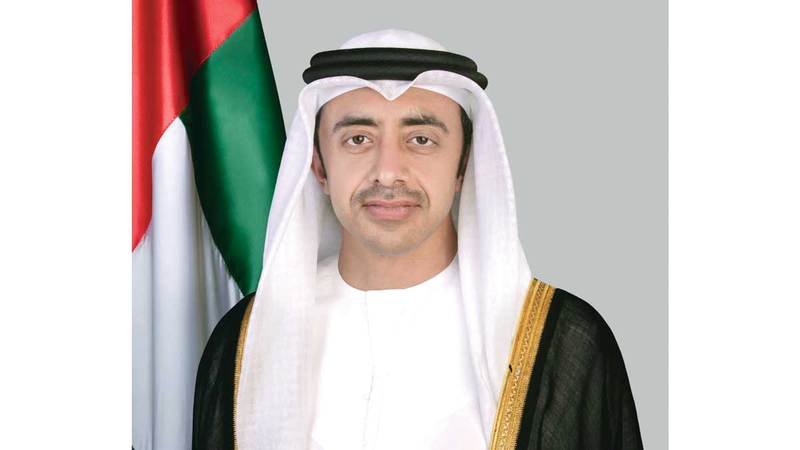
The diplomatic response to the arrests was swift, with the United Arab Emirates expressing full solidarity with the Kingdom of Bahrain. Sheikh Abdullah bin Zayed Al Nahyan, the UAE’s Deputy Prime Minister and Minister of Foreign Affairs, praised the vigilance of the Bahraini security authorities in uncovering the cell. In a statement, he reiterated the UAE’s support for all measures taken to protect Bahrain’s national security and sovereignty.
This expression of support is not merely symbolic but reflects a shared security architecture between the two nations. The UAE and Bahrain have frequently collaborated on counter-terrorism and intelligence sharing to mitigate the influence of the IRGC and its proxies in the Gulf. The UAE’s endorsement underscores a collective regional stance against the “export” of political ideologies and the use of covert financial networks to destabilize sovereign states.
The timing of this solidarity is particularly poignant, as the UAE has recently faced similar challenges. In March 2026, the UAE State Security Apparatus dismantled its own terrorist network funded and operated by Lebanon’s Hezbollah and Iran. That network had used a fictitious commercial cover to infiltrate the national economy and launder money to finance terrorism, mirroring the tactics allegedly employed by the network just uncovered in Bahrain.
The Broader Geopolitical Stakes in the Gulf
The dismantling of these networks in both Bahrain and the UAE points to a persistent pattern of “hybrid warfare” in the Middle East. By combining financial incentives, ideological indoctrination, and commercial covers, foreign actors attempt to create “sleeper cells” that can be activated to disrupt local economies or carry out espionage.
For Bahrain, the stakes are particularly high. As a small island nation with a strategic location, it has long been a focal point of the geopolitical rivalry between Riyadh and Tehran. The arrest of 41 individuals linked to the IRGC is a clear signal that Manama is prioritizing the “securitization” of its borders and internal affairs to prevent the establishment of foreign-controlled political or military footholds.
The use of the term “Wilayat Al Faqih” in official Bahraini statements is also a calculated move. By naming the specific ideology, the government is framing the issue not as a domestic political dispute, but as a matter of national security involving a foreign-imposed political system. This framing helps galvanize domestic support for security measures and justifies the strict legal actions taken against the detainees.
Key Takeaways of the Security Operation
- Scale of Arrests: 41 individuals have been detained as part of a coordinated strike against an IRGC-linked cell.
- Financial Motive: The network focused on collecting and transferring funds to Iran to support the IRGC and alleged terrorist activities.
- Ideological Driver: The cell operated under the “Wilayat Al Faqih” ideology, aiming to project Iranian political authority within Bahrain.
- Regional Support: The UAE, via Sheikh Abdullah bin Zayed Al Nahyan, has formally praised Bahrain’s actions and reaffirmed its solidarity.
- Broader Pattern: This operation follows a similar dismantling of an Iran/Hezbollah-linked network in the UAE in March 2026.
What Happens Next?
As the 41 suspects move through the legal system, the Bahraini Ministry of Interior is expected to release further details regarding the specific “terrorist operations” the funds were intended to finance. The focus of the investigation is now shifting toward identifying the full extent of the network’s reach, including any potential collaborators within other government or civil institutions.

Observers will be watching for any official response from Tehran, which typically denies involvement in such networks, characterizing them as political persecution. However, the coordinated public statements from Bahrain and the UAE suggest that the GCC is moving toward a more transparent and unified public narrative regarding Iranian interference.
The next confirmed checkpoint in this story will be the initial court hearings for the 41 detainees, where the evidence gathered by the security agencies will be presented. Updates on these legal proceedings are expected to be issued via the Bahraini Ministry of Interior’s official channels.
World Today Journal encourages readers to share this report and join the conversation in the comments below regarding regional security and the impact of foreign interference in the Gulf.