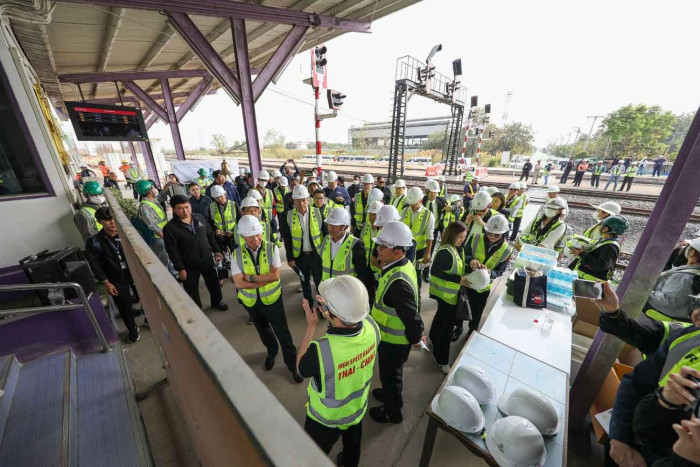
Thai-chinese High-Speed Rail Project: Progress and future Outlook
Published: 2026/02/15 02:46:05
Project Overview
The Thai-Chinese high-speed rail project, a key component of China’s Belt and Road Initiative, is steadily progressing towards its completion. as of February 15, 2026, the first phase of the project has reached 51.74% completion, according to the State Railway of Thailand (SRT). This ambitious infrastructure undertaking aims to modernize Thailand’s railway network and enhance regional connectivity.
Phase 1: Bangkok to Nakhon Ratchasima
The first phase of the project connects Bangkok and Nakhon Ratchasima, spanning a total distance of 250.77 kilometers.The total investment for this phase is 179.41 billion baht,encompassing 14 construction contracts and one train system contract. Approximately 188.68km of the route will be elevated, a design choice intended to reduce level crossings and improve safety. The remaining 54.09km will run at ground level. Two tunnels, located in Muak Lek and Lam Takhong, will contribute approximately 8km to the overall route length.
Construction Status
The SRT reports that two contracts – covering the Klang Dong–Pang Asok and Sikhiu–Kut Chik sections – have already been completed. Construction is currently underway on ten other sections.However, contracts for the bang Sue–Don Mueang and Ban Pho–phra Kaeo sections are still pending signature. The SRT has emphasized the importance of adhering to strict timelines and maintaining high engineering and safety standards throughout the construction process.
Key Stations
Phase 1 will feature six main stations strategically located along the route:
- Krung Thep Aphiwat
- Don Mueang
- Ayutthaya
- saraburi
- Pak Chong
- Nakhon Ratchasima
commercial operations on this initial segment are currently scheduled to begin in 2030.
Phase 2: Nakhon ratchasima to Nong Khai
building on the momentum of Phase 1, Phase 2 extends the high-speed rail line from Nakhon ratchasima to Nong Khai. This 357.12km section has already received cabinet approval and successfully completed an environmental impact assessment.The project is valued at 256.4 billion baht and will include five stations:
- Bua Yai Junction
- Ban Phai
- Khon Kaen
- Udon thani
- Nong Khai
Bidding and contract signing for Phase 2 are anticipated in 2026, with construction expected to take 48 months, leading to an estimated opening in 2031.
Economic impact and Regional Connectivity
The Thai-Chinese high-speed rail project is expected to have a significant positive impact on Thailand’s economy and regional connectivity. By improving transportation infrastructure, the project will facilitate trade, tourism, and investment. The enhanced connectivity will also strengthen Thailand’s position as a regional transportation hub, fostering greater economic integration within Southeast Asia.
Looking Ahead
The continued progress of the Thai-Chinese high-speed rail project demonstrates Thailand’s commitment to modernizing its infrastructure and strengthening its economic ties with China. As both phases move closer to completion, the project promises to deliver ample benefits to the Thai economy and its people, paving the way for a more connected and prosperous future.