
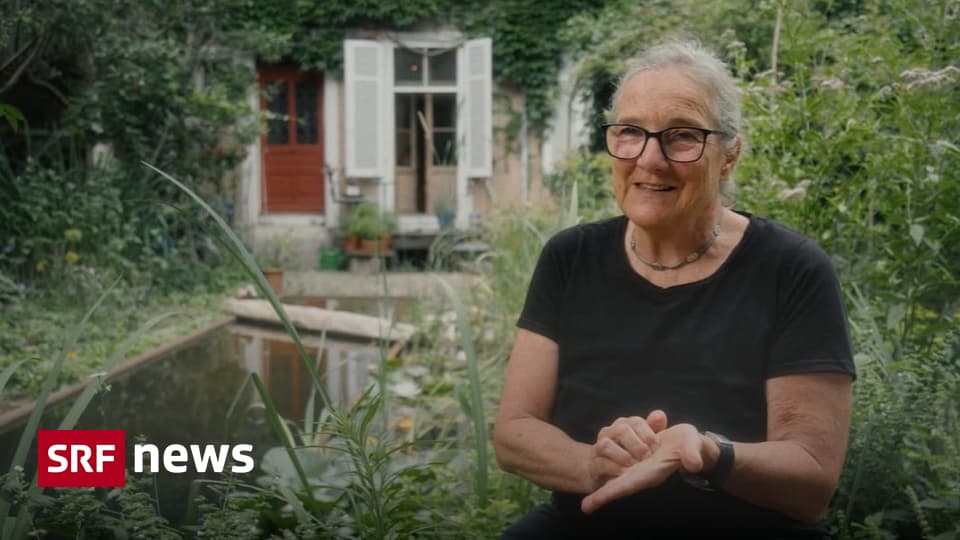
Barbara Buser, a Swiss architect and heritage conservationist renowned for her work preserving historic buildings in Basel, is the subject of a recent documentary film that highlights her pioneering contributions to urban heritage. The film, titled “Barbara Buser – Geschichte einer Baupionierin” (Barbara Buser – History of a Construction Pioneer), was produced by Swiss public broadcaster SRF and premiered in early 2024 as part of their cultural programming lineup. It explores her decades-long career advocating for the adaptive reuse of existing structures rather than demolition, a philosophy that has shaped Basel’s architectural landscape and influenced sustainable building practices across Switzerland.
The documentary draws on interviews with Buser herself, colleagues from the architectural firm in-situ she co-founded, and city officials who have worked with her on preservation projects. It showcases specific examples of her work, including the renovation of the Klosterlisberg complex in Basel and the transformation of industrial buildings into mixed-use spaces that maintain historical integrity while meeting modern needs. The film positions her as a key figure in Switzerland’s movement toward circular economy principles in construction, emphasizing how her approach reduces environmental impact by minimizing new material consumption and construction waste.
SRF’s cultural department confirmed the film’s production and broadcast details through their official programming schedule, noting that it aligns with their mission to highlight individuals driving social and environmental change in Swiss society. The documentary is available for streaming on the SRF Play platform following its television broadcast, allowing international audiences access to the film with optional subtitles. While the film focuses on her professional achievements, it also touches on her personal motivation, tracing her interest in heritage conservation back to her studies at ETH Zurich and early experiences working on restoration projects in the 1980s.
As cities worldwide grapple with the dual challenges of urban development and climate change, Buser’s work offers a tangible model for how historic preservation can coexist with contemporary urban needs. Her advocacy has helped establish Basel as a leader in heritage-sensitive urban planning, demonstrating that aged buildings can be revitalized to serve new functions without sacrificing their cultural significance. The documentary arrives at a time when sustainable architecture is gaining increasing attention globally, with organizations like the International Council on Monuments and Sites (ICOMOS) promoting similar principles of adaptive reuse in their guidelines for cultural heritage management.
Barbara Buser’s Philosophy and Impact on Basel’s Urban Fabric
Barbara Buser’s approach to architecture centers on what she terms “building within the existing” – a methodology that prioritizes understanding and working with a structure’s original fabric rather than replacing it. This philosophy emerged from her critique of postwar reconstruction trends that often favored complete demolition and new construction, which she viewed as both culturally shortsighted and environmentally wasteful. Her work consistently demonstrates how careful intervention can reveal and enhance a building’s historical layers while adapting it for modern use, a process she describes as “listening to the building” before making design decisions.
In Basel, her influence is visible in numerous projects where she has served as lead architect or consultant. The renovation of the former Swiss Machinery Association building into office and cultural spaces exemplifies her technique of preserving structural elements while introducing contemporary interventions that dialogue with the old fabric. Similarly, her work on the Kunstmuseum Basel extensions shows how new additions can be carefully integrated to complement rather than overwhelm historic cores. These projects have not only saved significant amounts of embodied carbon but have also maintained the city’s architectural continuity, allowing residents and visitors to experience Basel’s evolution through its built environment.
Beyond individual projects, Buser has contributed to shaping Basel’s official preservation policies through her involvement with the Basel-Stadt Department of Construction and Transport. Her expertise has informed guidelines that encourage developers to consider renovation before demolition, particularly in the city’s protected zones. This policy influence has helped create a framework where heritage conservation is viewed not as an obstacle to development but as an opportunity for innovative, context-sensitive design that respects both history and sustainability.
The documentary highlights how her work has inspired a generation of Swiss architects to view existing buildings as valuable resources rather than obstacles. Young professionals at firms like Herzog & de Meuron have cited her as an influence in their own approaches to sensitive interventions in historic contexts. Her legacy is particularly evident in Basel’s Altstadt (Old Town), where numerous buildings have undergone sensitive renovations that maintain their historical character while accommodating contemporary uses such as housing, offices, and cultural venues.
The Making of the SRF Documentary
SRF’s documentary on Barbara Buser was developed over an 18-month period, with filming taking place across Basel and at various project sites throughout 2022 and 2023. The production team, led by director Daniel Müller from SRF’s cultural documentary unit, conducted over 30 hours of interviews with Buser, her collaborators, and experts in heritage conservation. The filmmakers gained access to active construction sites, allowing them to document her methodology in real-time as she worked on projects like the renovation of a 19th-century factory building in Basel’s Gundeldingen district.
The documentary employs a combination of observational footage, archival material, and animated sequences to explain complex architectural concepts to a general audience. Animated diagrams illustrate how Buser analyzes structural integrity and identifies opportunities for reuse, while time-lapse sequences present the transformation of spaces from derelict states to revitalized environments. The film’s score, composed by Swiss musician Eliane Aberdam, uses minimalist piano and strings to underscore the contemplative nature of her work, avoiding dramatic swells in favor of a reflective tone that matches the documentary’s subject matter.
SRF allocated significant resources to the production, reflecting their commitment to in-depth cultural documentaries that explore individuals shaping Swiss society. The film underwent multiple review stages with heritage conservation experts to ensure technical accuracy while maintaining accessibility for viewers without architectural backgrounds. Subtitles in English, French, and German were prepared during post-production to facilitate international distribution through SRF’s international platforms and potential festival submissions.
The documentary’s release strategy included a premiere at the Solothurn Film Festival in January 2024, where it was featured in the Swiss documentary competition section. Following its festival debut, it aired on SRF 1 channel in February 2024 as part of the “Kulturplatz” cultural programming block before becoming available on SRF Play. The festival screening included a Q&A session with Buser and the filmmakers, providing additional context about her current projects and thoughts on the future of heritage conservation in Switzerland.
Legacy and Contemporary Relevance
Barbara Buser’s work continues to resonate in contemporary architectural discourse, particularly as the construction industry faces increasing pressure to reduce its carbon footprint. The building sector accounts for approximately 37% of global energy-related CO2 emissions according to the United Nations Environment Programme (UNEP), making approaches like hers—focused on minimizing new construction through adaptive reuse—highly relevant to climate mitigation efforts. Her projects demonstrate how preserving existing structures can significantly reduce embodied carbon compared to new construction, with studies showing renovation often saves 50-75% of the carbon emissions associated with building new.
Her influence extends beyond Switzerland into international heritage conservation circles. She has been invited to speak at conferences organized by ICOMOS and has contributed to publications on sustainable heritage management. The documentary positions her as part of a broader movement that includes figures like Anne Lacaton and Jean-Philippe Vassal, the 2021 Pritzker Prize winners known for their philosophy of “never demolish, never remove or replace, always add, transform, and reuse.” This connection highlights how her Swiss-based work aligns with global trends in sustainable architecture that value existing buildings as climate assets.
Looking ahead, Buser remains actively involved in projects through her firm in-situ, which continues to undertake renovation and conservation work across Switzerland. Recent projects include the adaptive reuse of a former hospital complex in Bern and ongoing consultation work for Basel’s urban development plans. The documentary concludes with her reflecting on the importance of maintaining a dialogue between past and present in urban environments, suggesting that the true value of historic buildings lies not just in their physical fabric but in the stories and memories they carry for communities.
For those interested in learning more about Barbara Buser’s work or the principles of heritage conservation, the documentary is available for streaming on SRF Play with subtitles in multiple languages. Additional information about her projects and the firm in-situ can be found on their official website, while SRF’s cultural department provides updates on similar documentaries through their official channels. As sustainable building practices gain urgency globally, her story serves as both an inspiration and a practical demonstration of how individual vision can shape more responsible approaches to our built environment.