
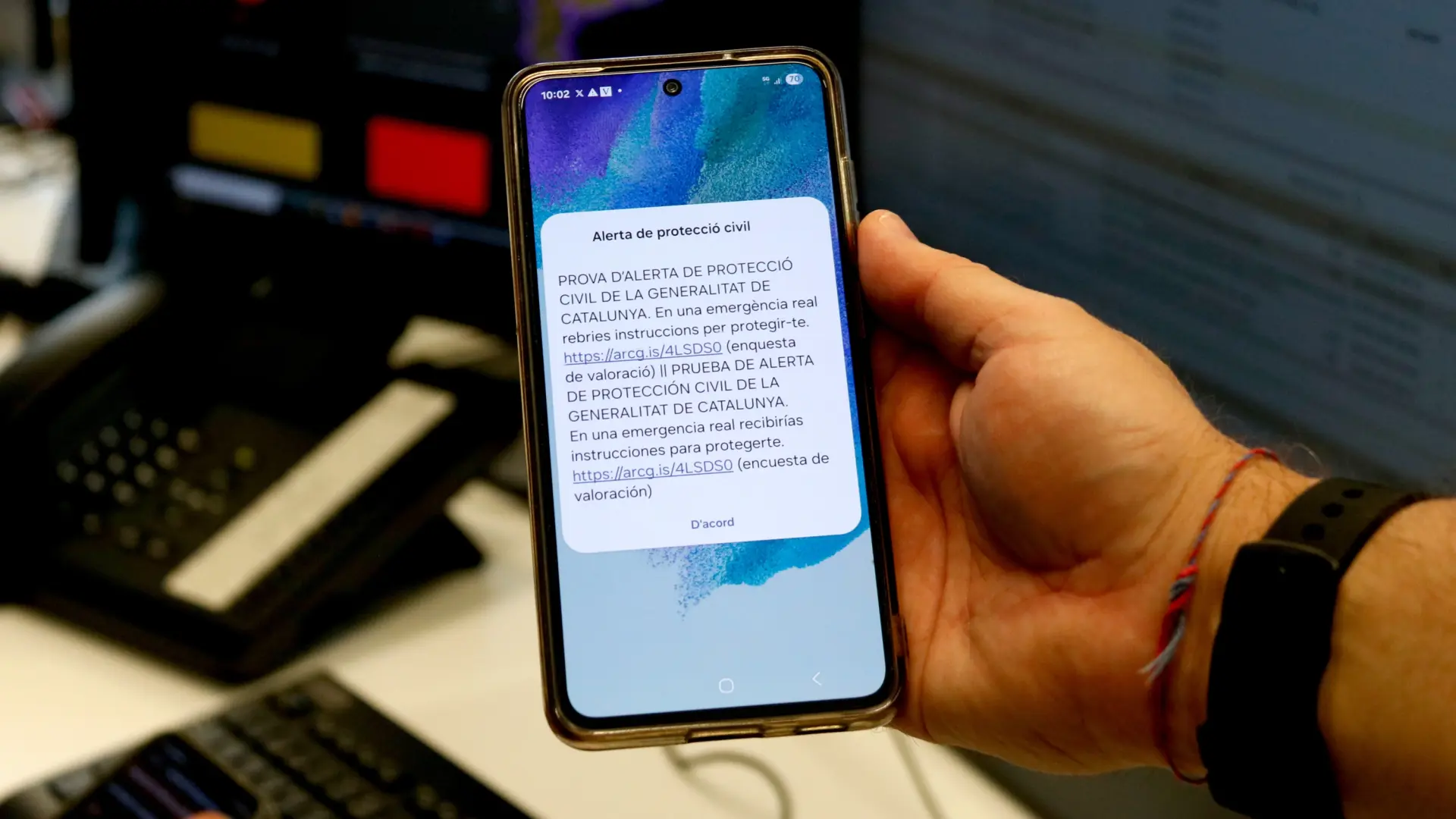
Understanding ES-Alert: Catalonia‘s New Emergency Alert System
Have you ever wondered how you’d receive critical facts during a major emergency? Catalonia has taken a notable step in public safety with teh recent launch and testing of ES-Alert,a new system designed to send emergency alerts directly to mobile phones. On November 3rd, 2025, over five million mobile devices across several regions participated in a large-scale test, marking a pivotal moment for emergency interaction in the region. This article will break down everything you need to know about ES-Alert, how it effectively works, and what it means for your safety.
What is ES-Alert?
ES-Alert is a population warning system developed by Protecció Civil (Civil Protection) of the generalitat de Catalunya. It’s designed to quickly disseminate vital information to individuals located in areas affected by a major emergency. Unlike customary alert methods like sirens or television broadcasts,ES-Alert leverages cell broadcasting technology.This means messages are sent to all compatible mobile phones within a defined geographical area, regardless of the owner’s language settings or carrier.
This system isn’t entirely new; similar systems are already operational in other countries, including the united States (Wireless Emergency Alerts - WEA) and Japan. However, this was the largest test conducted by Protecció Civil to date, focusing on the regions of Barcelonès, Baix Llobregat, Maresme, Vallès Occidental, and Vallès Oriental.
how Did the Recent Test Work?
The recent test, conducted at 10:00 AM on November 3rd, 2025, sent a message to all mobile phones within the designated areas. Importantly, the alert was received even by devices simply passing through the region – whether by road or rail. The message, delivered in Catalan, Spanish, and English, read: ”Prueba de alerta de Protecció civil de la Generalitat de Catalunya. En una emergencia real recibirías instrucciones para protegerte” (test alert from the Civil Protection of the Generalitat de Catalunya.In a real emergency, you would receive instructions to protect yourself).
According to Marta Cassany, the Director General of Protecció Civil, the test served a dual purpose. First,it aimed to familiarize the public with the system and the alert message itself. Second, it allowed authorities to verify the system’s functionality and ensure it operates “effectively and efficiently.” Núria Parlon, the Minister of Interior and Public Security, and Pilar Díaz, the Government Delegate in Barcelona, monitored the test from the Center de Coordinació Operativa de Catalunya (CECAT).
Why is ES-alert Vital?
In a crisis,seconds can save lives. ES-Alert offers a crucial advantage over traditional alert systems by providing immediate, localized information directly to those at risk. Consider these benefits:
* Speed: Cell broadcasting delivers alerts almost instantaneously.
* Reach: It bypasses the need for individuals to actively tune into news broadcasts or check online sources.
* Location-Based: Alerts are targeted to specific areas,minimizing needless panic in unaffected regions.
* Multilingual: messages are delivered in multiple languages, ensuring accessibility for a diverse population.
Recent research from the Federal Emergency Management Agency (FEMA) highlights the increasing importance of direct-to-public alerting systems.A 2024 report indicated a 30% increase in public reliance on mobile alerts during natural disasters compared to five years prior. https://www.fema.gov/
What Types of Emergencies Will Trigger an ES-Alert?
ES-Alert is intended for use in situations posing an immediate threat to life or safety. These include:
* Natural Disasters: Earthquakes, floods, wildfires, severe storms.
* Technological Accidents: Industrial incidents, chemical spills.
* public Health Emergencies: Outbreaks of infectious diseases.
* Security Threats: Terrorist attacks, civil unrest.
It’s important to note that ES-Alert will not be used for routine public service announcements or non-emergency information. The system is reserved for critical situations requiring immediate action.





