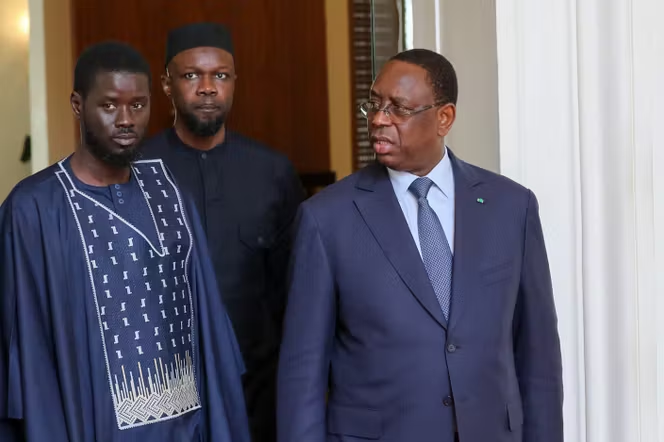
In a significant shift for the Senegalese political landscape, President Bassirou Diomaye Faye has officially ended the tenure of Prime Minister Ousmane Sonko. The move, which marks a major development for the current administration, follows a period of heightened scrutiny and internal tension within the government. As the nation watches the unfolding implications of this decision, the focus shifts to how the executive branch will proceed in the coming weeks.
The departure of Ousmane Sonko from his role as Prime Minister comes after months of speculation regarding the stability of the executive team. As a key figure in the rise of the PASTEF party, Sonko’s influence has been central to the political discourse in Senegal. The decision to conclude his tenure is viewed by analysts as a pivotal moment, though the administration has yet to detail the specific administrative transition plan that will follow this dismissal.
Political Context and the Role of PASTEF
The relationship between President Faye and Ousmane Sonko has historically been defined by their shared goals under the PASTEF—Les Patriotes party. Their partnership was instrumental in the recent electoral cycle, which saw a significant transition in leadership for the West African nation. The party has consistently framed its mission around serving the essential interests of the Senegalese people, a mandate that supporters believe remains the core focus despite recent leadership changes.
For those following West African geopolitics, this event underscores the complexities of governing coalitions that arise from grassroots movements. The transition from opposition activism to executive governance often brings unique pressures, particularly when balancing party ideology with the pragmatic requirements of statecraft. Observers are currently monitoring how the party leadership navigates this transition to ensure that public policy and government continuity remain stable.
What This Means for Senegalese Governance
The removal of a Prime Minister is a high-stakes constitutional maneuver that impacts the entire cabinet structure. In Senegal, the Prime Minister serves as the head of government, tasked with implementing the President’s agenda and coordinating ministerial activities. Any change at this level necessitates a recalibration of how ministries interact with the executive office. Citizens and international partners alike are looking for clarity on the next steps for the government’s economic and social programs.
It remains to be seen whether this decision will lead to a broader reshuffling of the cabinet or if the President intends to pivot toward a new strategic direction. The administration has historically emphasized reforms aimed at transparency and economic sovereignty, and the public will be looking for confirmation that these commitments remain intact as the new leadership structure takes shape.
Looking Ahead: Next Steps
As of May 23, 2026, the situation remains fluid. Official channels from the Presidency are expected to provide further updates regarding the appointment of a successor or the interim measures for the Prime Minister’s office. For the latest confirmed information, citizens and stakeholders are encouraged to monitor the official General Secretariat of the Government of Senegal for public decrees and official communiqués.
This development is not merely a change in personnel; it is a signal of the evolving political environment in Dakar. As the administration moves forward, the international community will be closely watching for signs of stability and the continued pursuit of the reforms promised during the last election cycle. We invite our readers to share their perspectives on this transition as we continue to track the official developments from our editorial desk in Sofia.
As this is a developing situation, we will provide updates as soon as official decrees are published by the Senegalese authorities. Please check back for further analysis and verified reporting.
Keep reading