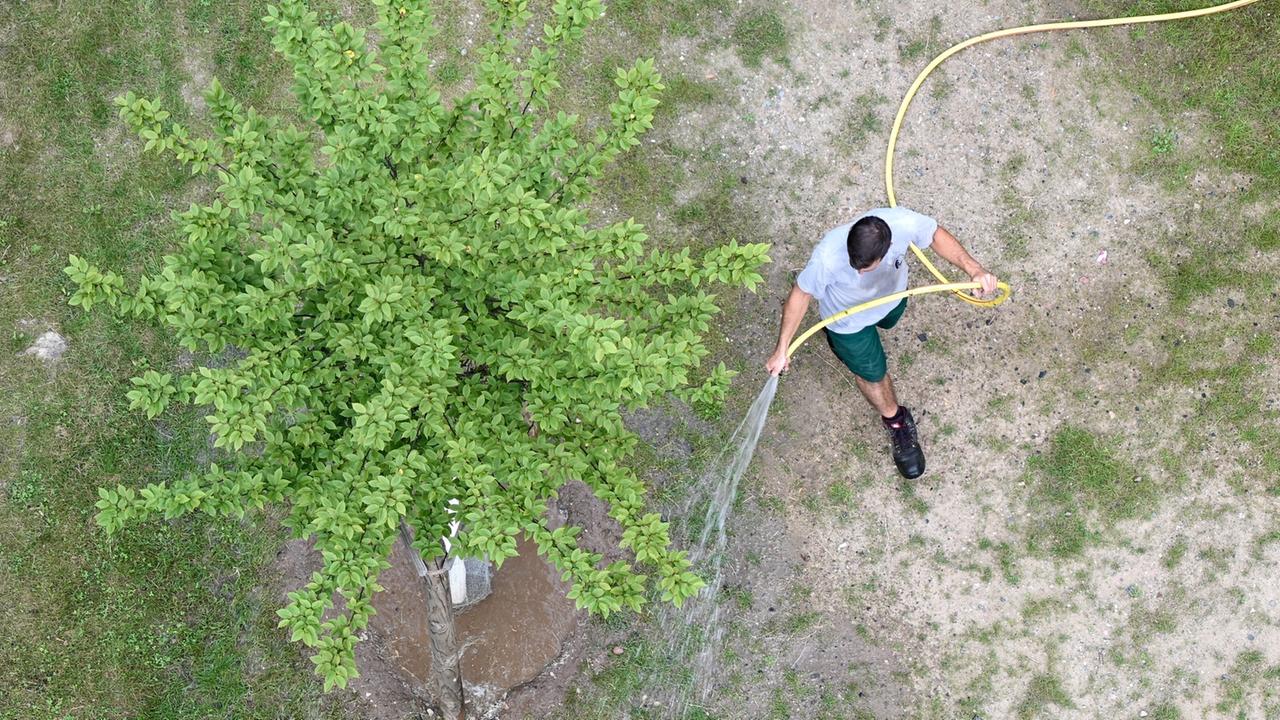
Urban centers across Baden-Württemberg are intensifying efforts to protect municipal greenery as rising summer temperatures and prolonged dry spells threaten the health of city trees. Municipalities throughout the state, including Stuttgart, Karlsruhe, and Freiburg, are implementing advanced irrigation strategies, soil improvement techniques, and species selection protocols to ensure that urban forests continue to provide cooling effects and improve air quality despite a shifting climate.
The Challenge of Urban Heat Stress
Urban trees face a dual threat from increasing heat waves and the physical limitations of city environments. According to the Landesanstalt für Umwelt Baden-Württemberg (LUBW), high temperatures accelerate evaporation, while sealed surfaces—such as asphalt and concrete—prevent rainwater from reaching root systems. This creates a “heat island” effect, where city centers become significantly warmer than surrounding rural areas, placing additional physiological stress on mature trees.
The stress is particularly acute for younger trees that have not yet established deep root systems. Without sufficient water, these trees suffer from leaf scorch, premature shedding, and increased vulnerability to pests and fungal diseases. The Baden-Württemberg Ministry of the Environment, Climate Protection and the Energy Sector has noted that maintaining urban canopy cover is essential for climate adaptation, as trees act as natural air conditioners by providing shade and releasing moisture through transpiration.
Irrigation and Soil Management Innovations
To combat water scarcity, many cities in Baden-Württemberg have modernized their maintenance programs. Stuttgart has invested in sensor-based irrigation technology that monitors soil moisture levels in real-time. This allows municipal crews to target watering efforts specifically where it is needed most, rather than adhering to a fixed, inefficient schedule. The city also utilizes “Baumbewässerungsbeutel” (tree watering bags) that deliver water slowly to the root zone, ensuring deep saturation rather than surface runoff.
In Karlsruhe, the city’s green space department has expanded the use of “Schwammstadt” (sponge city) concepts. As described by the City of Karlsruhe, this approach involves designing urban infrastructure to capture and store rainwater in the soil, allowing it to percolate into the ground rather than flowing into the sewer system. This passive irrigation method is considered more sustainable for long-term tree health than manual watering alone.
Selecting Resilient Tree Species
Beyond irrigation, municipalities are rethinking which trees are planted in urban corridors. The trend is shifting toward “Klimabäume” (climate-resilient trees)—species that are naturally adapted to higher temperatures and lower precipitation levels. Experts from the Forstliche Versuchs- und Forschungsanstalt Baden-Württemberg (FVA) suggest focusing on species that demonstrate high tolerance for heat and drought, such as the field maple, certain oak varieties, and hackberry trees.
This strategy is not merely about replacement; it is a long-term investment in urban resilience. By diversifying the tree population, cities aim to reduce the risk of large-scale die-offs caused by specific pathogens that thrive in warmer conditions. The shift in selection criteria is supported by ongoing research into how different species interact with the unique microclimates of dense urban environments.
Citizen Involvement and Future Outlooks
Public participation has become a pillar of municipal tree care. Many cities now encourage residents to assist with watering street trees during peak summer months. These “tree sponsorships” (Baumpatenschaften) provide citizens with buckets or access to local hydrants, fostering a sense of community ownership over the local environment. Official websites for cities like Stuttgart provide maps and instructions for residents who wish to help maintain the trees in their neighborhoods.
The next major checkpoint for these initiatives will be the upcoming municipal budget reviews for the 2025 fiscal year, where cities are expected to determine the allocation of funds for further climate-adaptation infrastructure. As temperatures continue to trend upward, the effectiveness of these measures will be monitored by both local environmental departments and state-level climate analysts to inform future urban planning mandates. Residents are encouraged to check their local municipal portals for updates on current drought advisories and opportunities to participate in local greening initiatives.
Related reading